


Vaginal microbiota alterations under supraphysiological estradiol state during in vitro fertilization-embryo transfer (IVF-ET) and the association with reproductive outcomes
- PMID: 40790561
- PMCID: PMC12341319
- DOI: 10.1186/s12866-025-04242-7
Vaginal microbiota alterations under supraphysiological estradiol state during in vitro fertilization-embryo transfer (IVF-ET) and the association with reproductive outcomes
Abstract
Background: The process of in vitro fertilization-embryo transfer (IVF-ET) induces a maternal supraphysiological estradiol environment during embryo implantation and early development. Estrogen is crucial in modulating the colonization of microbiota within the vaginal epithelium. However, the impact of supraphysiological estradiol levels on the vaginal microbiome and the relationship with pregnancy outcomes remains unclear.
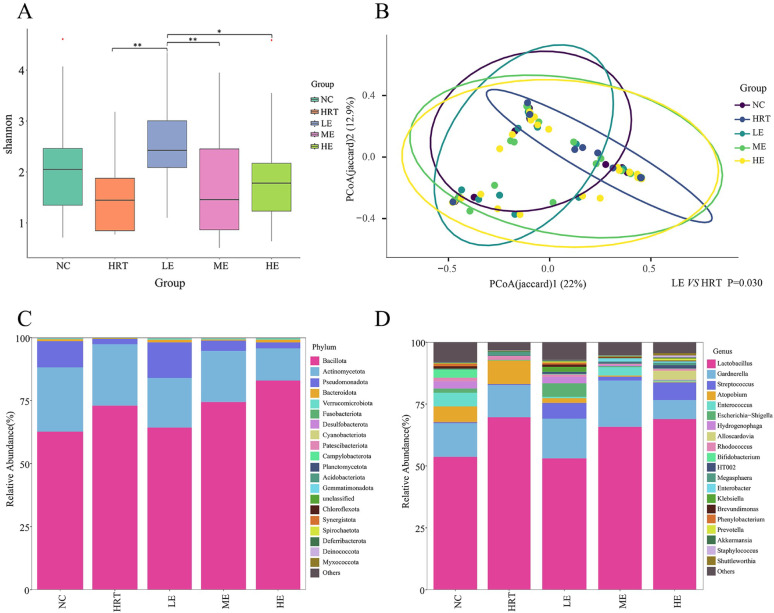
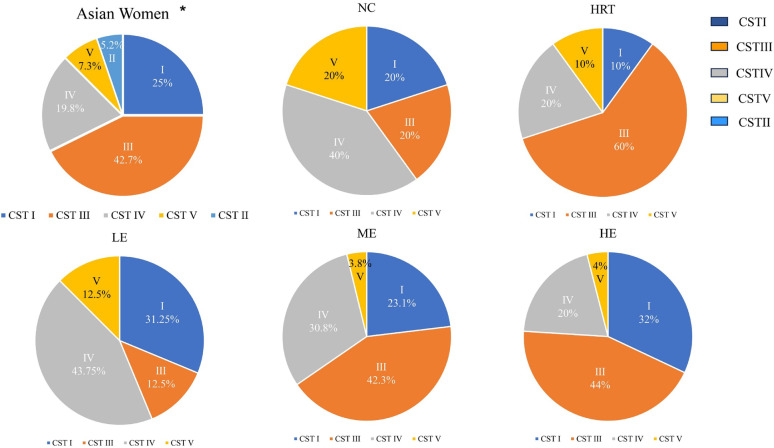
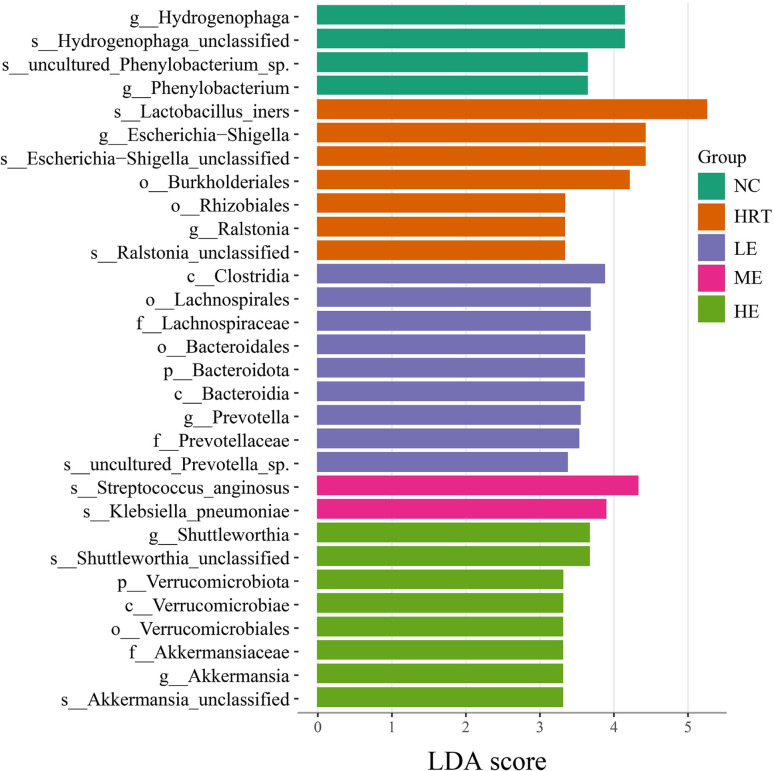
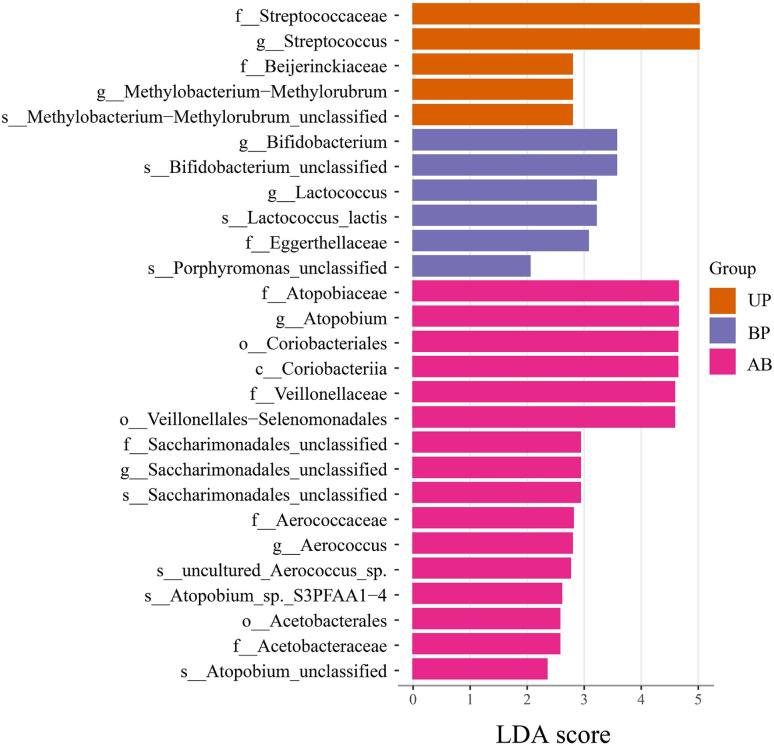
Results: The study aimed to characterize the vaginal microbiota under supraphysiological hormonal conditions. A total of 67 patients undergoing fresh embryo transfer were divided into three groups based on their peak estradiol levels: high-estradiol (HE) group (E2 > 11,000 pmol/L), median-estradiol (ME) group (E2 5,000-11,000 pmol/L), and low-estradiol (LE) group (E2 < 5,000 pmol/L). Twenty-five patients undergoing frozen-thawed embryo transfer were categorized into natural cycle (NC) group and hormone replacement cycle (HRT) group according to endometrial preparation protocols. Using 16S rRNA sequencing, we found that the vaginal microbiome exhibited variations with changes in peak estradiol levels. The elevated estradiol levels during ovarian stimulation or exogenous estrogen supplementation, significantly reduced alpha diversity, altered beta diversity within the vaginal microbiome, and shifted the vaginal community state types (CSTs) in Chinese infertile women toward Lactobacillus-dominant profiles, resembling those observed in most Asian women previously. However, the reproductive outcomes were not improved by these variations. The Streptococcus_anginosus and Akkermansia abundance correlated with estradiol levels positively, whereas Escherichia-Shigella showed a negative correlation. The abundance of Streptococcus, Atopobium, and Bifidobacterium on the day of embryo transfer may serve as predictors for adverse pregnancy outcomes, as determined by calculating the area under the curve (AUC) values.
Conclusions: Supraphysiological estradiol levels induced by IVF-ET significantly alter vaginal microbiota and shift the CSTs in Chinese infertile women toward patterns of most Asian women. The Lactobacillus dominance under supraphysiological estradiol conditions does not help improve assisted reproductive outcomes. The abundance of Streptococcus, Atopobium, and Bifidobacterium on the day of embryo transfer may serve as predictors for adverse pregnancy outcomes. Among them, Streptococcus correlates positively with peak estradiol levels and may act as a microbial mediator impairing reproductive success under hyperestrogenic conditions. However, further larger-scale researches are needed to identify and elucidate the potential mechanisms.
Keywords: In vitro fertilization-embryo transfer (IVF-ET); Pregnancy outcomes; Supraphysiological estradiol (E2) level; Vaginal microbiome.
© 2025. The Author(s).
Conflict of interest statement
Declarations. Ethics approval and consent to participate: The study has been carried out in compliance with the Helsinki Declaration and was approved by the ethics review board of the Women’s Hospital, School of Medicine, Zhejiang University. Informed consent was obtained from participants before sample and data collection. Consent for publication: Not applicable. Competing interests: The authors declare no competing interests. Clinical trial number: Not applicable.
Figures


References
MeSH terms
Substances
Grants and funding
LinkOut - more resources
Full Text Sources
