


Daytime and nighttime glycemic control with control-IQ technology vs. standard therapy in type 1 diabetes: a systematic review and meta-analysis with trial sequential analysis and GRADE assessment
- PMID: 40790781
- PMCID: PMC12341251
- DOI: 10.1186/s13098-025-01906-2
Daytime and nighttime glycemic control with control-IQ technology vs. standard therapy in type 1 diabetes: a systematic review and meta-analysis with trial sequential analysis and GRADE assessment
Abstract
Background: Automated insulin delivery showed better results than standard insulin therapy, such as MDI. Therefore, we aimed to discuss the efficacy of Control IQ hybrid closed loop (HCL) during the daytime and nighttime for the type 1 diabetic population without restriction in age group or disease severity.
Methods: We searched PubMed, Scopus, Cochrane Library, Web of Science, and related article citations. We analyzed the time in range (TIR), time below range (TBR), time above range (TAR), HBA1c, and serious adverse events (AEs) to ensure safety and efficacy. We used a random effects model when heterogeneity was present; otherwise, we used a fixed effects model. Data was presented as mean difference and 95% confidence intervals.
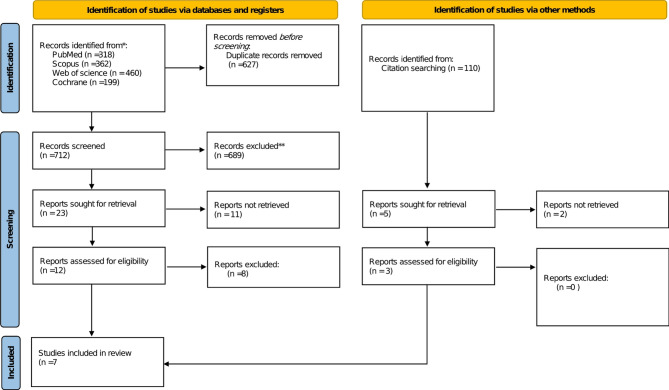
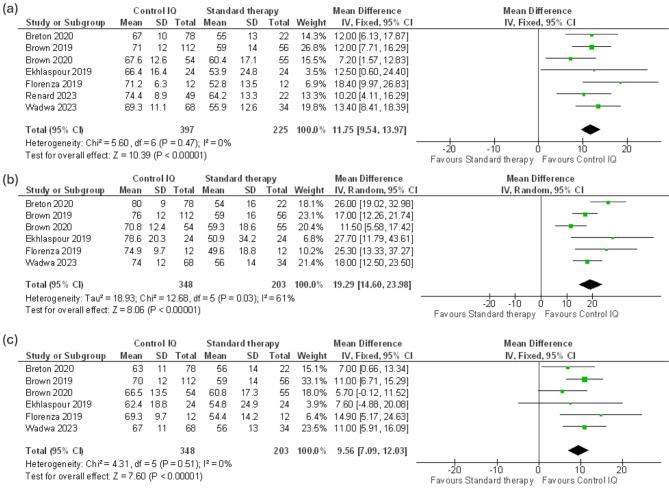
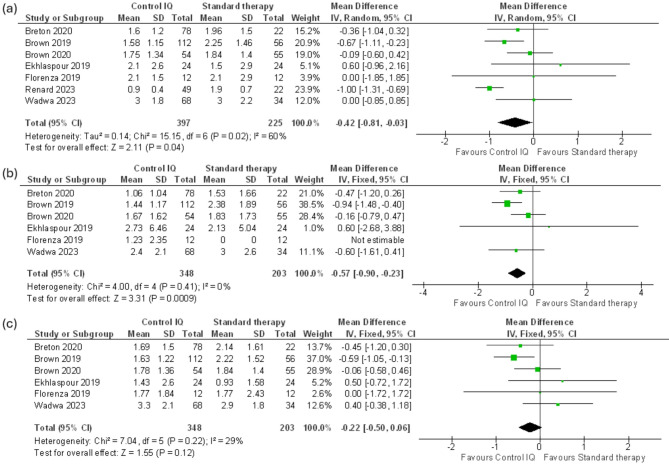
Results: We selected seven randomized controlled trials (RCTs) out of 1339 articles for the analysis. After analysis of pooled studies data, Control IQ showed improvement in TIR 70–180 mg/dl 24 h data (MD 11.75%, CI 95% (9.54 to 13.97), p = 0.000001) with a similar effect observed in daytime and nighttime. Significant reduction in HbA1c (MD -0.38%, CI 95% (-0.55 to -0.22), p = 0.00001) and 24-hour coefficient variation (CV) measurement (MD -1.42%, CI 95% (-2.22 to -0.61), p = 0.0006) in the Control IQ group compared to the standard therapy group. However, daytime TBR < 70 mg/dl did not show significant improvement (MD -0.22%, CI 95% (-0.50 to 0.06), p = 0.12). Regarding safety, Control IQ reduction in DKA was insignificant (OR 1.48 (CI 95%: 0.23–9.55), p = 0.68).
Conclusion: Control IQ showed better blood glucose control than standard insulin therapy, with some considerations regarding daytime glycemic control that need further assessment.
Supplementary Information: The online version contains supplementary material available at 10.1186/s13098-025-01906-2.
Keywords: Artificial pancreas; Closed loop; Control IQ; Type 1 diabetes.
Conflict of interest statement
Declarations. Ethics and consent to participate declarations: Not applicable. Competing interests: The authors declare no competing interests.
Figures

References
-
- Leelarathna L, Choudhary P, Wilmot EG, Lumb A, Street T, Kar P, et al. Hybrid closed-loop therapy: where are we in 2021? Diabetes Obes Metabolism. 2021;23(3):655–60. - PubMed
Publication types
LinkOut - more resources
Full Text Sources
