This is a preprint.
Using expert-cited features to detect leg dystonia in cerebral palsy
- PMID: 40791730
- PMCID: PMC12338898
- DOI: 10.1101/2024.10.15.24315574
Using expert-cited features to detect leg dystonia in cerebral palsy
Update in
-
Using Expert-Cited Features to Detect Leg Dystonia in Cerebral Palsy.Ann Neurol. 2026 Jan 18. doi: 10.1002/ana.78130. Online ahead of print. Ann Neurol. 2026. PMID: 41549584
Abstract
Objectives: Leg dystonia in cerebral palsy (CP) is debilitating but remains underdiagnosed. Routine clinical evaluation has only 12% accuracy for leg dystonia diagnosis compared to gold-standard expert consensus assessment. We determined whether expert-cited leg dystonia features could be quantified to train machine learning (ML) models to detect leg dystonia in videos of children with CP.
Methods: Eight pediatric movement disorders physicians assessed 298 videos of children with CP performing a seated task at two CP centers. We extracted leg dystonia features cited by these experts during consensus-building discussions, quantified these features in videos, used these quantifications to train 4664 ML models on 163 videos from one center, and tested the best performing models on a separate set of 135 videos from both centers.
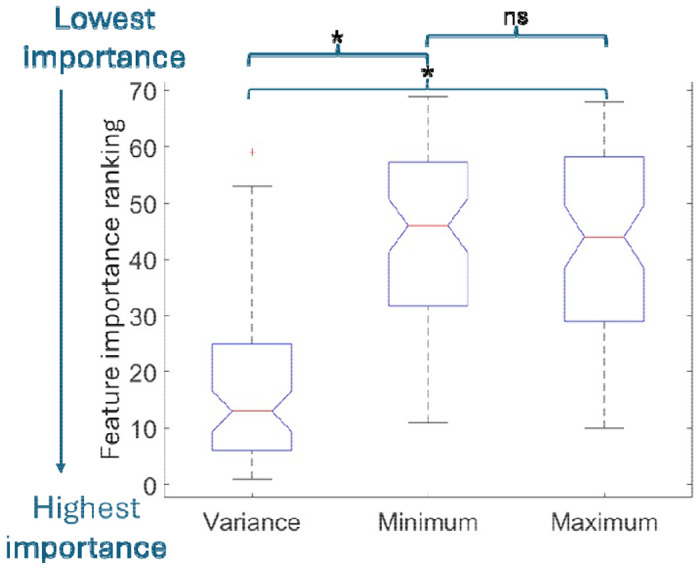
Results: We identified 69 quantifiable features corresponding to 12 expert-cited leg dystonia features. ML models trained using these quantifications achieved 88% sensitivity, 74% specificity, 82% positive predictive value, 84% negative predictive value, and 82% accuracy for identifying leg dystonia across both centers. Of the 25 features contributing to the best performing ML models, 17 (68%) quantified leg movement variability. We used these ML models to develop DxTonia, open-source software that identifies leg dystonia in videos of children with CP.
Interpretation: DxTonia primarily leverages detection of leg movement variability to achieve 82% accuracy in identifying leg dystonia in children with CP, a significant improvement over routine clinical diagnostic accuracy of 12%. Observing or quantifying leg movement variability during a seated task can facilitate leg dystonia detection in CP.
Conflict of interest statement
Potential Conflicts of interest The authors have no conflicts of interest to disclose.
Figures



References
-
- Rice J., Skuza P., Baker F., Russo R. & Fehlings D. Identification and measurement of dystonia in cerebral palsy. Dev. Med. Child Neurol. 59, 1249–1255 (2017). - PubMed
-
- Steeves T. D., Day L., Dykeman J., Jette N. & Pringsheim T. The prevalence of primary dystonia: A systematic review and meta-analysis. Mov. Disord. 27, 1789–1796 (2012). - PubMed
Publication types
Grants and funding
LinkOut - more resources
Full Text Sources
Miscellaneous