Review
. 2025;24(4):2445-2461.
doi: 10.1007/s11101-023-09895-8. Epub 2023 Oct 12.

Proanthocyanidin biosynthesis and postharvest seed coat darkening in pinto bean

Affiliations
Review

Proanthocyanidin biosynthesis and postharvest seed coat darkening in pinto bean

Nishat S Islam et al. Phytochem Rev. 2025.

Abstract

Proanthocyanidins (PAs) are polyphenolic compounds present widely in the plant kingdom. These specialized metabolites are derived from the phenylpropanoid pathway and are known for producing brown pigments in different plant organs. PAs accumulate in the seed coat tissues of flowering plants and play a determinant role in seed germination and viability, protect seeds from biotic and abiotic stresses, and thus ensure the long-term storage potential of seeds. In addition, PAs are a rich source of antioxidants for the health of both human and livestock. Many of the commercially relevant dry beans (Phaseolus vulgaris) contain high levels of PAs, which when oxidized cause the beans to overdarken, a phenomenon known as postharvest darkening. These darker beans give the impression of oldness, and consumers tend to avoid buying them which, in turn, affects their market value. Pinto beans, one of the leading market classes of dry beans, are affected the most by the postharvest darkening. Therefore, exploring the regulation of PA biosynthesis and accumulation in bean seed coat tissues will help to develop strategy to manage the postharvest darkening effect in pintos. In this review, we discuss the PA biosynthesis and its regulation, connecting it to seed coat color genetics for a better understanding of the mechanism of seed coat darkening.

Keywords: Gene regulation; Phenylpropanoid pathway; Pinto beans; Postharvest seed coat darkening; Proanthocyanidins.


Figures

Fig. 1
Fig. 1
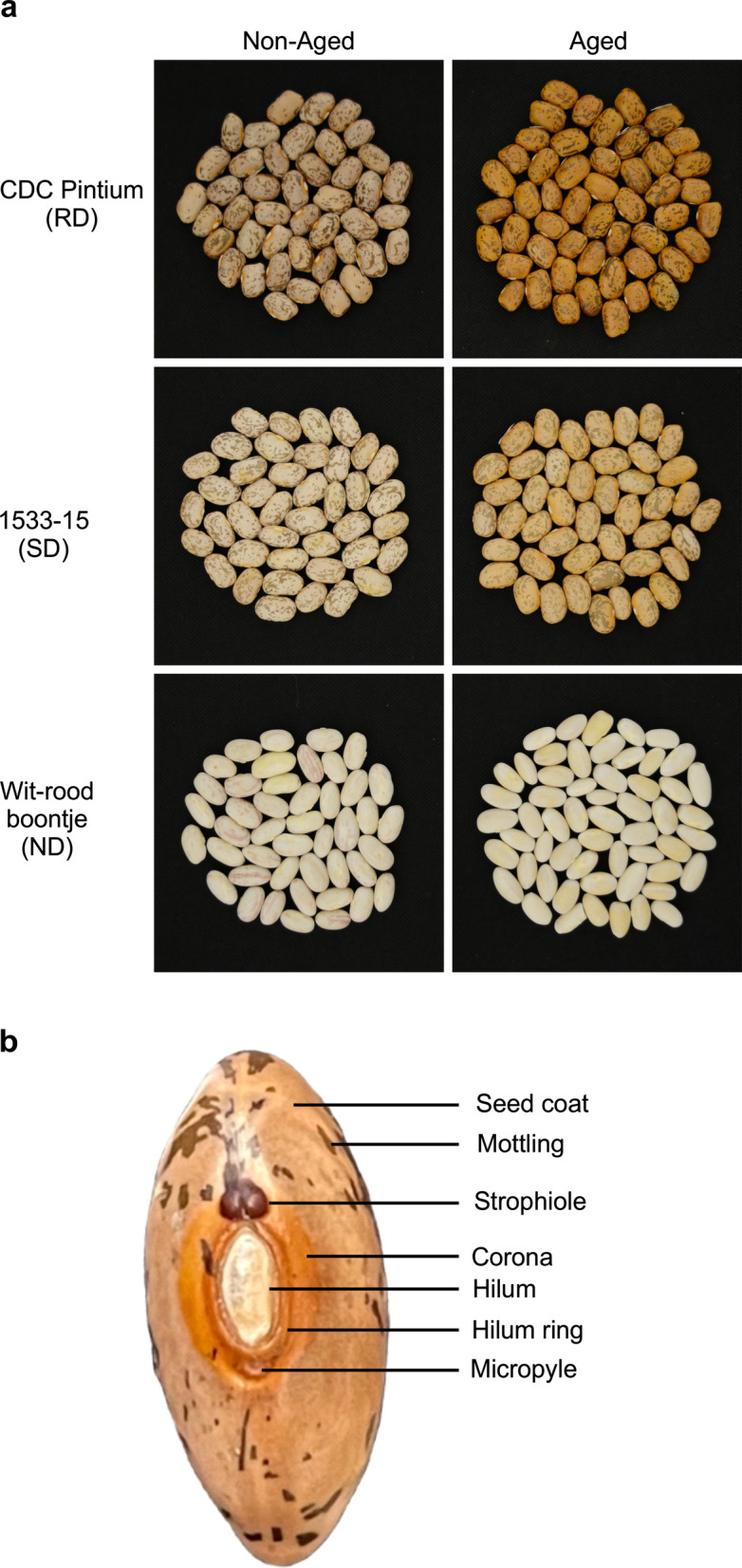
Seed coat colors in pinto beans. a Postharvest seed coat darkening in pinto beans. Non aged (freshly harvested) and aged (after 6 months of storage at room temperature) pictures of three different pinto cultivars: CDC Pintium (RD), 1533-15 (SD) and cranberry like Wit-rood boontje (ND). (adapted from Islam et al. 2020). b Area specific PA-level variation in a seed of pinto bean cultivar CDC Pintium
Fig. 2
Fig. 2
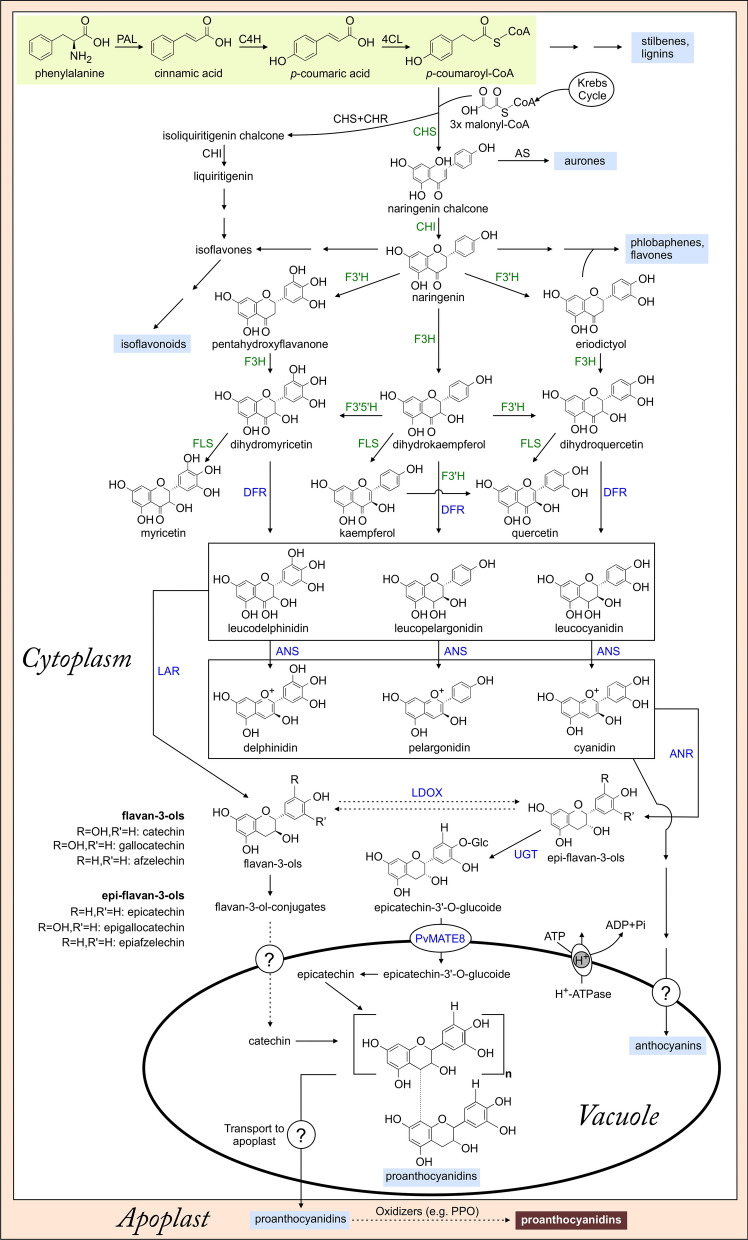
Proanthocyanidin biosynthesis in pinto bean. The dashed arrows represent speculative steps and multiple arrows indicate multiple steps. General phenylpropanoid pathway is highlighted in yellow and the end products are highlighted in blue, anthocyanin in purple and oxidized PAs in brown. Enzymes encoded by early biosynthetic genes and late biosynthetic genes are indicated by green and blue by fonts, respectively. PAL, phenylalanine ammonia lyase; C4H, cinnamate4-hydroxylase; 4Cl, 4-coumarate-CoA ligase; CHS, chalcone synthase; AS, aurone synthase; CHI, chalcone isomerase; F3′H, flavonoid 3′-hydroxylase; F3H, flavanone 3-hydroxylase; FLS, flavonol synthase; F3′5′H, flavonoid 3′,5′-hydroxylase; DFR, dihydroflavonol reductase; LAR, leucoanthocyanidin reductase; ANS, anthocyanidin synthase; ANR, anthocyanidin reductase; LDOX, leucoanthocyanidin dioxygenase; UGT, uracil glucosyltransferase; PvMATE8, multidrug and toxic compound extrusion protein 8; PPO, polyphenol oxidase
Fig. 3
Fig. 3
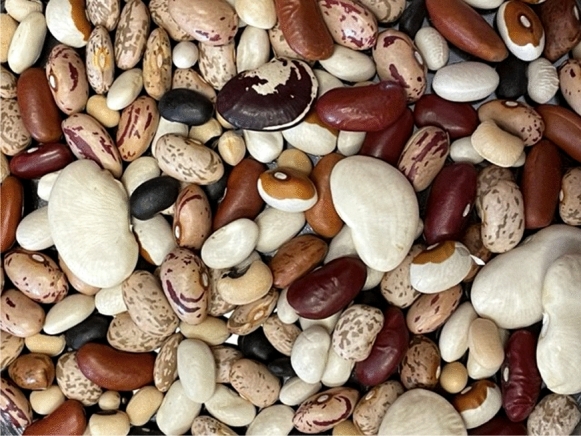
A photograph showing seed coat color of some popular market classes of common beans with wide color diversity, along with variation in their shapes, sizes and patterns
Fig. 4
Fig. 4
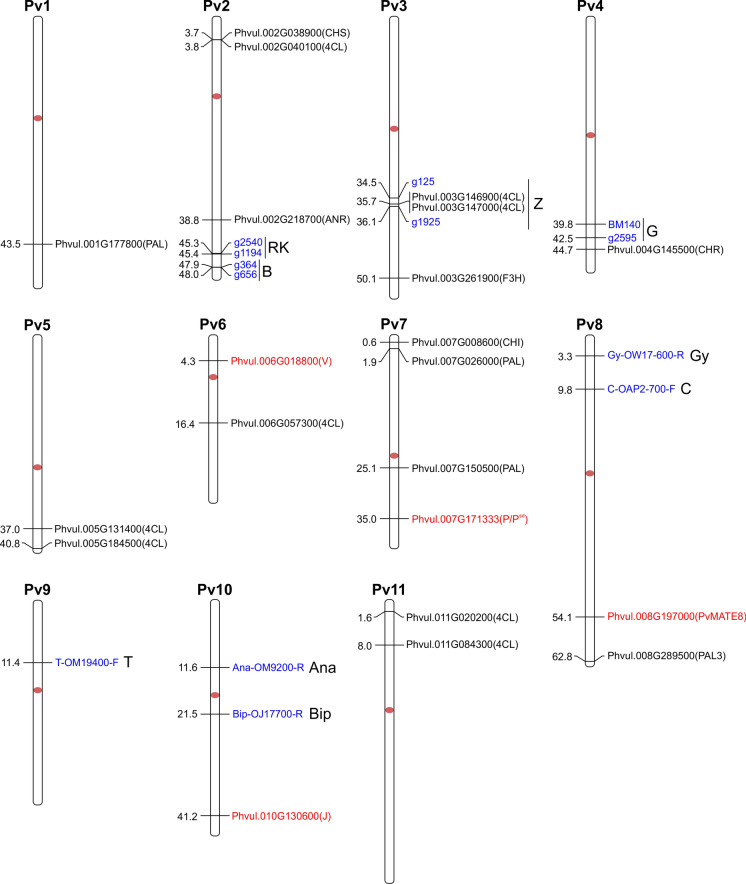
Chromosomal locations of color genes in common bean. Genomic distribution of putative biosynthetic genes (black), color and pattern genes (black) aligned with their closest markers (blue) and functionally characterized color genes (red) on P. vulgaris chromosome (Phytozome 13 https://phytozome-next.jgi.doe.gov/, accessed September 2023). The chromosome numbers are indicated above each chromosome and drawn to a scale in megabase pairs (Mbp). The chromosome size is indicated by its relative length using the information from Phytozome 13. Chromosome map illustrated by MapChart 2.32
Fig. 5
Fig. 5
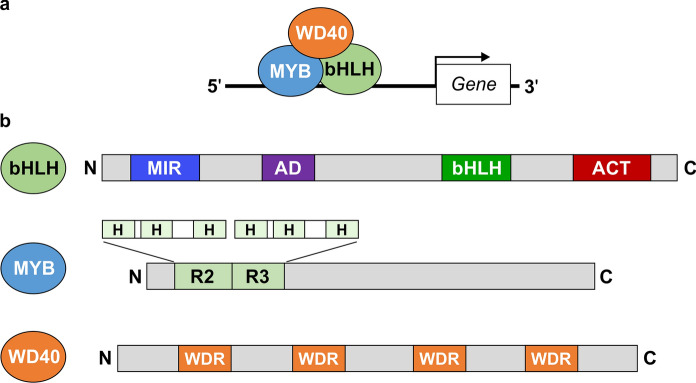
MBW complex proteins and PA gene regulation. a A schematic diagram showing MYB-bHLH-WD40 (MBW) complex binding to the target gene promoter for transcription activation. The upstream DNA region from translation start site of the gene is indicated by black line. b Protein motifs in bHLH, MYB and WD40. bHLH protein with MYB interaction region (MIR), Activation domain (AD), bHLH and ACT domain are shown, MYB protein with R2 and R3 motifs indicating the α-helices (H) involved in bHLH interaction and WD40 repeat (WDR) regions in WD40 proteins. Structures are not drawn to scale

References

    1. Abrahams S, Lee E, Walker AR, Tanner GJ, Larkin PJ, Ashton AR (2003) The Arabidopsis TDS4 gene encodes leucoanthocyanidin dioxygenase (LDOX) and is essential for proanthocyanidin synthesis and vacuole development. Plant J 35:624–636 - PubMed
    1. Adams DO (2006) Phenolics and ripening in grape berries. Am Soc Enol Vitic 57:249–256
    1. Aerts RJ, Barry TN, Mcnabb WC (1999) Polyphenols and agriculture: beneficial effects of proanthocyanidins in forages. Agric Ecosyst Environ 75:1–12
    1. Albert NW, Davies KM, Lewis DH, Zhang H, Montefiori M, Brendolise C, Boase MR, Ngo H, Jameson PE, Schwinn KE (2014) A conserved network of transcriptional activators and repressors regulates anthocyanin pigmentation in eudicots. Plant Cell 26:962–980 - PMC - PubMed
    1. Alvares RC, Stonehouse R, Souza TLPO, Melo PGS, Miklas PN, Bett KE, Melo LC, Rodrigues LA, Souza LL, Pereira HS (2019) Generation and validation of genetic markers for the selection of carioca dry bean genotypes with the slow-darkening seed coat trait. Euphytica 215:141

LinkOut - more resources