


Resilience of long-lasting insecticidal net distribution system on the Thai-Myanmar border: pre, during, and post COVID-19 pandemic insights
- PMID: 40797249
- PMCID: PMC12345034
- DOI: 10.1186/s12936-025-05499-z
Resilience of long-lasting insecticidal net distribution system on the Thai-Myanmar border: pre, during, and post COVID-19 pandemic insights
Abstract
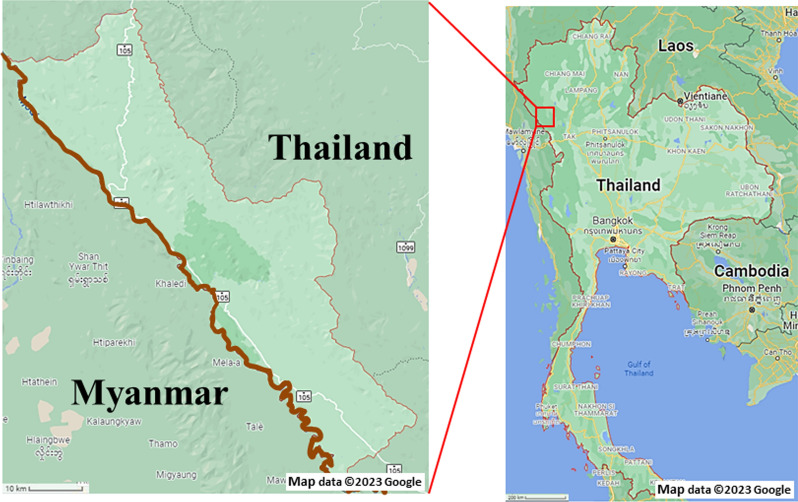
Background: To achieve the elimination goal by 2026, an effective LLIN distribution system is the essential strategy. This study aims to evaluate the outcome of LLINs distribution system tailored to COVID-19 setting in the Thai-Myanmar border in Tak Province.
Methods: A retrospective mixed-methods research study was conducted with 16 staffs involved in LLIN distribution and 388 household heads from six sub-districts along the Thai-Myanmar border. The research tools included in-depth interviews and questionnaires. Qualitative analysis employed a thematic analysis approach. Proportions were used to examine ownership, access, and bed net use.
Results: The operational system of LLINs distribution included mass distribution campaigns and continuous distribution through routine channels, such as malaria posts (MPs) and malaria clinics (MCs). Although lockdown measures stopped the mass campaign during the COVID-19 pandemic (2020-2021), the operational system used to distribute LLINs in this study setting had resilience. According to this system's post-pandemic outcome, 95.9% of households had at least one bed net, and 87.9% of household members used any type of bed net. The in-depth interviews showed that a small proportion of individuals would like a different type of bed net and could not acquire them. During the pandemic, most community members still had sufficient bed nets to cover their sleeping spaces. Staying at home during lockdowns likely provided an opportunity for better adherence to bed net use among those who previously would have been traveling. Factors contributing to the success of LLIN distribution in this setting included good cooperation between government and partnerships, effective management, and a useful electronic database for decision-making.
Conclusion: The coverage of bed nets is high in this area, and as long as there is not a disruption that is longer than the lifespan of the bed nets, high coverage has been maintained. This high coverage indicated the effectiveness of the operational system of LLIN distribution in this study setting. These findings could be useful in the policy improvement of the LLIN distribution system, which could ultimately contribute to the successful elimination of malaria.
© 2025. The Author(s).
Conflict of interest statement
Declarations. Competing interests: The authors declare no competing interests.
Figures
References
-
- World Health Organization. World malaria report 2023. Geneva: World Health Organization; 2023.
-
- World Health Organization. Mekong Malaria Elimination: epidemiology summary. Geneva: World Health Organization; 2023.
-
- WHO SEARO/WHO Myanmar. Myanmar public health situation analysis (PHSA). Geneva: World Health Organization; 2022.
-
- Malaria Online Database, Thailand Malaria Elimination Program. http://malaria.ddc.moph.go.th/malariar10/index_newversion.php. Accessed on 3 May 2023.
MeSH terms
LinkOut - more resources
Full Text Sources
Medical
Miscellaneous
