


Roles of Pho regulon in bacterial pathogenicity
- PMID: 40799166
- PMCID: PMC12351708
- DOI: 10.1080/21505594.2025.2545559
Roles of Pho regulon in bacterial pathogenicity
Abstract
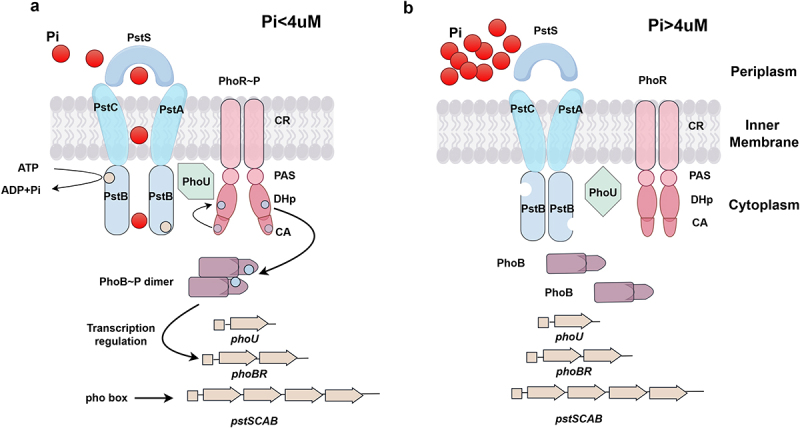
Bacterial infections are a leading cause of global health loss. The prerequisites for bacteria to colonize and establish systemic infection in the host are environmental adaptability and the expression of virulence factors. Phosphorus constitutes the fifth most important element in terms of its cellular content, which is pivotal for DNA replication, metabolism, signal transmission, and microbial cell composition. The phosphate (Pho) regulon is a well-established unique mechanism in response to inorganic phosphate (Pi) starvation. The Pho regulon is strongly related to bacterial pathogenicity, except for the simple regulatory system for Pho balance. The PhoBR two-component regulatory system of the Pho regulon has documented the effects of affecting virulence in microbes. This review emphasizes the impact of the absence of PhoB and virulence-related gene regulation by PhoB on pathogenicity in common pathogens of Escherichia coli, Pseudomonas aeruginosa, Salmonella enterica serovar Typhimurium, Vibrio cholerae, etc. Collectively, Pho regulon is a regulatory network connecting Pho homeostasis with bacterial virulence. This study may offer valuable information for understanding the regulation of bacterial virulence by the Pho regulon, providing novel insights for the development of antimicrobial strategies.
Keywords: Pho regulon; bacterial pathogenicity; phosphate homeostasis.
Conflict of interest statement
No potential conflict of interest was reported by the author(s).
Figures


References
Publication types
MeSH terms
Substances
LinkOut - more resources
Full Text Sources
Research Materials
Miscellaneous
