


Central Insulin-Like Growth Factor-1-Induced Anxiolytic and Antidepressant Effects in a Rat Model of Sporadic Alzheimer's Disease Are Associated with the Peripheral Suppression of Inflammation
- PMID: 40801621
- PMCID: PMC12346486
- DOI: 10.3390/cells14151189
Central Insulin-Like Growth Factor-1-Induced Anxiolytic and Antidepressant Effects in a Rat Model of Sporadic Alzheimer's Disease Are Associated with the Peripheral Suppression of Inflammation
Abstract
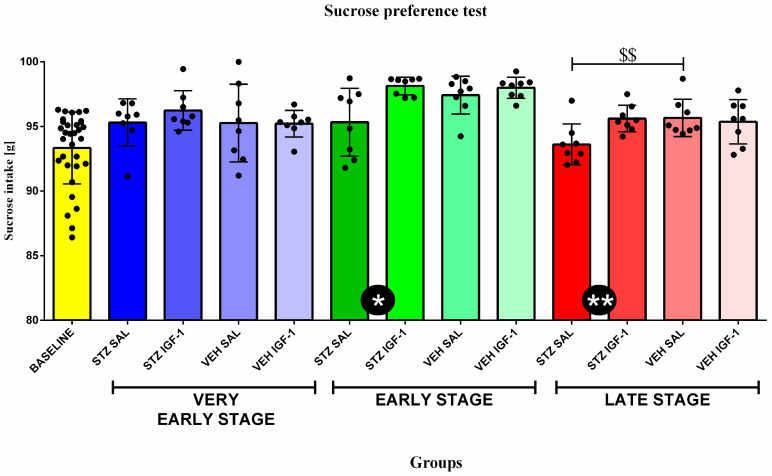
(1) Insulin-like growth factor-1 (IGF-1) is a neurotrophin with anti-inflammatory properties. Neuroinflammation and stress activate peripheral immune mechanisms, which may contribute to the development of depression and anxiety in sporadic Alzheimer's disease (sAD). This study aims to evaluate whether intracerebroventricular (ICV) premedication with IGF-1 in a rat model of streptozotocin (STZ)-induced neuroinflammation can prevent the emergence of anhedonia and anxiety-like behavior by impacting the peripheral inflammatory responses. (2) Male Wistar rats were subjected to double ICVSTZ (total dose: 3 mg/kg) and ICVIGF-1 injections (total dose: 2 µg). We analyzed the level of anhedonia (sucrose preference), anxiety (elevated plus maze), peripheral inflammation (hematological and cytometric measurement of leukocyte populations, interleukin (IL)-6), and corticosterone concentration at 7 (very early stage, VES), 45 (early stage, ES), and 90 days after STZ injections (late stage, LS). (3) We found that ICVIGF-1 administration reduces behavioral symptoms: anhedonia (ES and LS) and anxiety (VES, ES), and peripheral inflammation: number of leukocytes, lymphocytes, T lymphocytes, monocytes, granulocytes, IL-6, and corticosterone concentration (LS) in the rat model of sAD. (4) The obtained results demonstrate beneficial effects of central IGF-1 administration on neuropsychiatric symptoms and peripheral immune system activation during disease progression in the rat model of sAD.
Keywords: anhedonia; anxiety; insulin-like growth factor-1; peripheral inflammation; sporadic Alzheimer’s disease model.
Conflict of interest statement
The authors declare no conflicts of interest. Moreover, the providers of the IGF-1 gift had no role in the design of the experiment, data collection, analysis of the results or interpretation of the data, writing the article, or the decision to publish the results.
Figures



References
MeSH terms
Substances
Grants and funding
LinkOut - more resources
Full Text Sources
Medical
Miscellaneous
