


Pre- and postoperative pain management practices in fracture surgery: A bicentric prospective observational study in Ethiopia
- PMID: 40801972
- PMCID: PMC12350506
- DOI: 10.1007/s00423-025-03837-y
Pre- and postoperative pain management practices in fracture surgery: A bicentric prospective observational study in Ethiopia
Abstract
Background: Acute pain is common following orthopedic trauma and surgery. This study aims to evaluate the adequacy of pre- and postoperative pain management in traumatic fracture patients undergoing orthopedic surgery in Ethiopia.
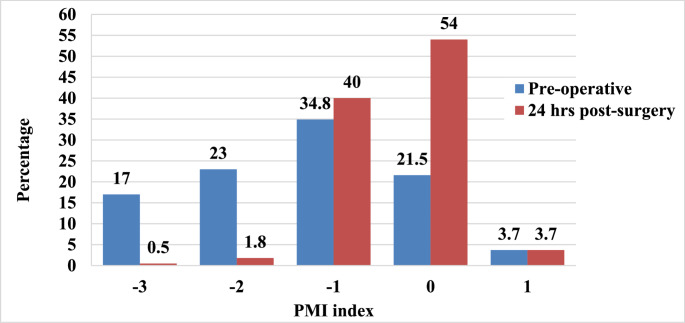
Methods: A prospective cohort study was conducted at two Ethiopian trauma centers from January 2019 to October 2021. Preoperatively, data was obtained on sociodemographic factors, substance use, type of injury, pain and psychological factors. Pain was assessed again 24 h following surgery. Pain management adequacy was evaluated using the Pain Management Index (PMI), based on the World Health Organization's pain treatment framework. The PMI was determined by subtracting the patient's pain intensity from the strength of the prescribed analgesic scores range from - 3 to + 3. Negative values indicate inadequate pain control.
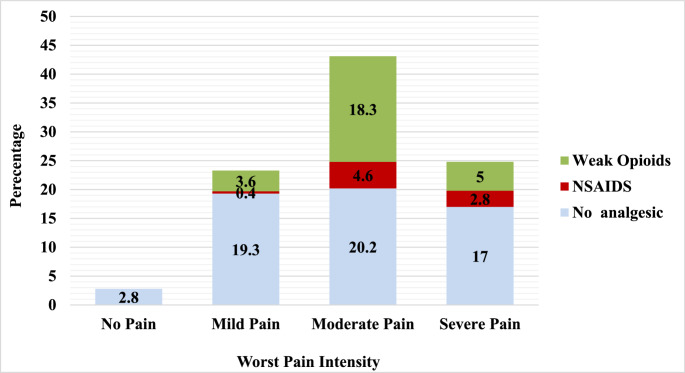
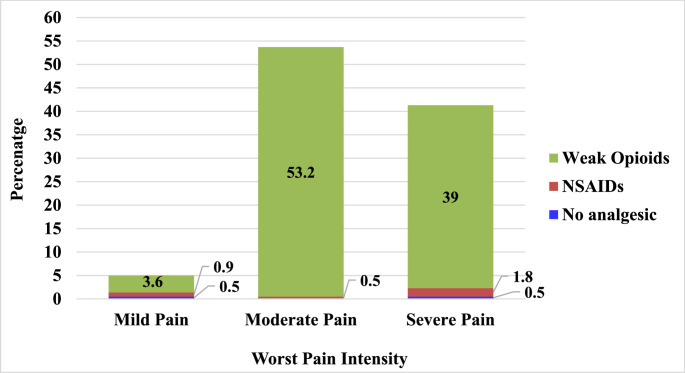
Results: Of the 220 patients enrolled, 218 completed the study. Preoperative pain was inadequately managed in 74.8% of patients, improving to 42.2% postoperatively. Most patients reported mild (23.3%), moderate (43.1%), or severe (30.8%) pain preoperatively, yet 56.4% received no analgesics. At 24 h post-surgery, the patients reported mild (5.0%), moderate (53.7%), and severe (41.3%) pain, with 99.1% receiving analgesics. Notably, no patients with severe pain were given strong opioids at any time point. Lower educational level was associated with inadequate preoperative pain management (AOR: 3.18; 95% CI: 1.19-8.54). Alcohol use (AOR: 2.80; 95% CI: 1.30-6.05), higher anxiety (AOR: 1.17; 95% CI: 1.05-1.30), and higher depression scores (AOR: 0.77; 95% CI: 0.68-0.88) were associated with inadequate pain management 24 h post-surgery.
Conclusions: Most patients with traumatic fractures received inadequate perioperative pain management, especially before surgery. Strong opioids were not used even in cases of severe pain. Socio-demographic and psychological factors were significantly associated with inadequate pain management.
Keywords: Analgesics; Orthopedic surgery; Pain management; Pain management index; Traumatic fractures.
© 2025. The Author(s).
Conflict of interest statement
Declarations. Ethics approval and consent to participate: This study received ethical approval from the Institutional Review Boards of Jimma University (JHRPGD/510/2018), St. Paul’s Hospital Millennium Medical College (PM23/406), and the Regional Committee for Medical Research Ethics—South-East Norway (2017/1609/REK). Written informed consent forms were obtained from all patients. For patients who were unable to read and/or write, informed consent including a witness signature was obtained. The study was performed in accordance with the Declarations of Helsinki. Consent for publication: Not applicable. Competing interests: The authors declare no competing interests.
Figures
References
-
- Hailu S, Gebre H, Alemayehu G (2022) Orthopaedic injury patterns at a tertiary referral hospital in Ethiopia: a prospective observational study. Injury 53(10):3195–3200 - PubMed
-
- Nischal N, Arulraja E, Shaheen SP (2020) Pain management for orthopedic injuries. Emerg Med Clin North Am 38(1):223–241 - PubMed
-
- Gerbershagen HJ et al (2013) Pain intensity on the first day after surgery: a prospective cohort study comparing 179 surgical procedures. Anesthesiology 118(4):934–944 - PubMed
Publication types
MeSH terms
Substances
LinkOut - more resources
Full Text Sources
Medical
