


Effects of low-temperature stress at different growth stages on rice physiology, pollen viability and yield in China's cold region
- PMID: 40802840
- PMCID: PMC12349717
- DOI: 10.1371/journal.pone.0329441
Effects of low-temperature stress at different growth stages on rice physiology, pollen viability and yield in China's cold region
Abstract
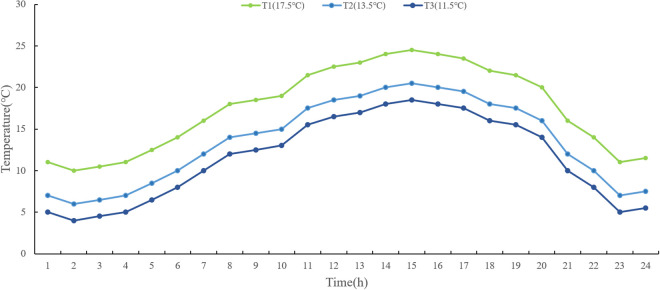
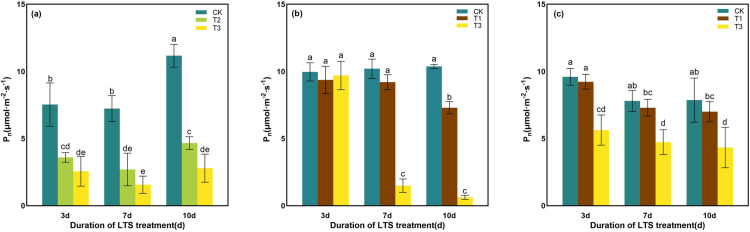
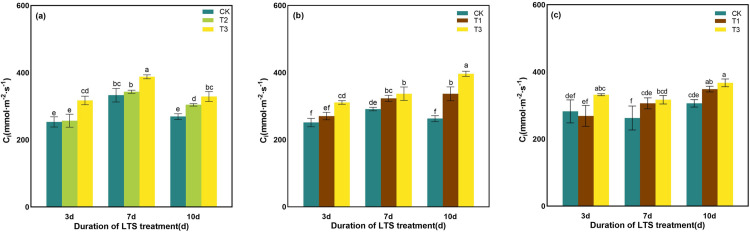
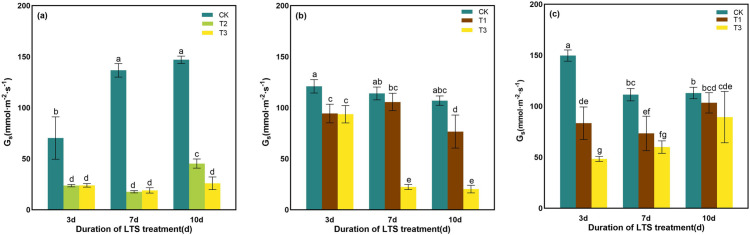
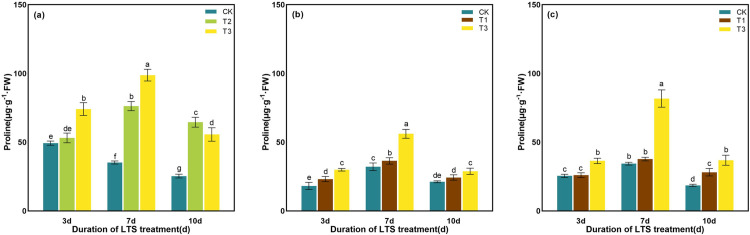
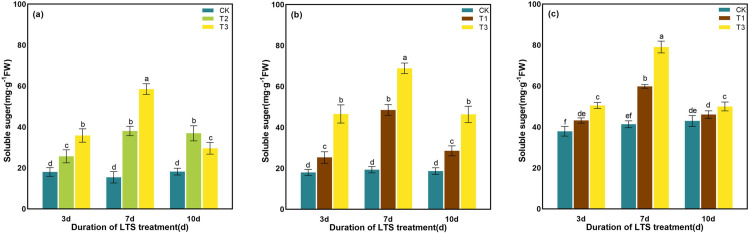
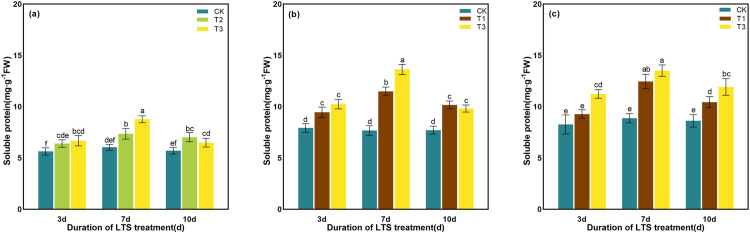
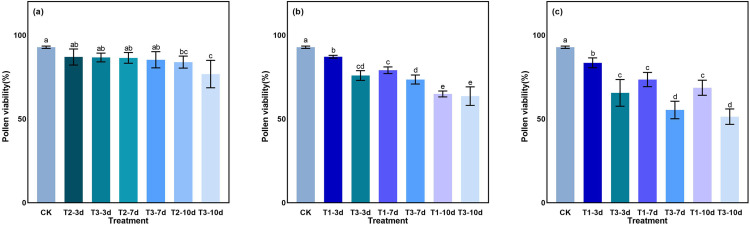
Low-temperature stress (LTS) is a major limiting factor for rice production in high-latitude regions. Many studies have reported the impacts of LTS on leaf photosynthesis and yield, but few of them explored the response of photosynthesis, chloroplast ultrastructure, pollen fertility, cold stress adaptation to LTS at different growth stages of rice. In this study, we conducted a two-year temperature-controlled field experiment (in 2023 and 2024) to investigate the effects of LTS at the tillering, booting, and heading stages on physiological and biochemical characteristics, plant growth, pollen fertility, and grain yield for a japonica rice cultivar (Longgeng31). The results showed that rice photosynthesis gradually decreased as the LTS temperature was decreasing and the LTS duration was increasing. The net photosynthetic rate (Pn) decreased the most at the booting stage, followed by the tillering, and the heading stages. Compared with controlled group (CK), the LTS treatment at 11.5°C for 3-10 days significantly reduced Pn by 52.2% ~ 62.7%, 85.3% ~ 93.9% and 39.3% ~ 44.9%, at the tillering stage, booting and heading stages respectively. Increasing LTS intensity and duration caused distorted chloroplast morphology and reduced plant height. The concentrations of the antioxidant and osmotic regulation systems in rice peaked after 7 days of LTS treatment, indicating that the stress response to LTS showed a trend of initially increasing and subsequently decreasing. The grain yield decreased the most under LTS at the booting stage by 59.30%-88.76% on D10, followed by the heading and tillering stages. After 10 days of exposure to LTS, the pollen viability decreased most significantly at the heading stage by 44.67%, followed by the booting and the tillering stages. These findings could provide a theoretical basis for identifying and evaluating LTS in rice under field conditions, and provide a methodological reference for the identification and monitoring of LTS in other crops, thereby holding significant practical implications.
Copyright: © 2025 Guo et al. This is an open access article distributed under the terms of the Creative Commons Attribution License, which permits unrestricted use, distribution, and reproduction in any medium, provided the original author and source are credited.
Conflict of interest statement
The authors have declared that no competing interests exist.
Figures
References
-
- Hsiaoping C, Toriyama K, Heong KL, Hardy B. Rice consumption in China: can China change rice consumption from quantity to quality?, In Rice Is life: scientific perspectives for the century world rice, 2005.
-
- Yan W, Huang K. Determinants of agricultural protection in China and the rest of the world. Asian-Pacific Econ Lit. 2018;32:64–75.
MeSH terms
LinkOut - more resources
Full Text Sources
Research Materials
