


Effect of Aggregate Type on Asphalt-Aggregate Adhesion and Its Quantitative Characterization
- PMID: 40805573
- PMCID: PMC12348592
- DOI: 10.3390/ma18153696
Effect of Aggregate Type on Asphalt-Aggregate Adhesion and Its Quantitative Characterization
Abstract
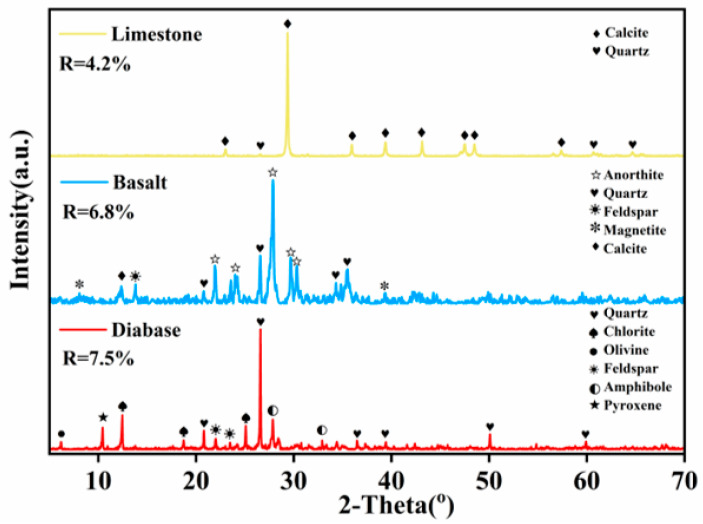
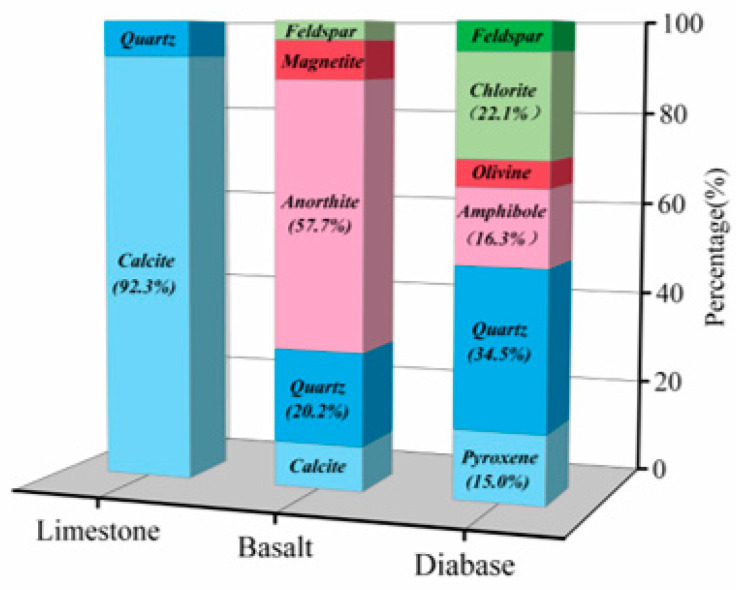
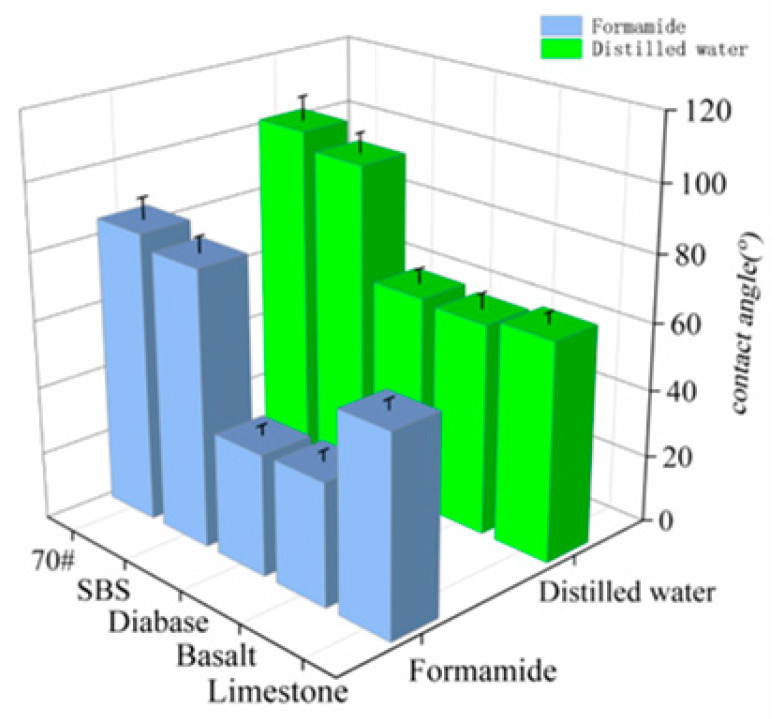
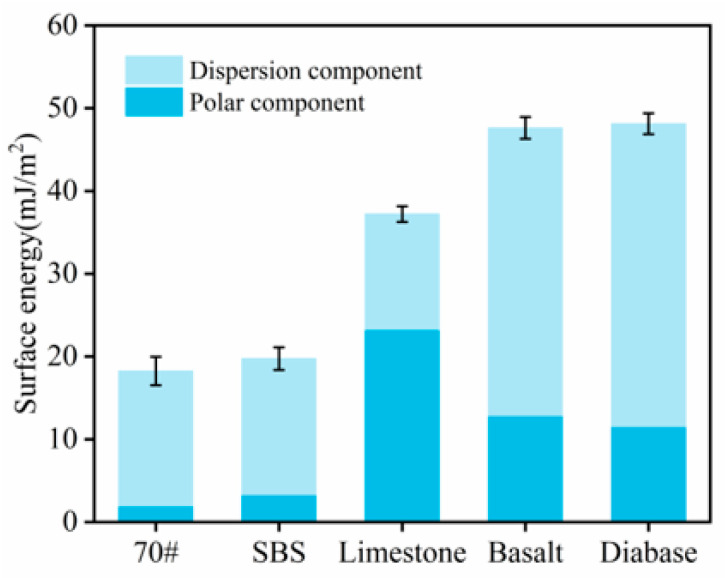
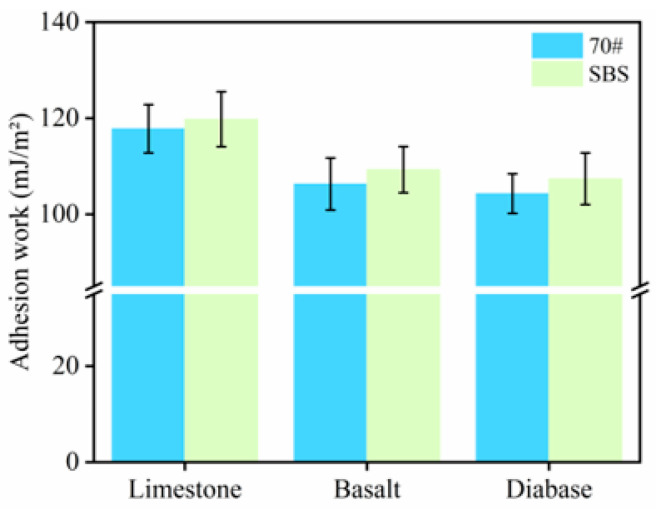
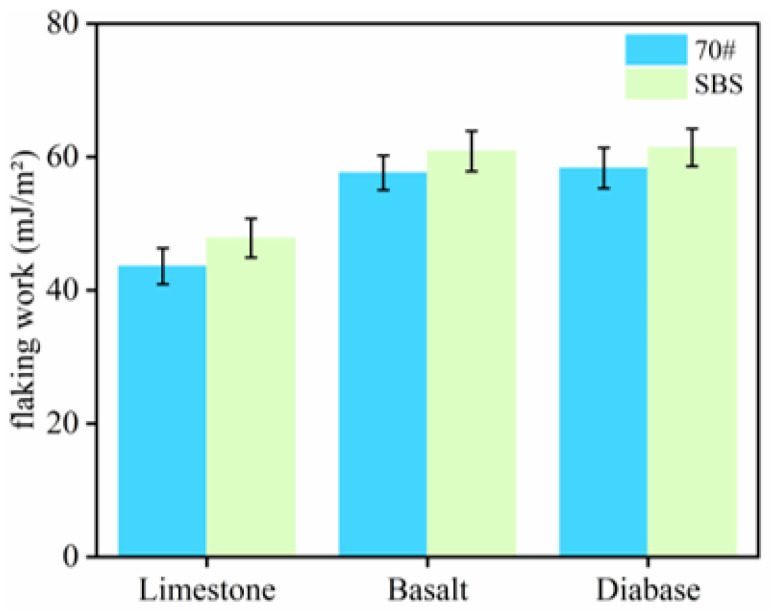
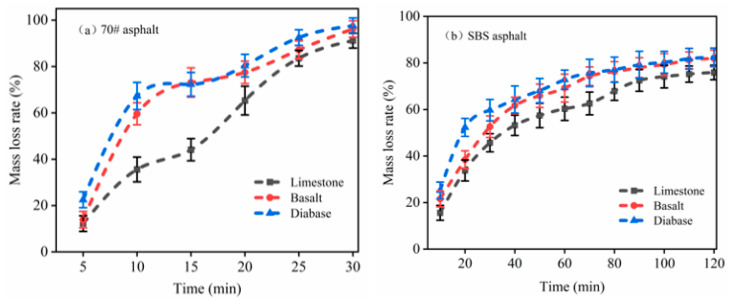
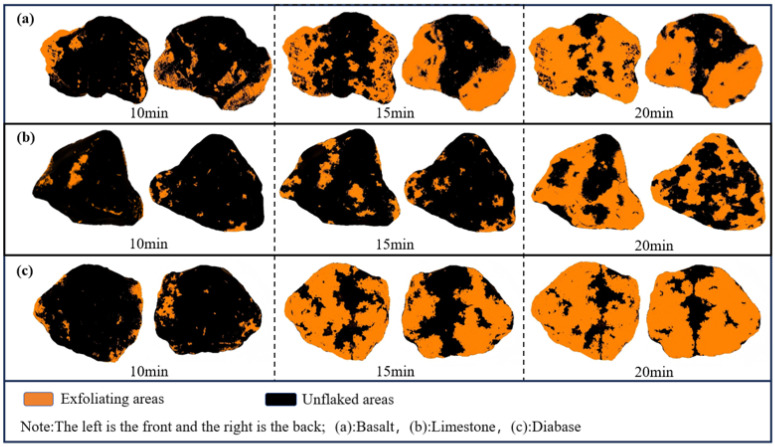
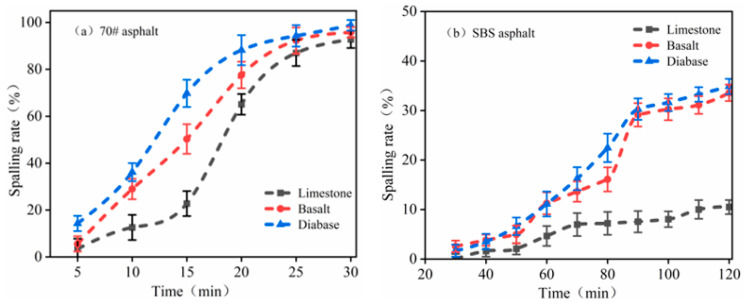
To study the effect of aggregate type on the adhesion between asphalt and aggregate, limestone, basalt, diabase, and 70# asphalt with SBS asphalt were selected. The mineral phase composition of the aggregates was analyzed by X-ray diffraction. The surface energy theory was used to calculate the adhesion work and the work of flaking. The modified water boiling method combined with image processing technology was used to quantitatively characterize the flaking behavior of the asphalt. The results show that the aggregate type is closely related to the asphalt-aggregate adhesion. The mineral compositions of different types of aggregates vary significantly, with limestone, being a strongly alkaline aggregate predominantly comprising CaCO3, exhibiting better adhesion with asphalt. The contact angle test and modified boiling method also yielded the same results, and the adhesion relationship with asphalt was limestone > basalt > diabase. Image processing technology effectively characterizes the spalling situation of asphalt and conducts quantitative analysis.
Keywords: asphalt–aggregate adhesion; image processing techniques; surface energy; water boiling test.
Conflict of interest statement
Enlin Feng was employed by the Sichuan Zhen Tong Inspection Co., Ltd. The remaining authors declare that the research was conducted in the absence of any commercial or financial relationships that could be construed as a potential conflict of interest.
Figures
References
-
- Su A., Yin H., Bao S., Zhao J., Li J., Li S. A multiscale study of the influence of aggregate type on adhesion at the asphalt–aggregate interface. AIP Adv. 2024;14:055207. doi: 10.1063/5.0204552. - DOI
-
- Wang H., Lin E., Xu G. Molecular dynamics simulation of asphalt-aggregate interface adhesion strength with moisture effect. Int. J. Pavement Eng. 2017;18:414–423. doi: 10.1080/10298436.2015.1095297. - DOI
-
- Zhu S., Kong L., Peng Y., Chen Y., Zhao T., Jian O., Zhao P., Sheng X., Li Z. Mechanisms of interface electrostatic potential induced asphalt-aggregate adhesion. Constr. Build. Mater. 2024;438:137255. doi: 10.1016/j.conbuildmat.2024.137255. - DOI
-
- Tang Y., Fu Z., Raos G., Ma F., Zhao P., Hou Y. Molecular dynamics simulation of adhesion at the asphalt-aggregate interface: A review. Surf. Interfaces. 2024;44:103706. doi: 10.1016/j.surfin.2023.103706. - DOI
Grants and funding
- TCEM-2023-06/The National & Local Joint Engineering Research Center of Transportation and Civil Engineering Materials, Chongqing Jiaotong University
- 22zx7121/The Scientific research fund of Southwest University of Science and Technology
- 2024QLK12/2024 Science and Technology project of Guizhou Highway Bureau
- 2025ZNSFSC1319/The Natural Science Foundation Project of Sichuan Province
LinkOut - more resources
Full Text Sources
