


Balloon Eustachian Tuboplasty: A Systematic Review of Technique, Safety, and Clinical Outcomes in Chronic Obstructive Eustachian Tube Dysfunction
- PMID: 40805865
- PMCID: PMC12345958
- DOI: 10.3390/healthcare13151832
Balloon Eustachian Tuboplasty: A Systematic Review of Technique, Safety, and Clinical Outcomes in Chronic Obstructive Eustachian Tube Dysfunction
Abstract
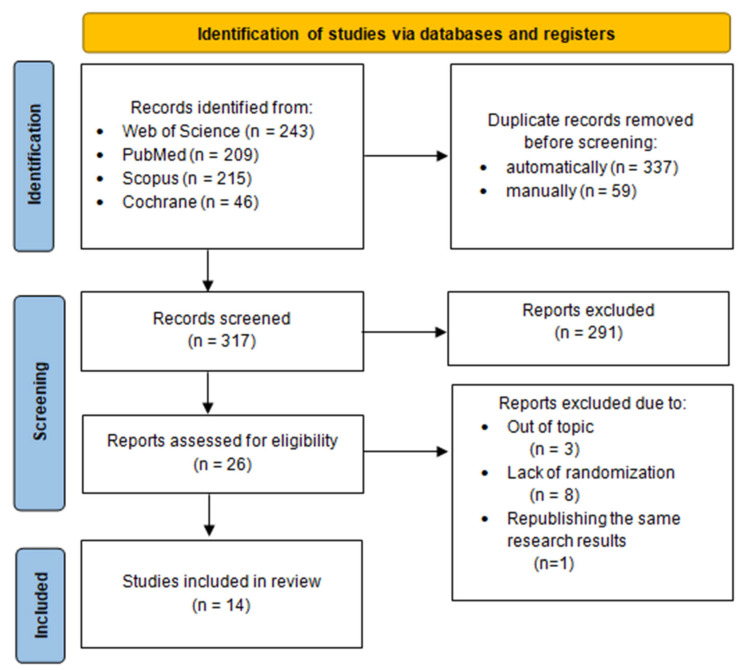
Background/Objectives: Obstructive Eustachian tube dysfunction (OETD) is common in adults and may lead to middle-ear conditions such as atelectasis and cholesteatoma. The ETDQ-7 questionnaire is used to assess symptom severity. Balloon dilation of the Eustachian tube (BDET) is a minimally invasive treatment with variable outcomes. This review evaluates the safety and effectiveness of BDET. Methods: A systematic review was conducted following PRISMA 2020 guidelines. Four databases (PubMed, Scopus, Cochrane, Web of Science) were searched using ETD- and BDET-related terms, with the last search on 11 April 2025. Randomized trials were selected based on predefined criteria, and data were extracted by two independent reviewers. Discrepancies were resolved by consensus. Results: This systematic review included 14 studies on BDET published between 2013 and 2025. BDET improved otoscopic findings, Valsalva maneuver (VM) performance, and tympanometry (TMM), particularly within the first 6 weeks. ETDQ-7 scores generally indicated symptom improvement, though pure tone audiometry (PTA) showed no significant changes. Most procedures were performed under general anesthesia, with some studies showing similar outcomes under local anesthesia. Combining BDET with other interventions produced mixed results. Reported complications were rare. Conclusions: BDET is a safe, low-risk procedure that effectively reduces tympanic membrane retraction and improves VM and TMM results. While it relieves ETD symptoms in many patients, evidence for long-term efficacy and impact on PTA is limited.
Keywords: BDET; ETD; ETDQ-7; balloon dilation; eustachian tube; tuboplasty.
Conflict of interest statement
The authors declare no conflicts of interest.
Figures
References
-
- Schilder A.G., Bhutta M.F., Butler C.C., Holy C., Levine L.H., Kvaerner K.J., Norman G., Pennings R.J., Poe D., Silvola J.T., et al. Eustachian tube dysfunction: Consensus statement on definition, types, clinical presentation and diagnosis. Clin. Otolaryngol. 2015;40:407–411. doi: 10.1111/coa.12475. - DOI - PMC - PubMed
Publication types
Grants and funding
LinkOut - more resources
Full Text Sources
Miscellaneous
