


Neurocognitive and Psychosocial Interactions in Atrial Fibrillation: Toward a Holistic Model of Care
- PMID: 40805894
- PMCID: PMC12346523
- DOI: 10.3390/healthcare13151863
Neurocognitive and Psychosocial Interactions in Atrial Fibrillation: Toward a Holistic Model of Care
Abstract
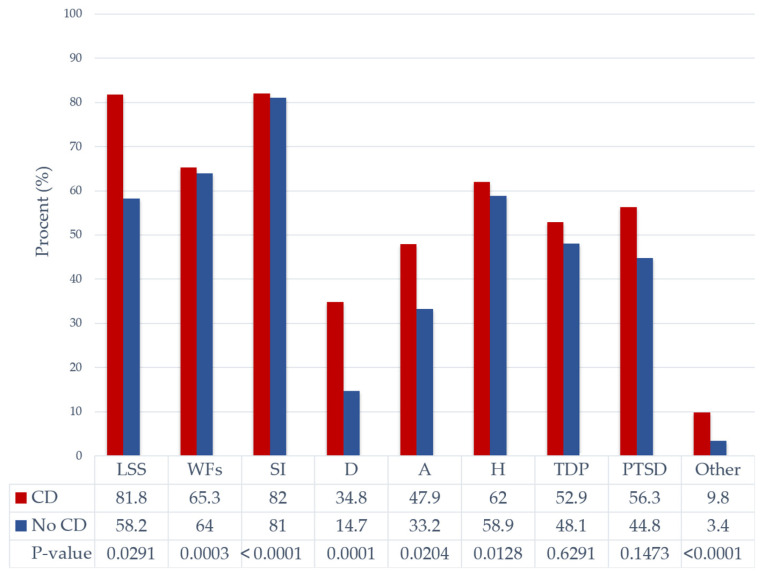
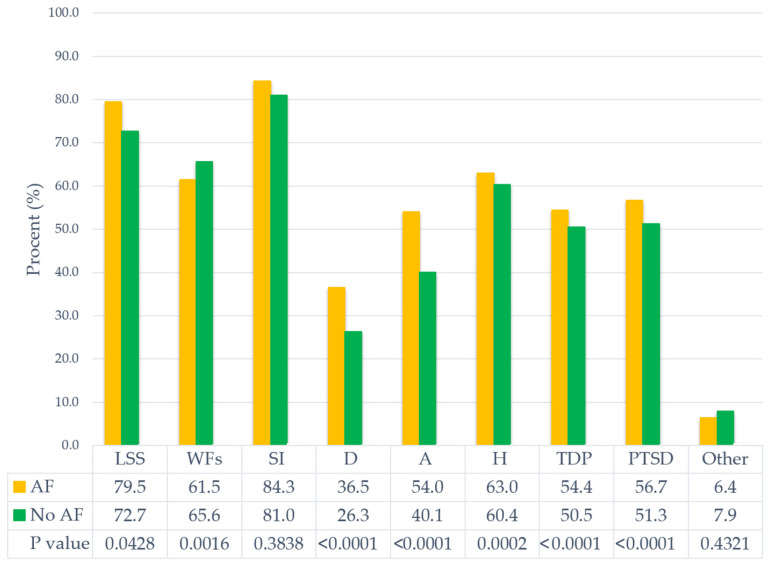
Background/Objectives: Psychosocial (PS) factors and cognitive dysfunction (CD) in patients with atrial fibrillation (AF) may negatively impact treatment compliance. The PS profile covers multiple psychological and socio-economic factors, although research is mostly limited to depression, anxiety, and work stress. This study assessed the prevalence of a broad range of PS factors in patients with AF and their relationship with cognitive decline. Methods: We retrospectively analyzed data from patients referred to a cardiovascular rehabilitation clinic between March 2017 and April 2023 who underwent standardized assessments of PS factors, cognition, and quality of life. Results: Of the 798 included patients, 230 (28.8%) had AF, with a mean age of 68.07 years (SD 9.60 years). Six of nine PS factors were present in more than half of the overall sample. Compared to non-AF patients, those with AF showed significantly higher levels of social isolation, depression, and hostility, whereas low socioeconomic status, family and work-related stress, and other mental disorders were more frequent in the non-AF group. CD was present in 67.4% of the total cohort and was more prevalent in AF patients with a higher PS burden. Patients with permanent AF reported the poorest health status. Conclusions: Integrating assessments of PS factors and cognition in cardiac rehabilitation is feasible and supports a more comprehensive, patient-centred model of care in AF.
Keywords: atrial fibrillation; cardiovascular disease; cardiovascular rehabilitation; cognitive dysfunction: psychosocial distress; mental health; psychosocial factor; quality of life in atrial fibrillation.
Conflict of interest statement
The authors declare no conflicts of interest.
Figures
References
-
- Martin S.S., Aday A.W., Almarzooq Z.I., Anderson C.A.M., Arora P., Avery C.L., Baker-Smith C.M., Barone Gibbs B., Beaton A.Z., Boehme A.K., et al. American Heart Association Council on Epidemiology and Prevention Statistics Committee and Stroke Statistics Subcommittee. 2024 Heart Disease and Stroke Statistics: A Report of US and Global Data From the American Heart Association. Circulation. 2024;149:e347–e913. doi: 10.1161/CIR.0000000000001209. - DOI - PMC - PubMed
-
- Pamporis K., Karakasis P., Sagris M., Theofilis P., Milaras N., Pantelidaki A., Mourouzis I., Fragakis N., Vlachos K., Kordalis A., et al. Prevalence of asymptomatic atrial fibrillation and risk factors associated with asymptomatic status: A systematic review and meta-analysis. Eur. J. Prev. Cardiol. 2025:zwaf138. doi: 10.1093/eurjpc/zwaf138. - DOI - PubMed
LinkOut - more resources
Full Text Sources
Miscellaneous
