


Health Literacy and Nutrition of Adolescent Patients with Inflammatory Bowel Disease
- PMID: 40806043
- PMCID: PMC12348946
- DOI: 10.3390/nu17152458
Health Literacy and Nutrition of Adolescent Patients with Inflammatory Bowel Disease
Abstract
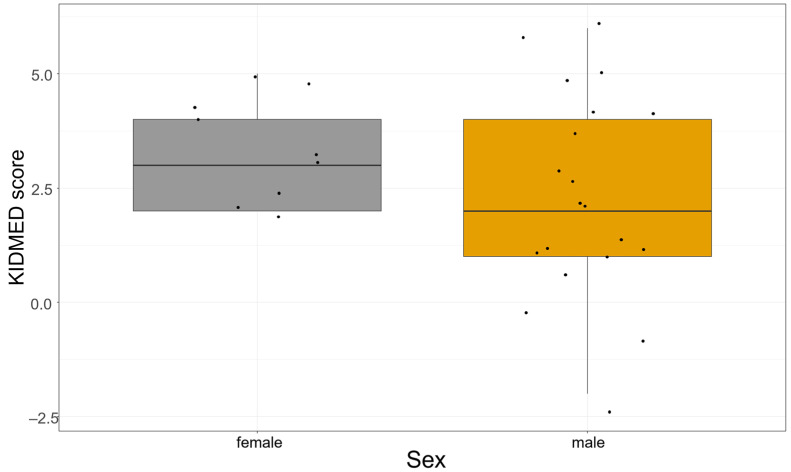
Background/Objectives: Nutrition in inflammatory bowel disease (IBD) is a central concern for both patients and healthcare professionals, as it plays a key role not only in daily life but also in disease outcomes. The Mediterranean diet represents a healthy dietary pattern that may be suitable in many cases of IBD. Among other factors, health literacy (HL) influences patients' dietary habits and their ability to follow nutritional recommendations. The aim of this study was to assess HL and dietary patterns in adolescent and pediatric patients with IBD. Methods: We conducted a cross-sectional study that included a total of 99 participants (36 patients with IBD receiving biological therapy recruited from a single center and 63 healthy controls). HL was assessed using the Newest Vital Sign (NVS) tool regardless of disease activity, whereas diet quality was evaluated by the KIDMED questionnaire exclusively in patients in remission. Linear regression models were used to evaluate the effects of sex, age and group (patients vs. control) on NVS and KIDMED scores. Results: Most participants (87.9%) had an adequate HL, which was positively associated with age. While the most harmful dietary habits (such as frequent fast-food consumption) were largely absent in the patient group, KIDMED scores indicated an overall poor diet quality. Conclusions: Although HL increased with age and was generally adequate in this cohort, it did not translate into healthier dietary patterns as measured by the KIDMED score. Further research with larger, more diverse samples is needed to clarify the relationship between HL and dietary adherence in adolescents with IBD.
Keywords: Mediterranean diet; adolescent; health literacy; inflammatory bowel disease; nutrition.
Conflict of interest statement
The authors declare no conflicts of interest.
Figures



References
-
- van Rheenen P.F., Aloi M., Assa A., Bronsky J., Escher J.C., Fagerberg U.L., Gasparetto M., Gerasimidis K., Griffiths A., Henderson P., et al. The Medical Management of Paediatric Crohn’s Disease: An ECCO-ESPGHAN Guideline Update. J. Crohns Colitis. 2021;15:jjaa161. doi: 10.1093/ecco-jcc/jjaa161. - DOI - PubMed
-
- Sigall Boneh R., Westoby C., Oseran I., Sarbagili-Shabat C., Albenberg L.G., Lionetti P., Manuel Navas-López V., Martín-de-Carpi J., Yanai H., Maharshak N., et al. The Crohn’s Disease Exclusion Diet: A Comprehensive Review of Evidence, Implementation Strategies, Practical Guidance, and Future Directions. Inflamm. Bowel Dis. 2024;30:1888–1902. doi: 10.1093/ibd/izad255. - DOI - PMC - PubMed
MeSH terms
LinkOut - more resources
Full Text Sources
Medical
