


Gut-Microbiota-Derived Metabolites and Probiotic Strategies in Colorectal Cancer: Implications for Disease Modulation and Precision Therapy
- PMID: 40806086
- PMCID: PMC12348773
- DOI: 10.3390/nu17152501
Gut-Microbiota-Derived Metabolites and Probiotic Strategies in Colorectal Cancer: Implications for Disease Modulation and Precision Therapy
Abstract
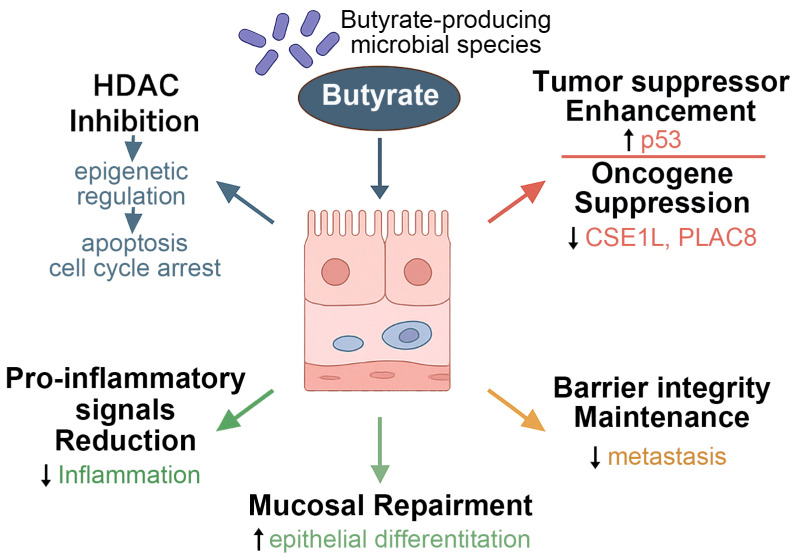
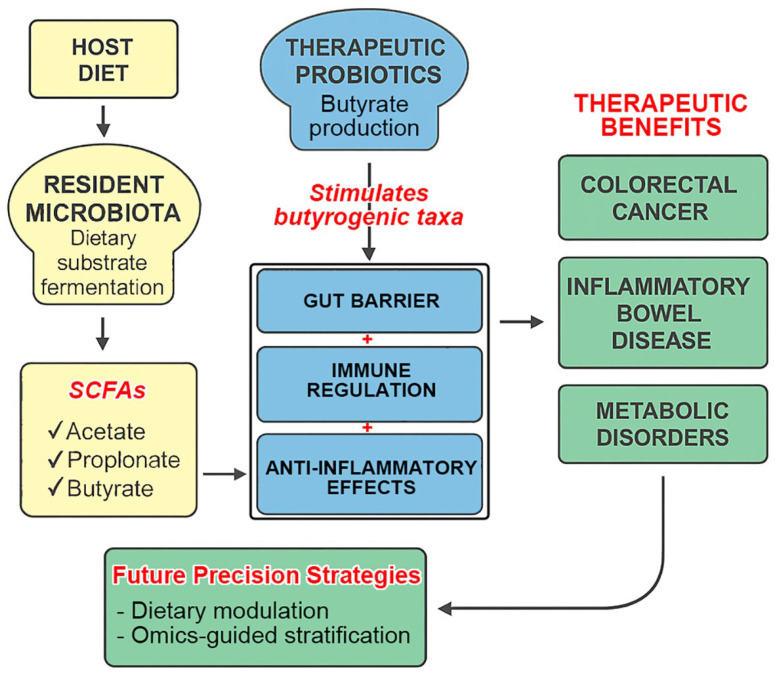
The human gut microbiota significantly influences host health through its metabolic products and interaction with immune, neural, and metabolic systems. Among these, short-chain fatty acids (SCFAs), especially butyrate, play key roles in maintaining gut barrier integrity, modulating inflammation, and supporting metabolic regulation. Dysbiosis is increasingly linked to diverse conditions such as gastrointestinal, metabolic, and neuropsychiatric disorders, cardiovascular diseases, and colorectal cancer (CRC). Probiotics offer therapeutic potential by restoring microbial balance, enhancing epithelial defenses, and modulating immune responses. This review highlights the physiological functions of gut microbiota and SCFAs, with a particular focus on butyrate's anti-inflammatory and anti-cancer effects in CRC. It also examines emerging microbial therapies like probiotics, synbiotics, postbiotics, and engineered microbes. Emphasis is placed on the need for precision microbiome medicine, tailored to individual host-microbiome interactions and metabolomic profiles. These insights underscore the promising role of gut microbiota modulation in advancing preventive and personalized healthcare.
Keywords: colorectal cancer (CRC); gut microbiota; microbiome therapeutics; probiotics; short-chain fatty acids (SCFAs).
Conflict of interest statement
The authors declare no conflicts of interest.
Figures
References
Publication types
MeSH terms
Substances
Grants and funding
LinkOut - more resources
Full Text Sources
Medical
