


Insights into the Molecular Mechanisms and Signaling Pathways of Epithelial to Mesenchymal Transition (EMT) in the Pathophysiology of Endometriosis
- PMID: 40806587
- PMCID: PMC12347505
- DOI: 10.3390/ijms26157460
Insights into the Molecular Mechanisms and Signaling Pathways of Epithelial to Mesenchymal Transition (EMT) in the Pathophysiology of Endometriosis
Abstract
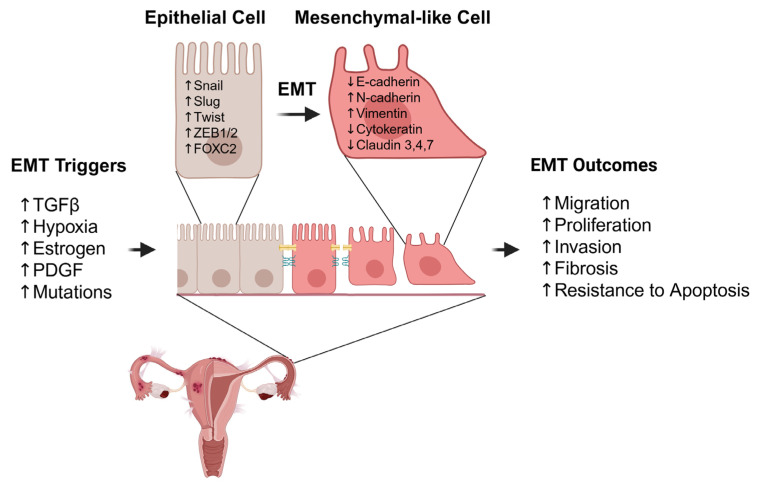
Endometriosis is a disease characterized by the presence of endometrial glands and stroma outside of the uterine corpus, often clinically presenting with pain and/or infertility. Ectopic lesions exhibit features characteristic of epithelial-to-mesenchymal transition (EMT), a process in which epithelial cells lose polarity and acquire mesenchymal traits, including migratory and invasive capabilities. During the process of EMT, epithelial traits are downregulated, while mesenchymal traits are acquired, with cells developing migratory ability, increasing proliferation, and resistance to apoptosis. EMT is promoted by exposure to hypoxia and stimulation by transforming growth factor-β (TGF-β), platelet-derived growth factor (PDGF), and estradiol. Signaling pathways that promote EMT are activated in most ectopic lesions and involve transcription factors such as Snail, Slug, ZEB-1/2, and TWIST-1/2. EMT-specific molecules present in the serum of women with endometriosis appear to have diagnostic potential. Strategies targeting EMT in animal models of endometriosis have demonstrated regression of ectopic lesions, opening the door for novel therapeutic approaches. This review summarizes the current understanding of the role of EMT in endometriosis and highlights potential targets for EMT-related diagnosis and therapeutic interventions.
Keywords: TGF-β; endometriosis; epithelial-to-mesenchymal transition; fibrosis.
Conflict of interest statement
The authors declare no conflicts of interest.
Figures
References
Publication types
MeSH terms
Substances
Grants and funding
LinkOut - more resources
Full Text Sources
Medical
Research Materials
