


Developments in the Study of Inert Gas Biological Effects and the Underlying Molecular Mechanisms
- PMID: 40806678
- PMCID: PMC12347430
- DOI: 10.3390/ijms26157551
Developments in the Study of Inert Gas Biological Effects and the Underlying Molecular Mechanisms
Abstract
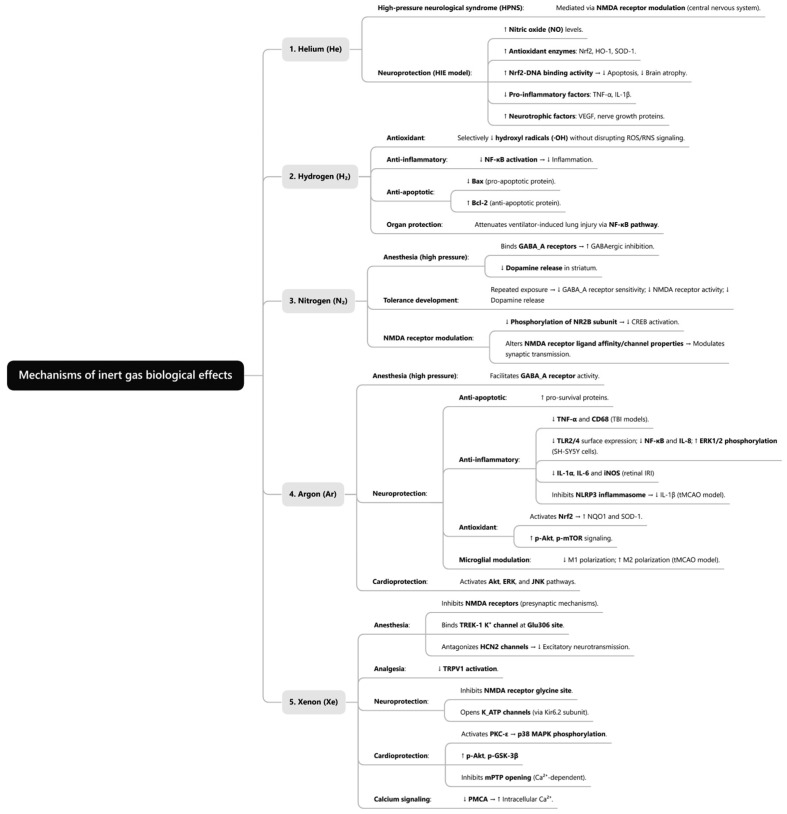
It has long been accepted that breathing gases that are physiologically inert include helium (He), neon (Ne), nitrogen (N2), argon (Ar), krypton (Kr), xenon (Xe), and hydrogen (H2). The term "inert gas" has been used to describe them due to their unusually high chemical stability. However, as investigations have advanced, many have shown that inert gas can have specific biological impacts when exposed to high pressure or atmospheric pressure. Additionally, different inert gases have different effects on intracellular signal transduction, ion channels, and cell membrane receptors, which are linked to their anesthetic and cell protection effects in normal or pathological processes. Through a selective analysis of the representative literature, this study offers a concise overview of the state of research on the biological impacts of inert gas and their molecular mechanisms.
Keywords: biological effect; inert gas; molecular mechanism; research progress.
Conflict of interest statement
The authors declare no conflicts of interest.
Figures
References
-
- Battino R., Seybold P., Campanell F. Correlations involving the solubility of gases in water at 298.15 K and 101325 Pa. J. Chem. Eng. Data. 2011;56:727–732. doi: 10.1021/je101070h. - DOI
Publication types
MeSH terms
Substances
LinkOut - more resources
Full Text Sources
Research Materials
