


Registry-Based Frequency and Clinical Characteristics of Inborn Errors of Immunity in Kazakhstan: A Retrospective Observational Cohort Study (2009-2023)
- PMID: 40806973
- PMCID: PMC12347398
- DOI: 10.3390/jcm14155353
Registry-Based Frequency and Clinical Characteristics of Inborn Errors of Immunity in Kazakhstan: A Retrospective Observational Cohort Study (2009-2023)
Abstract
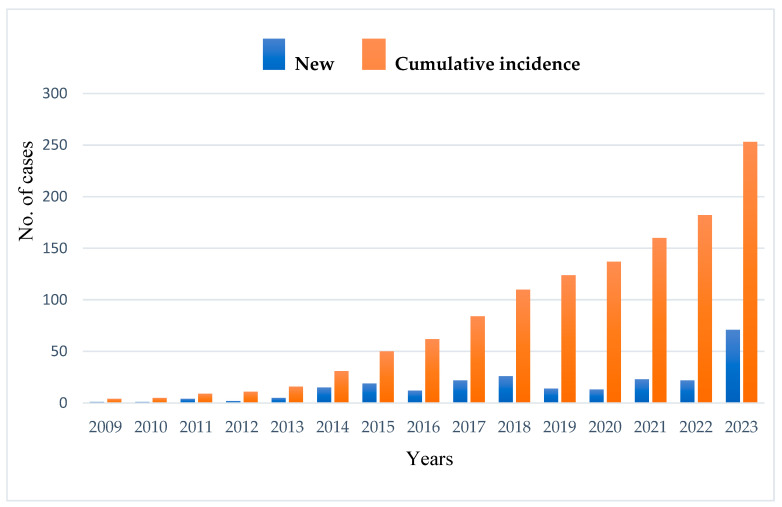
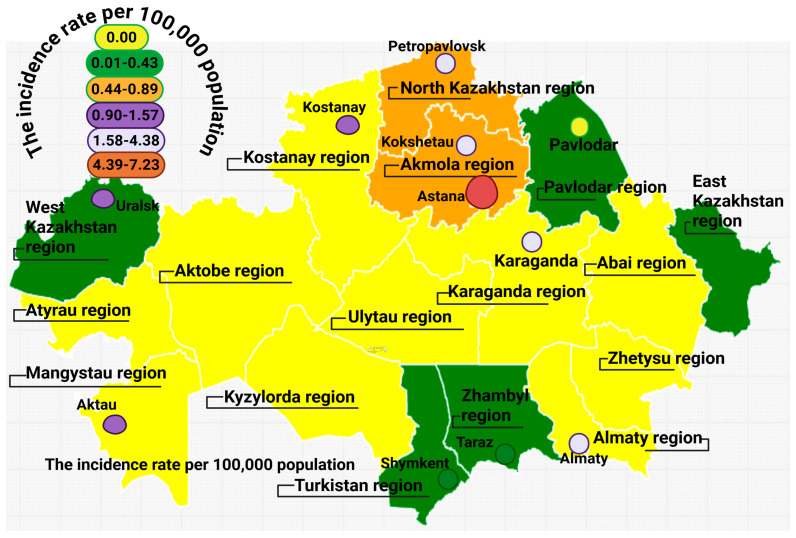
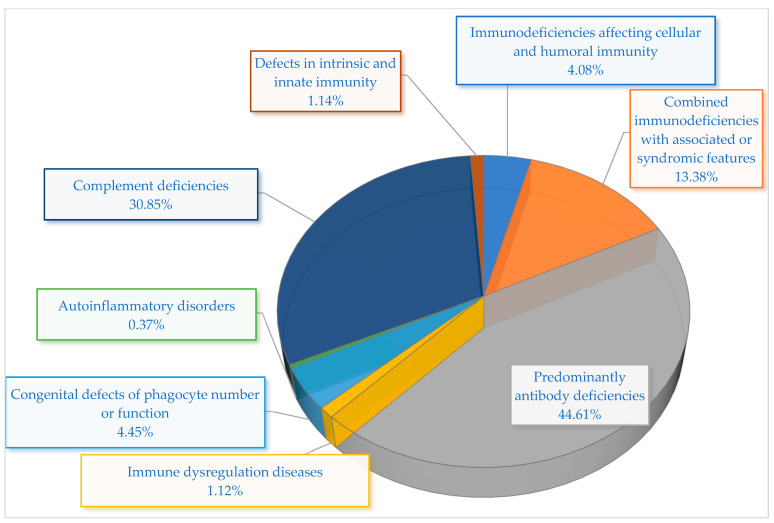
Background/Objectives: Inborn errors of immunity (IEIs) represent a wide spectrum of diseases characterized by a predisposition to recurrent infections, as well as increased susceptibility to autoimmune, atopic, and autoinflammatory diseases and malignancies. The aim of this study was to report the registry-based frequency and describe the clinical characteristics of IEIs among patients in the Republic of Kazakhstan. Methods: We analyzed data from 269 patients belonging to 204 families who were either self-referred or referred by healthcare providers to the University Medical Center of Nazarbayev University with suspected IEIs. All patients resided in various regions across Kazakhstan. Results: A total of 269 diagnosed cases were identified in the national registry. The estimated prevalence was 1.3 per 100,000 population. The gender ratio was nearly equal, with 139 males and 130 females. The median age at diagnosis was 5 years (range: 1 month to 70 years), while the mean age was 11.3 years. The most common diagnosis was humoral immunodeficiency, observed in 120 individuals (44.6%), followed by complement deficiencies in 83 individuals (30.8%). Combined immunodeficiencies with syndromic features were found in 35 patients (13%), and phagocytic cell defects were identified in 12 patients (4.5%). The predominant clinical manifestations included severe recurrent infections and autoimmune cytopenias, while atopic and autoinflammatory symptoms were reported less frequently. Conclusions: These findings contribute to a better understanding of the registry-based distribution and clinical spectrum of IEIs in Kazakhstan and underscore the importance of early diagnosis and targeted care for affected individuals.
Keywords: Kazakhstan; autoimmune disorders; congenital immune system defects; epidemiological data; inborn errors of immunity; malignancies; primary immunodeficiencies; recurrent infections.
Conflict of interest statement
The authors declare no conflict of interest.
Figures
References
-
- Tangye S.G., Al-Herz W., Bousfiha A., Cunningham-Rundles C., Franco J.L., Holland S.M., Klein C., Morio T., Oksenhendler E., Picard C., et al. Human Inborn Errors of Immunity: 2022 Update on the Classification from the International Union of Immunological Societies Expert Committee. J. Clin. Immunol. 2022;42:1473–1507. doi: 10.1007/s10875-022-01289-3. - DOI - PMC - PubMed
-
- Picard C., Gaspar H.B., Al-Herz W., Bousfiha A., Casanova J.-L., Chatila T., Crow Y.J., Cunningham-Rundles C., Etzioni A., Franco J.L., et al. International Union of Immunological Societies: 2017 Primary Immunodeficiency Diseases Committee Report on Inborn Errors of Immunity. J. Clin. Immunol. 2018;38:96–128. doi: 10.1007/s10875-017-0464-9. - DOI - PMC - PubMed
-
- Bousfiha A.A., Jeddane L., Moundir A., Poli M.C., Aksentijevich I., Cunningham-Rundles C., Hambleton S., Klein C., Morio T., Picard C., et al. The 2024 update of IUIS phenotypic classification of human inborn errors of immunity. J. Hum. Immun. 2025;1:e20250002. doi: 10.70962/jhi.20250002. - DOI
Grants and funding
LinkOut - more resources
Full Text Sources
