


Djulis (Chenopodium formosanum) Extract as a Promising Natural Agent Against Skin Aging
- PMID: 40807384
- PMCID: PMC12348743
- DOI: 10.3390/molecules30153209
Djulis (Chenopodium formosanum) Extract as a Promising Natural Agent Against Skin Aging
Abstract
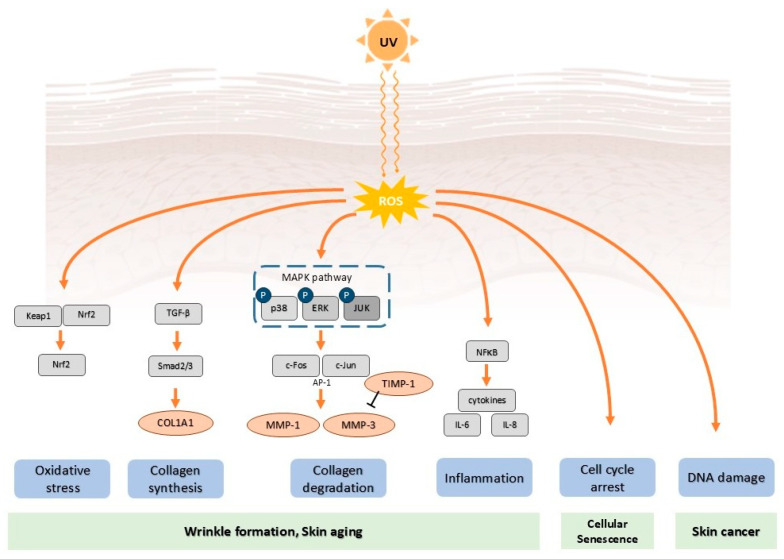
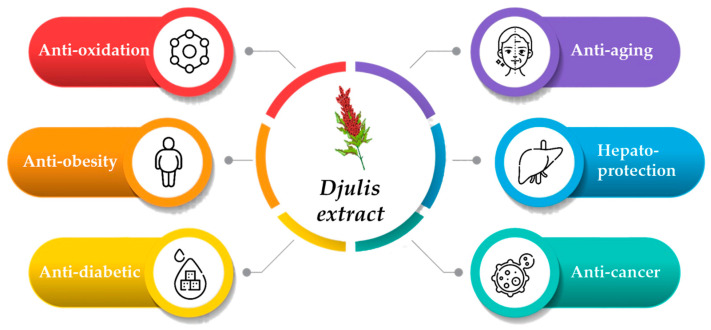
Photoaging, predominantly induced by ultraviolet radiation, is a primary driver of premature skin aging, characterized by complex molecular mechanisms including oxidative stress, inflammation, matrix metalloproteinase activation, and extracellular matrix degradation. Consequently, there is growing scientific interest in identifying effective natural agents to counteract skin aging and photoaging. Djulis (Chenopodium formosanum), an indigenous Taiwanese pseudocereal from the Amaranthaceae family, has emerged as a promising candidate for skincare applications because of its rich phytochemicals and diverse bioactivities. This review describes the current understanding of the molecular mechanisms underlying photoaging and examines the therapeutic potential of djulis extract as a multifunctional agent for skin aging. Its mechanisms of action include enhancing antioxidant defenses, modulating inflammatory pathways, preserving the extracellular matrix, and inhibiting the formation of advanced glycation end products. Bioactive constituents of djulis extract, including phenolic compounds, flavonoids, and betanin, are known to exhibit potent antioxidant and photoprotective activities by modulating multiple molecular pathways essential for skin protection. The bioactivities of djulis in in vitro and animal studies, and four skin clinical trials of djulis extract products are presented in this review article. Ultimately, this review provides an overview that supports the potential of djulis extract in the development of evidence-based skincare formulations for the prevention and treatment of skin aging.
Keywords: Chenopodium formosanum; advanced glycation end products; anti-inflammatory; antioxidant; matrix metalloproteinases; photoaging; phytochemicals.
Conflict of interest statement
The authors declare no conflicts of interest.
Figures
References
Publication types
MeSH terms
Substances
Grants and funding
LinkOut - more resources
Full Text Sources
Medical
