


Factors Associated with Stunting among Infants and Young Children in the Fourth District of Camarines Sur, Philippines
- PMID: 40809708
- PMCID: PMC12340443
- DOI: 10.47895/amp.vi0.10849
Factors Associated with Stunting among Infants and Young Children in the Fourth District of Camarines Sur, Philippines
Abstract
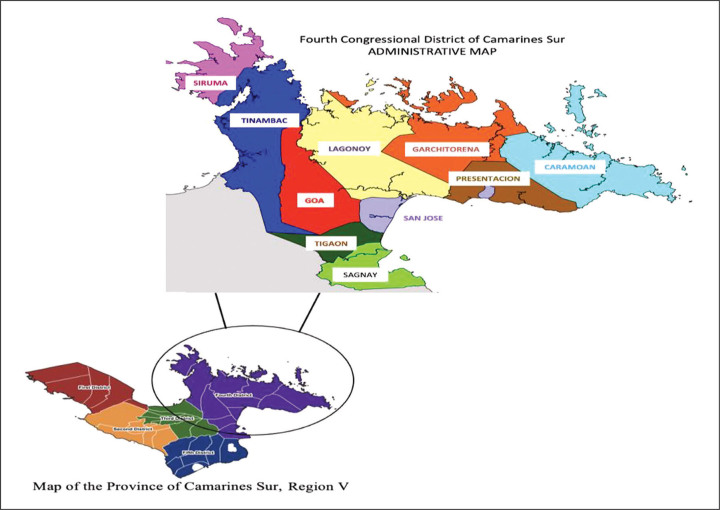
Objective: This study aimed to investigate the determinants linked to stunting among infants and young children aged 0-23 months in the Fourth District of Camarines Sur.
Methods: An analytical cross-sectional study was conducted among 628 primary caregivers with infants and young children aged 0-23 months in four municipalities of the Fourth District of Camarines Sur, Philippines, using a twostage stratified random sampling design. Data on sociodemographic and economic factors were collected through face-to-face interviews. Infant and young child feeding (IYCF) indicators were assessed using a list-based approach, while weight and length were evaluated using the World Health Organization Anthro Plus software. Descriptive statistics and multiple logistic regression were done using R statistical software version 4.3.1.
Results: The study revealed that the prevalence of stunting was of significant public health concern, reaching 42.8%. Holding other variables constant, age of the child (OR=0.77; 95% CI: 0.63-0.94), having college undergraduate mothers (OR=0.26; 95% CI: 0.05-1.28), and belonging to a poor income household (OR=0.40; 95% CI: 0.14-0.88) were associated with stunting among infants aged 0.01-6.00 months. Moreover, after controlling for the confounding effects of other variables, age (OR=1.09; 95% CI: 1.05-1.14) and sex of the child (OR=1.55; 95% CI: 1.05-2.28) were associated with stunting among older children aged 6.00-23.99 months.
Conclusion: This study emphasizes the challenge of stunting in the Fourth District of Camarines Sur. None of the IYCF indicators were associated with stunting; however, maternal education, the child's age, sex, and socioeconomic status were identified as significant factors influencing stunting. Addressing these determinants through targeted interventions focusing on improving maternal education and enhancing socio-economic conditions were crucial to reducing stunting in the study areas.
Keywords: growth disorders; infant nutrition disorders; nutritional status; risk factors.
© The Author(s) 2025.
Conflict of interest statement
All authors declared no known conflicts of interest and that the institution did not gain any financial or proprietary advantage from the study results.
Figures
References
-
- World Health Organization . Malnutrition [Internet]. 2024. [cited 2024 Jun]. Available from: https://www.who.int/news-room/fact-sheets/detail/malnutrition.
-
- United Nations Children’s Fund (UNICEF) Philippines . Addressing stunting and malnutrition should go beyond Nutrition Month celebration [Internet]. 2020. [cited 2024 Jun]. Available from: https://www.unicef.org/philippines/press-releases/addressing-stunting-an....
-
- World Health Organization . Stunting in a nutshell [Internet]. November 19, 2015. [cited 2024 Jun]. Available from: https://www. ho.int/news/item/19-11-2015-stunting-in-a-nutshell.
-
- UNICEF/WHO/World Bank Group . Levels and trends in child malnutrition: UNICEF/WHO/World Bank Group joint child malnutrition estimates: key findings of the 2023 edition [Internet]. 2023. [cited 2024 Jun]. Available from: https://www.who.int/publications/i/item/9789240073791.
LinkOut - more resources
Full Text Sources