


Simulation-based dosimetry of transcranial and intranasal photobiomodulation of the human brain: the roles of wavelength, power density, and skin tone
- PMID: 40809965
- PMCID: PMC12339309
- DOI: 10.1364/BOE.567345
Simulation-based dosimetry of transcranial and intranasal photobiomodulation of the human brain: the roles of wavelength, power density, and skin tone
Abstract
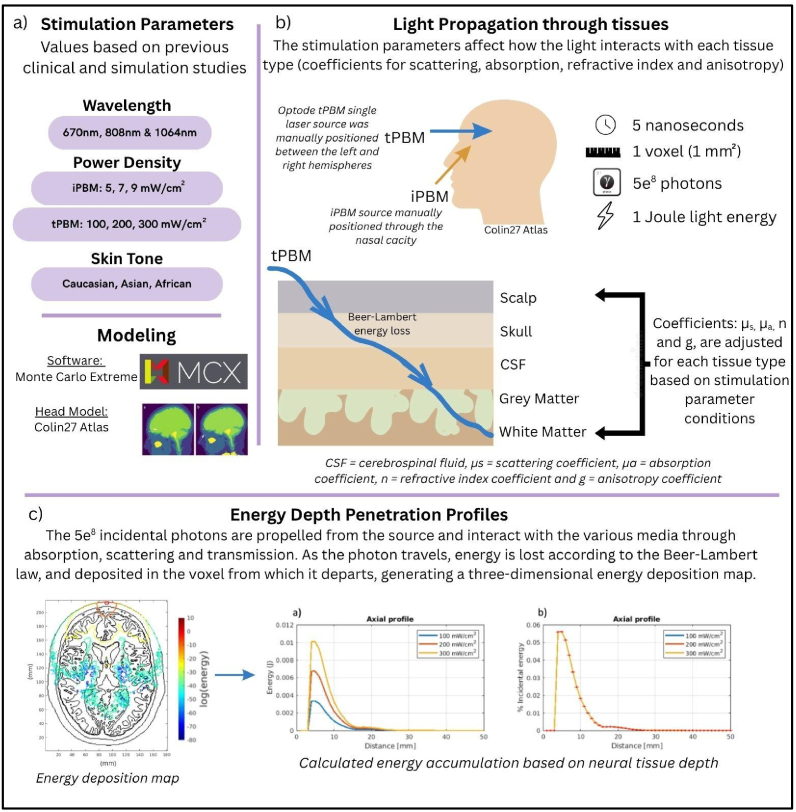
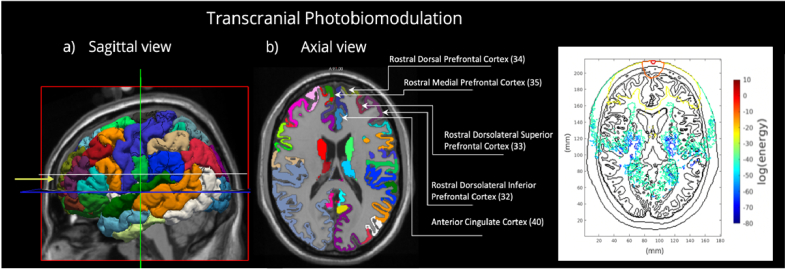
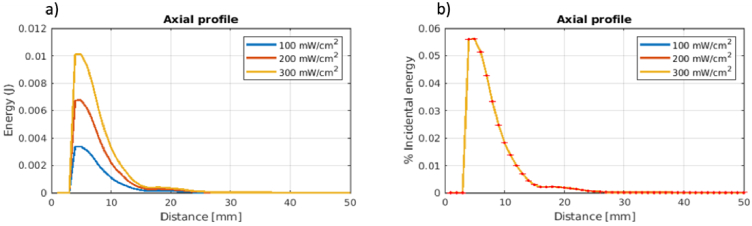
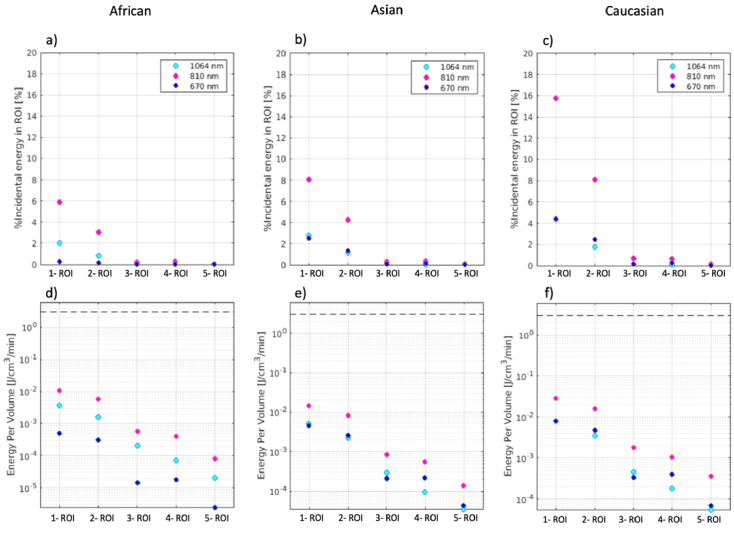
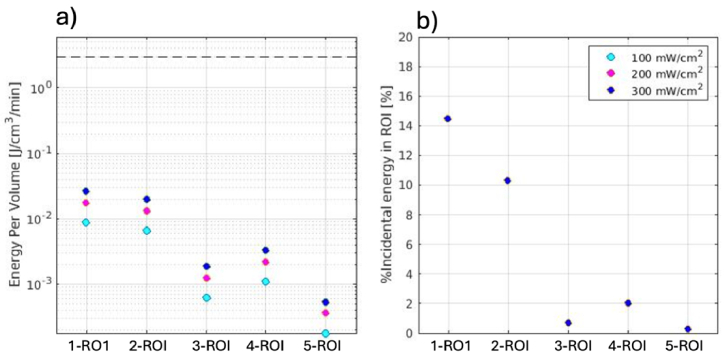
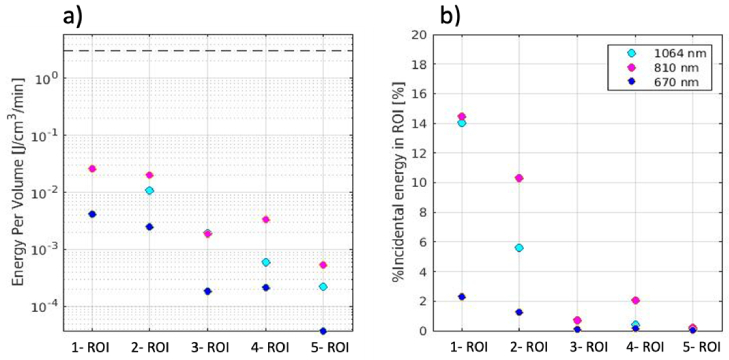
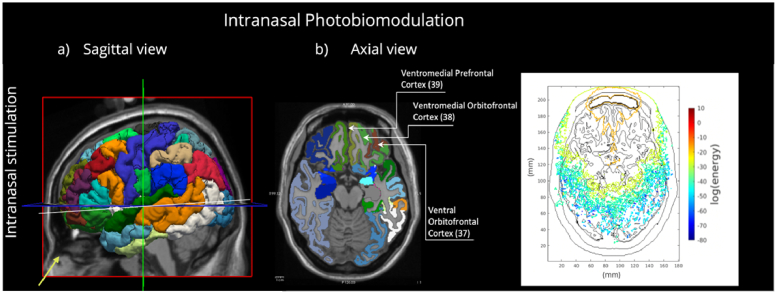
Photobiomodulation (PBM) using near-infrared (NIR) light is a novel neuromodulation technique. However, despite the many in vivo studies, the stimulation protocols for PBM vary across studies, and the current understanding of the physiological effects of PBM, as well as the dose dependence, is limited. Specifically, although NIR light can be absorbed by melanin in the skin, the understanding of how skin tones compare and how their influence interacts with other dose parameters remains limited. This study investigates the effect of melanin, optical power density, and wavelength on light penetration and energy accumulation via forehead and intranasal PBM. We use Monte Carlo simulations of a single laser source for transcranial (tPBM, forehead position) and intranasal (iPBM, nostril position) irradiation on a healthy human brain model. We investigate wavelengths of 670, 810, and 1064 nm at various power densities in combination with light ("Caucasian"), medium ("Asian"), and dark ("African") skin tone categories as defined in the literature. Our simulations show that a maximum of 15% of the incidental energy for tPBM and 1% for iPBM reaches the cortex from the light source. The rostral dorsal prefrontal cortex and the ventromedial prefrontal cortex accumulate the highest light energy in tPBM and iPBM, respectively, for both wavelengths. Notably, we show that nominally "Caucasian" skin allows the highest energy accumulation of all three skin tones. Moreover, the 810 nm wavelength for tPBM and the 1064 nm wavelength for iPBM produced the highest cortical energy accumulation, which was linearly correlated with optical power density, but these variations could be overridden by a difference in skin tone in the tPBM case.The simulations serve as a starting point for enabling hypothesis generation for in vivo PBM investigations. This study is the first to account for skin tone as a tPBM dosing consideration. For the future of PBM research, it is important to evaluate combinations of stimulation parameters (wavelength, optical power density, pulsation frequency, duration, light source) when working to determine an optimal dosage for PBM-based therapy.
© 2025 Optica Publishing Group.
Conflict of interest statement
Lew Lim is the CRO and the shareholder of Vielight Inc. Nazanin Hosseinkhah is the director of special projects of Vielight Inc. Paolo Cassano is the Cofounder, chair of scientific advisory board, board member and stock owner of Niraxx Inc.
Figures
References
-
- Wurtman R. J., “The Effects of Light on the Human Body,” Sci. Am. 233(1), 68–79 (1975).https://www.jstor.org/stable/24949844 - PubMed
LinkOut - more resources
Full Text Sources
Miscellaneous