


Potential of Cannabidiol (CBD) to overcome extensively drug-resistant Acinetobacter baumannii
- PMID: 40817249
- PMCID: PMC12357442
- DOI: 10.1186/s12906-025-05056-w
Potential of Cannabidiol (CBD) to overcome extensively drug-resistant Acinetobacter baumannii
Abstract
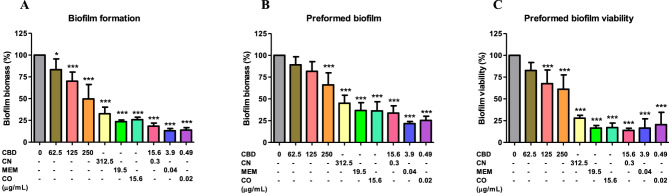
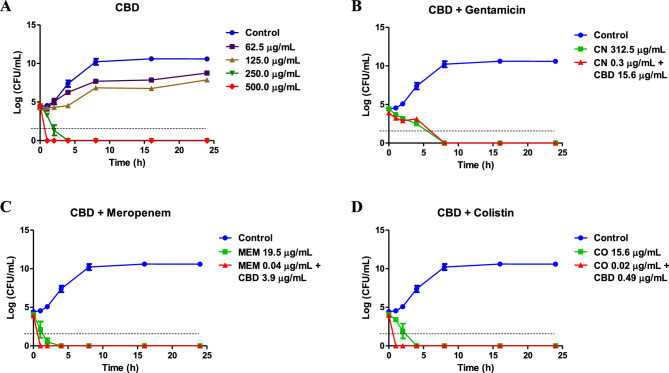
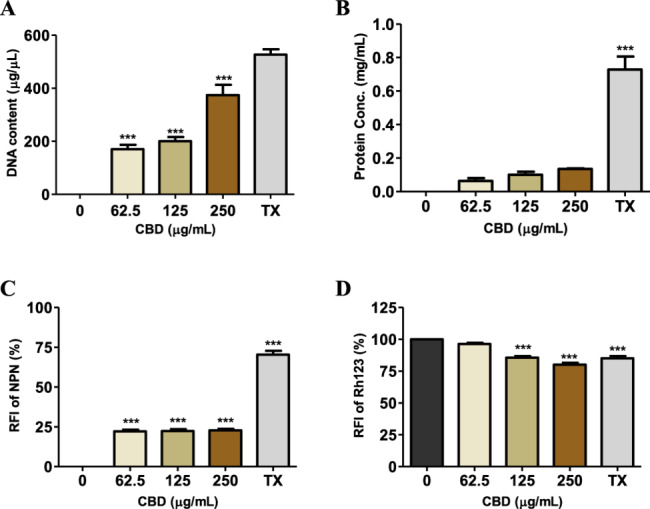
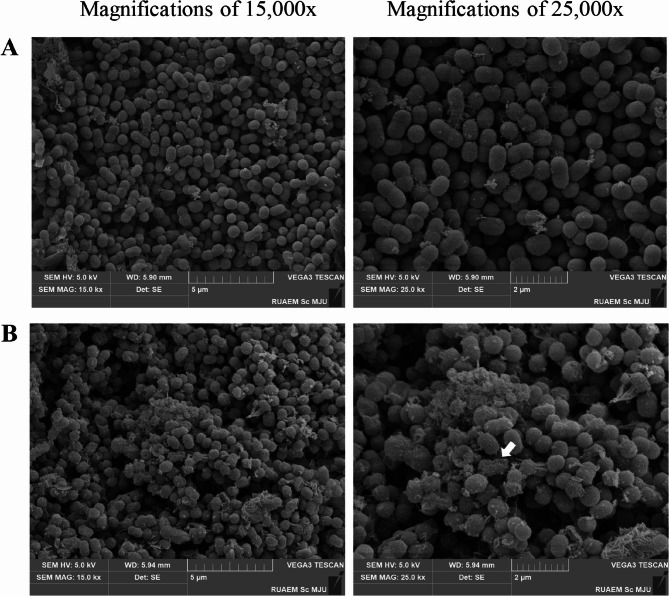
Extensively drug-resistant (XDR) Acinetobacter baumannii poses a serious clinical challenge due to its resistance to nearly all available antibiotics, including carbapenems and colistin. Cannabidiol (CBD), a non-psychoactive phytochemical from Cannabis sativa L., has recently shown promising antimicrobial activity. This study evaluates the antibacterial and anti-biofilm effects of CBD against XDR A. baumannii isolates and explores its mechanism of action and potential as an adjunct therapeutic agent. Twenty-six A. baumannii isolates collected from ICU medical devices were identified using MALDI-TOF/MS. Antimicrobial susceptibility was assessed by disk diffusion and broth microdilution to determine MICs and MBCs for CBD and standard antibiotics. Synergistic effects were evaluated via checkerboard assays and FICI values. Biofilm inhibition and eradication were assessed using crystal violet and MTT assays. Time-kill studies, membrane integrity assays (DNA/protein leakage, NPN uptake, membrane depolarization), and scanning electron microscopy (SEM) were employed to investigate bactericidal kinetics and membrane-disruptive mechanisms. CBD exhibited activity against antimicrobial resistance isolates (MIC: 3.9 to > 500 µg/mL). Remarkably, CBD synergized with gentamicin, meropenem, and colistin, reducing their effective concentrations by up to 1,000-fold. Combination therapy significantly inhibited and eradicated biofilms. Time-kill assays demonstrated rapid, concentration-dependent killing, with complete bacterial clearance at 4× MIC within 2 h. Mechanistic assays and SEM confirmed that CBD induces extensive membrane damage. These findings highlight CBD's potential as an effective adjunct to conventional antibiotics for treating XDR A. baumannii infections, offering a novel strategy to counteract antimicrobial resistance.
Keywords: Acinetobacter baumannii; Antimicrobial resistant; Cannabidiol; Extensively drug resistant; Synergistic.
© 2025. The Author(s).
Conflict of interest statement
Declarations. Ethics approval and consent to participate: Not applicable. Consent for publication: Not applicable. Competing interests: The authors declare no competing interests.
Figures
References
-
- Pormohammad A, Mehdinejadiani K, Gholizadeh P, Nasiri MJ, Mohtavinejad N, Dadashi M, Karimaei S, Safari H, Azimi T. Global prevalence of colistin resistance in clinical isolates of acinetobacter baumannii: A systematic review and meta-analysis. Microb Pathog. 2020;139:103887. - PubMed
-
- Shi J, Sun T, Cui Y, Wang C, Wang F, Zhou Y, Miao H, Shan Y, Zhang Y. Multidrug resistant and extensively drug resistant acinetobacter baumannii hospital infection associated with high mortality: a retrospective study in the pediatric intensive care unit. BMC Infect Dis. 2020;20(1):597. - PMC - PubMed
-
- De Blasiis MR, Sciurti A, Baccolini V, Isonne C, Ceparano M, Iera J, De Vito C, Marzuillo C, Villari P, Migliara G. Impact of antibiotic exposure on antibiotic-resistant < em > Acinetobacter baumannii isolation in intensive care unit patients: a systematic review and meta-analysis. J Hosp Infect. 2024;143:123–39. - PubMed
-
- Sileem AE, Said AM, Meleha MS. Acinetobacter baumannii in ICU patients: A prospective study highlighting their incidence, antibiotic sensitivity pattern and impact on ICU stay and mortality. Egypt J Chest Dis Tuberculosis. 2017;66(4):693–8.
MeSH terms
Substances
Grants and funding
LinkOut - more resources
Full Text Sources
Medical
