


Therapeutic potential of cannabinoids for treating atopic dermatitis
- PMID: 40818974
- PMCID: PMC12357451
- DOI: 10.1186/s42238-025-00317-4
Therapeutic potential of cannabinoids for treating atopic dermatitis
Abstract
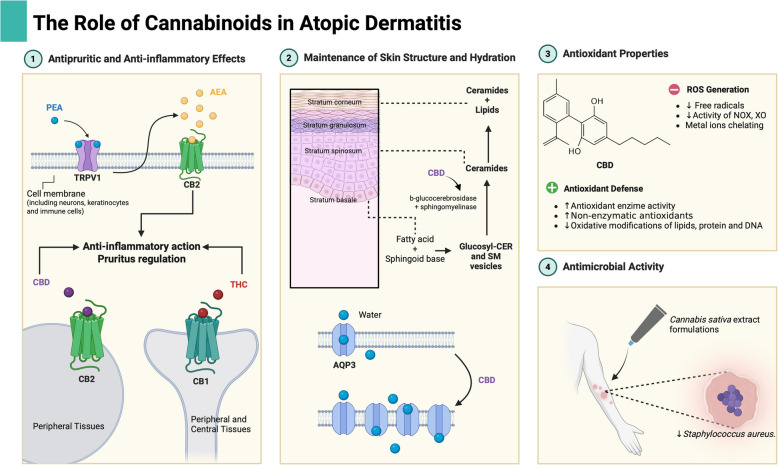
This review aims to assess the therapeutic potential of cannabinoids as complementary treatments for atopic dermatitis. Atopic dermatitis (AD) is a skin disease characterized by the loss of skin barrier function that promotes subsequent symptoms such as intense itching, xerosis and inflammation. Several treatments are available, particularly topical approaches, which are crucial for both acute and chronic management of the disease. The main objectives of topical treatments are to promote skin hydration and reduce itching and immune responses, typically through lotions and topical medications such as glucocorticoids. However, the long-term use of glucocorticoids presents certain disadvantages, highlighting the need for new therapeutic options to minimize adverse effects and providing a broader range of choices for both physicians and patients to find the best alternative for each case. Research involving cannabinoids, which can be endogenous, plant-based or synthetic, has intensified in recent years to evaluate the therapeutic potential of these compounds for skin conditions, including AD. Studies suggest that phytocannabinoids such as cannabidiol (CBD) and Δ-9-tetrahydrocannabinol (THC), along with endogenous and synthetic compounds such as palmitoyletanolamide (PEA) and dronabinol, can improve AD symptoms, primarily because of their anti-inflammatory, antipruritic and antioxidant properties. Additionally, some cannabinoids exhibit antimicrobial effects. Despite these promising results, the use of cannabinoids in AD treatment requires further investigation to better understand their efficiency and safety, necessitating high-accuracy clinical and preclinical trials.
Keywords: Atopic dermatitis; Cannabidiol; Cannabinoids; Dronabinol; Palmitoylethanolamide; Δ-9-tetrahydrocannabinol.
© 2025. The Author(s).
Conflict of interest statement
Declarations. Ethics approval and consent to participate: Not applicable. Consent for publication: Not applicable. Competing interests: The authors declare no competing interests.
Figures
References
-
- Agarwal N et al. Cannabinoids mediate analgesia largely via peripheral type 1 cannabinoid receptors in nociceptors. 2007. [Online]. Available: http://npg.nature.com/reprintsandpermissions. - PMC - PubMed
Publication types
Grants and funding
LinkOut - more resources
Full Text Sources
