


A novel selective medium Sucrose-Bacitracin agar 10 for accurate isolation and identification of Streptococcus mutans
- PMID: 40819078
- PMCID: PMC12357436
- DOI: 10.1186/s12903-025-06675-y
A novel selective medium Sucrose-Bacitracin agar 10 for accurate isolation and identification of Streptococcus mutans
Abstract
Background: To develop and evaluate Sucrose-Bacitracin agar with 10% sucrose (SB-10), a novel selective medium designed to enhance the isolation and identification of Streptococcus mutans, a key cariogenic pathogen in dental caries.
Methods: SB-10 was compared to Mitis Salivarius Bacitracin agar with 20% sucrose (MSB-20) for its ability to support S. mutans growth, promote distinctive colony morphology, and differentiate it from other oral bacteria. Sugar particle formation was assessed using wild-type and mutant strains of S. mutans lacking glucosyltransferases B and C (GtfB and GtfC). Liquid chromatography was performed to characterize the sugar particles around colonies. The specificity and clinical utility of SB-10 were further assessed by culturing clinical saliva samples and confirming S. mutans colonies via 16S rRNA sequencing.
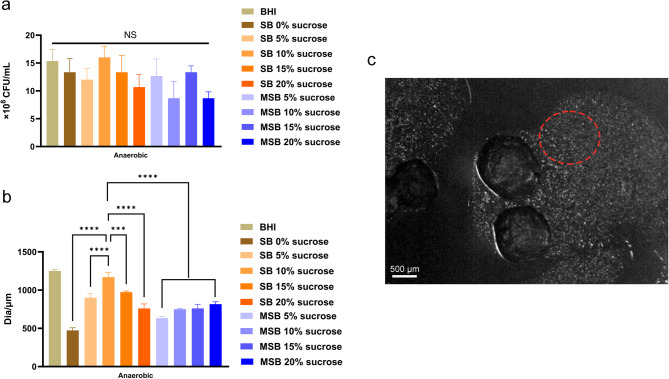
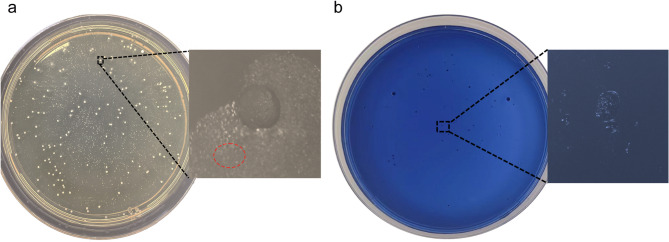
Results: SB-10 supported robust S. mutans growth with larger colonies and distinctive sugar particle formation compared to MSB-20. GtfB and GtfC were essential for sugar particle deposition around colonies. SB-10 demonstrated high specificity by suppressing the growth of non-target oral bacteria and accurately isolating S. mutans from clinical saliva samples, with all colonies confirmed as S. mutans via 16S rRNA sequencing.
Conclusions: SB-10 is a novel selective medium that enhances the isolation and identification of S. mutans, characterized by unique sugar particles deposition and colony morphology.
Keywords: Streptococcus mutans; Dental caries; Glucosyltransferases; Selective medium; Sucrose-Bacitracin agar.
© 2025. The Author(s).
Conflict of interest statement
Declarations. Ethics approval and consent to participate: The present study was approved by the Institutional Review Board of West China Hospital of Stomatology (WCHSIRB-D-2024–221) and was conducted in accordance with the Declaration of Helsinki. Written informed consent was obtained from the participants prior to their participation in the study. Consent for publication: Not applicable. Competing interests: The authors declare no competing interests.
Figures



References
Publication types
MeSH terms
Substances
Grants and funding
- 32400094/National Natural Science Foundation of china
- 82203008/National Natural Science Foundation of china
- 82170947/National Natural Science Foundation of china
- RD-02-202402/Fundamental Research Funds for the Central Universitiesthe Research and Develop Program, West china Hospitalof stomatology, sichuan University
- RCDWJS2023-10/Research Funding from West china school/Hospital ofstomatology, sichuan University
- 2025ZNSFSC0771/Sichuan Science and Technology Program
- 2024ZD1000600/the Deep Earth Probe and Mineral Resources Exploration-National Science and Technology Major Project
- RCDWJS2022-5/Research Funding from West china School/Hospital ofstomatology,sichuan University
- 23LCY1016/Sichuan Provincial Health Commission grant
LinkOut - more resources
Full Text Sources
Miscellaneous
