


Plasma hydrogen sulfide as a promising predictor of collateral cerebral circulation in acute ischemic stroke
- PMID: 40821063
- PMCID: PMC12351584
- DOI: 10.62347/OTKA7544
Plasma hydrogen sulfide as a promising predictor of collateral cerebral circulation in acute ischemic stroke
Abstract
Objectives: To investigate the relationship between plasma hydrogen sulfide (H2S) levels and collateral circulation in patients with acute ischemic stroke (AIS), and to explore the effects of vascular endothelial growth factor (VEGF), homocysteine (Hcy), folic acid (FA), vitamin B12 (VB12), and vitamin B6 (VB6).
Methods: A total of 68 AIS patients were enrolled and classified into two groups based on collateral vessel grading: the Good Collateral Circulation (GCC) group (n = 37) and the Poor Collateral Circulation (PCC) group (n = 31). Plasma levels of H2S, VEGF, Hcy, FA, VB12, and VB6 were measured on the 2nd and 7th days after admission using microassays and ELISA.
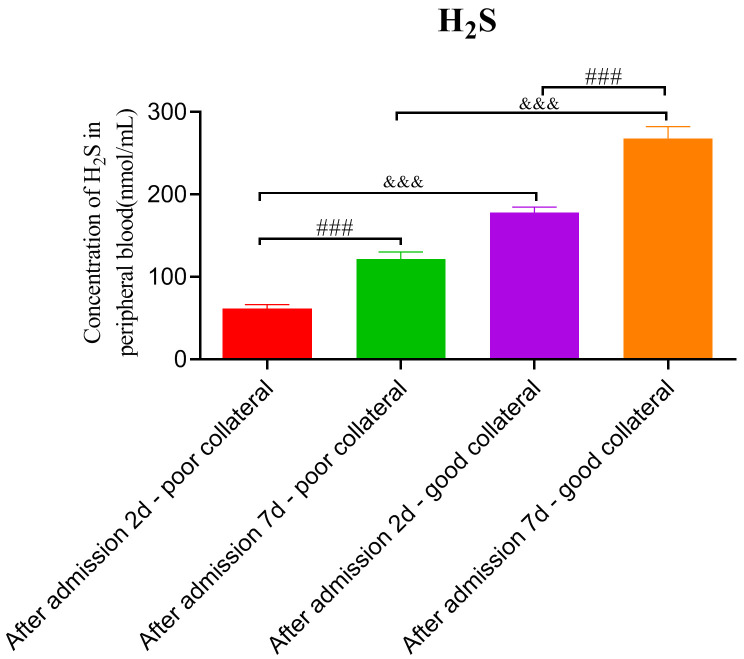
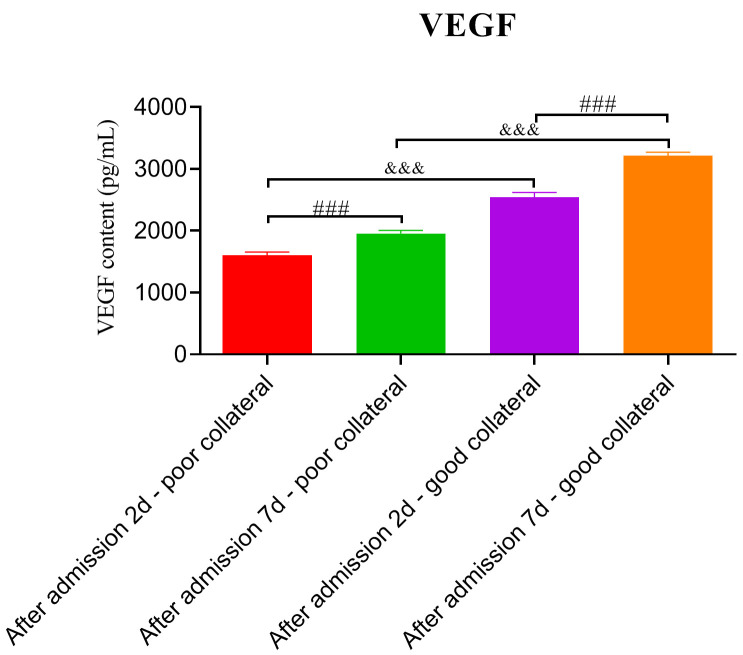
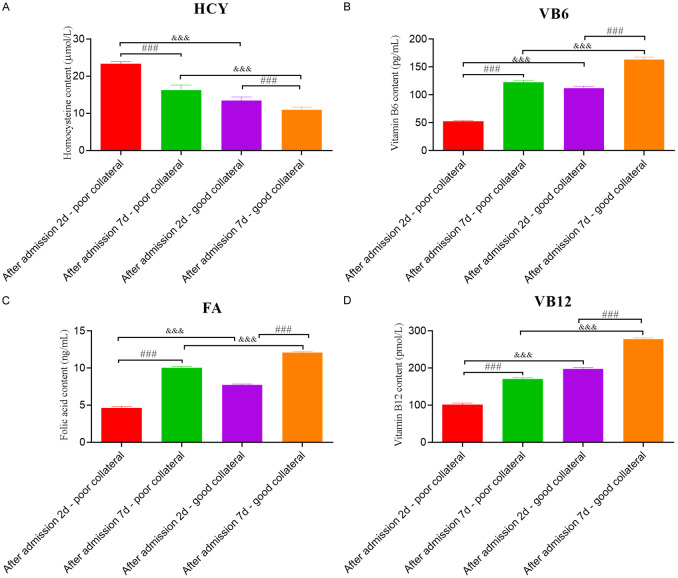
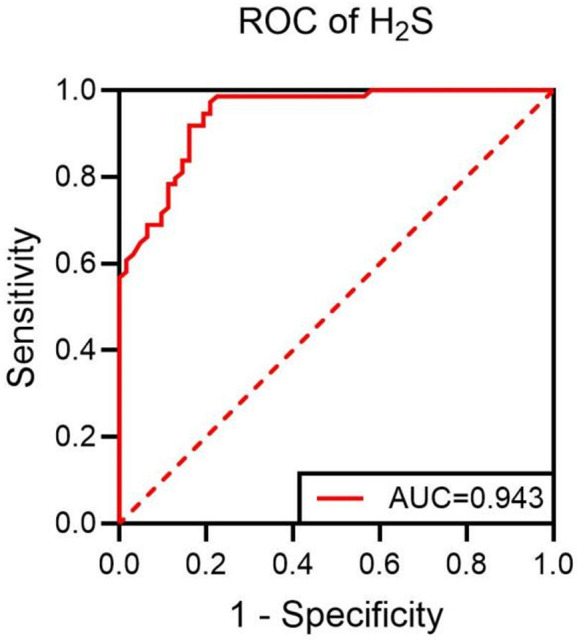
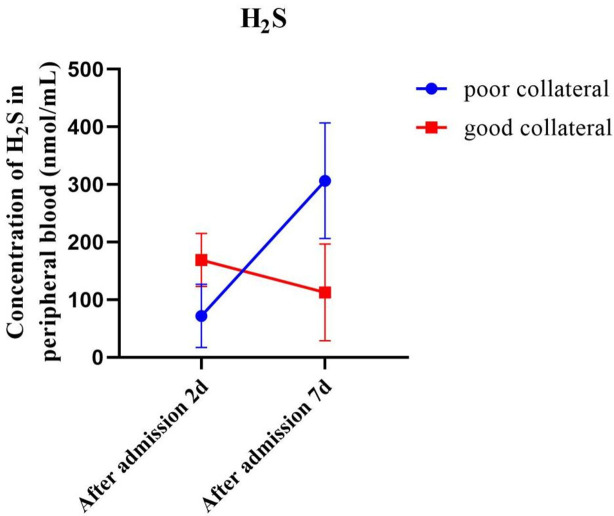
Results: Compared to the PCC group, patients in the GCC group had significantly lower National Institutes of Health Stroke Scale (NIHSS) and Modified Rankin Scale scores (mRS) scores at both admission and discharge (all P < 0.05). On both the 2nd and 7th days, plasma levels of H2S, VEGF, FA, VB12, and VB6 were significantly higher in the GCC group, while Hcy levels were significantly lower (all P < 0.05). Within group comparisons between the two time points also showed significant changes (all P < 0.001). Correlation analysis revealed that plasma H2S levels were positively correlated with collateral circulation, VEGF, FA, VB12, and VB6, and negatively correlated with Hcy levels (all P < 0.001). Plasma H2S levels demonstrated high predictive value for collateral circulation (area under the curve, AUC = 0.943). An interaction between time and collateral circulation on H2S levels was also observed.
Conclusions: Plasma H2S levels may serve as a valuable biomarker for predicting good collateral circulation in patients with acute ischemic stroke.
Keywords: Plasma hydrogen sulfide; acute ischemic stroke; collateral circulation; homocysteine; vascular endothelial growth factor.
AJTR Copyright © 2025.
Conflict of interest statement
None.
Figures
References
-
- Martin SS, Aday AW, Allen NB, Almarzooq ZI, Anderson CAM, Arora P, Avery CL, Baker-Smith CM, Bansal N, Beaton AZ, Commodore-Mensah Y, Currie ME, Elkind MSV, Fan W, Generoso G, Gibbs BB, Heard DG, Hiremath S, Johansen MC, Kazi DS, Ko D, Leppert MH, Magnani JW, Michos ED, Mussolino ME, Parikh NI, Perman SM, Rezk-Hanna M, Roth GA, Shah NS, Springer MV, St-Onge MP, Thacker EL, Urbut SM, Van Spall HGC, Voeks JH, Whelton SP, Wong ND, Wong SS, Yaffe K, Palaniappan LP American Heart Association Council on Epidemiology, Prevention Statistics Committee and Stroke Statistics Committee. 2025 heart disease and stroke statistics: a report of US and global data from the American heart association. Circulation. 2025;151:e41–e660. - PMC - PubMed
-
- Renu Jornet A, Urra X, Laredo C, Montejo C, Rudilosso S, Llull L, Blasco J, Amaro S, Torne R, Obach V, Macho J, Chamorro A. Benefit from mechanical thrombectomy in acute ischemic stroke with fast and slow progression. J Neurointerv Surg. 2020;12:132–135. - PubMed
-
- Yoshimoto T, Inoue M, Tanaka K, Kanemaru K, Koge J, Shiozawa M, Kamogawa N, Kimura S, Chiba T, Satow T, Takahashi JC, Toyoda K, Koga M, Ihara M. Identifying large ischemic core volume ranges in acute stroke that can benefit from mechanical thrombectomy. J Neurointerv Surg. 2021;13:1081–1087. - PMC - PubMed
-
- Shuaib A, Butcher K, Mohammad AA, Saqqur M, Liebeskind DS. Collateral blood vessels in acute ischaemic stroke: a potential therapeutic target. Lancet Neurol. 2011;10:909–921. - PubMed
LinkOut - more resources
Full Text Sources