


Noncoding RNAs as regulators of FOSL1 in cancer
- PMID: 40821785
- PMCID: PMC12354540
- DOI: 10.3389/fimmu.2025.1599674
Noncoding RNAs as regulators of FOSL1 in cancer
Abstract
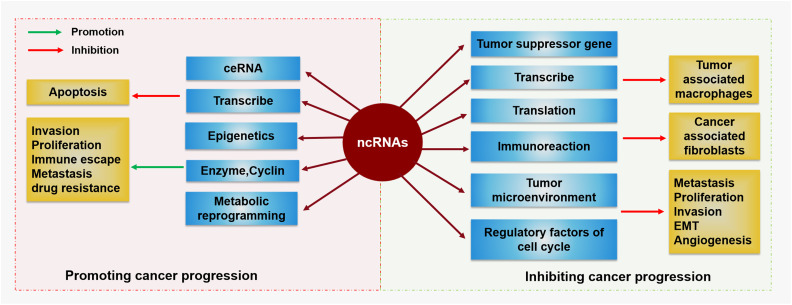
The AP-1 transcription factor FOSL1, also known as Fra-1, is a crucial oncoprotein that plays an important role in human tumor progression and metastasis and has thus emerged as a promising therapeutic target. FOSL1 regulates the expression of a large protein-coding gene network, and this molecular mechanism can promote the progression of tumors. Interestingly, recent studies have shown that FOSL1 can also achieve the same protumor effect by regulating certain noncoding RNAs (ncRNAs). However, more studies have shown that ncRNAs can regulate the expression and activity of FOSL1, thereby affecting the occurrence and development of tumors, which indicates that ncRNAs can be regulators of FOSL1 in cancer. In this review, we first provide a comprehensive overview of the expression and function of FOSL1 and ncRNAs in tumors and then focus on the mutual regulatory relationship between ncRNAs and FOSL1, as well as their regulatory effects on and mechanisms of tumor progression. In addition, we further explored the potential clinical applications of the FOSL1-ncRNA system in cancer treatment, providing a theoretical basis for the study of FOSL1 and/or ncRNA-related molecular markers or targeted therapies.
Keywords: FOSL1; cancer; immune escape; ncRNA; targeted therapy.
Copyright © 2025 Wang, Wang, Wang, Zhang, Wang, Zhang, Li, Wei, Zhao and Zhou.
Conflict of interest statement
The authors declare that the research was conducted in the absence of any commercial or financial relationships that could be construed as a potential conflict of interest.
Figures


References
Publication types
MeSH terms
Substances
LinkOut - more resources
Full Text Sources
Medical
