


Mitophagy in Hypertensive Cardiac Hypertrophy: Mechanisms and Therapeutic Implications
- PMID: 40823764
- PMCID: PMC12358939
- DOI: 10.1111/jch.70127
Mitophagy in Hypertensive Cardiac Hypertrophy: Mechanisms and Therapeutic Implications
Abstract
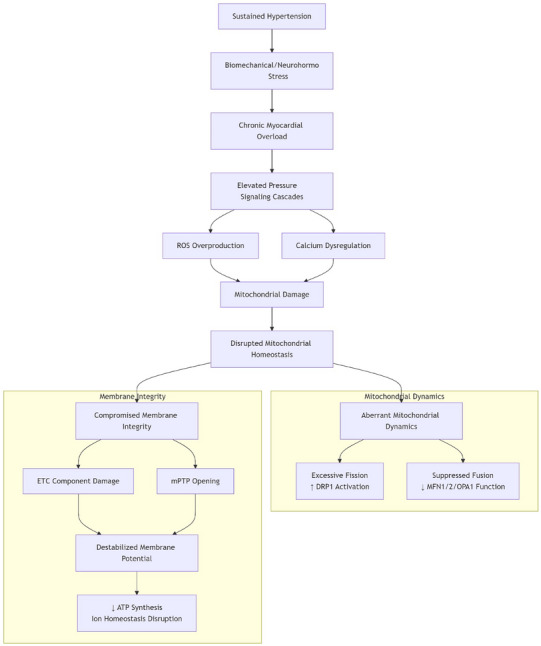
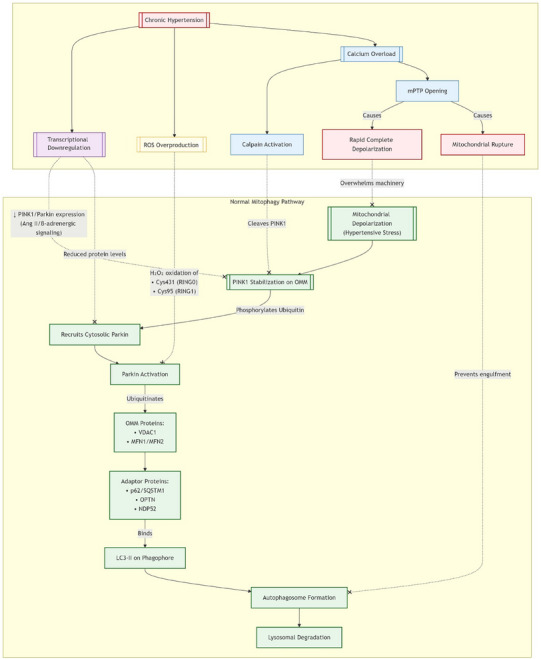
Hypertensive cardiac hypertrophy (HCH) is a compensatory response to chronic pressure overload, ultimately progressing to heart failure if left unmanaged. Emerging evidence highlights the critical role of mitochondrial dysfunction in HCH pathogenesis, with impaired mitophagy-a selective autophagic process that removes damaged mitochondria-contributing to cardiomyocyte death, oxidative stress, and fibrosis. Protective mitophagy eliminates damaged mitochondria, averting reactive oxygen species (ROS)/calcium overload in HCH. Conversely, its dysregulation-either insufficient clearance or excessive removal-exacerbates mitochondrial dysfunction, driving pathological hypertrophy, fibrosis, and bioenergetic crisis. This dual nature presents a therapeutic paradox demanding contextual modulation. This review comprehensively examines the molecular mechanisms underlying mitophagy dysregulation in HCH, focusing on key pathways such as PINK1/Parkin, BNIP3/NIX, and FUNDC1. We also discuss the interplay between mitophagy and other cellular processes, including mitochondrial biogenesis, inflammasome activation, and metabolic remodeling. Furthermore, we explore potential therapeutic strategies targeting mitophagy to ameliorate HCH, including pharmacological agents, lifestyle interventions, and gene therapy approaches. Understanding the dual role of mitophagy in HCH-both protective and detrimental-may pave the way for novel precision medicine strategies in cardiovascular disease.
Keywords: hypertensive cardiac hypertrophy; mitochondrial dysfunction; mitophagy; oxidative stress; therapeutic targets.
© 2025 The Author(s). The Journal of Clinical Hypertension published by Wiley Periodicals LLC.
Conflict of interest statement
The authors declare no conflicts of interest.
Figures
References
-
- Nakashima H., Shinohara K., Matsumoto S., et al., “Establishment of a HFpEF Model Using Female Dahl Salt‐Sensitive Rats: A Valuable Tool for Elucidating the Pathophysiology of HFpEF in Women,” Hypertension Research 48 (2025): 672–680. - PubMed
-
- Sigle M., Rohlfing A. K., Cruz Santos M., et al., “Targeting Cyclophilin A in the Cardiac Microenvironment Preserves Heart Function and Structure in Failing Hearts,” Circulation Research 135 (2024): 758–773. - PubMed
-
- Orekhov A. N., Poznyak A. V., Sobenin I. A., et al., “Mitochondrion as a Selective Target for the Treatment of Atherosclerosis: Role of Mitochondrial DNA Mutations and Defective Mitophagy in the Pathogenesis of Atherosclerosis and Chronic Inflammation,” Current Neuropharmacology 18 (2020): 1064–1075. - PMC - PubMed
Publication types
MeSH terms
Substances
LinkOut - more resources
Full Text Sources
Medical
