


Sulfate-based coagulants can suppress methanogenesis in treated oil sands fine tailings
- PMID: 40824510
- PMCID: PMC12363050
- DOI: 10.1186/s12932-025-00104-3
Sulfate-based coagulants can suppress methanogenesis in treated oil sands fine tailings
Abstract
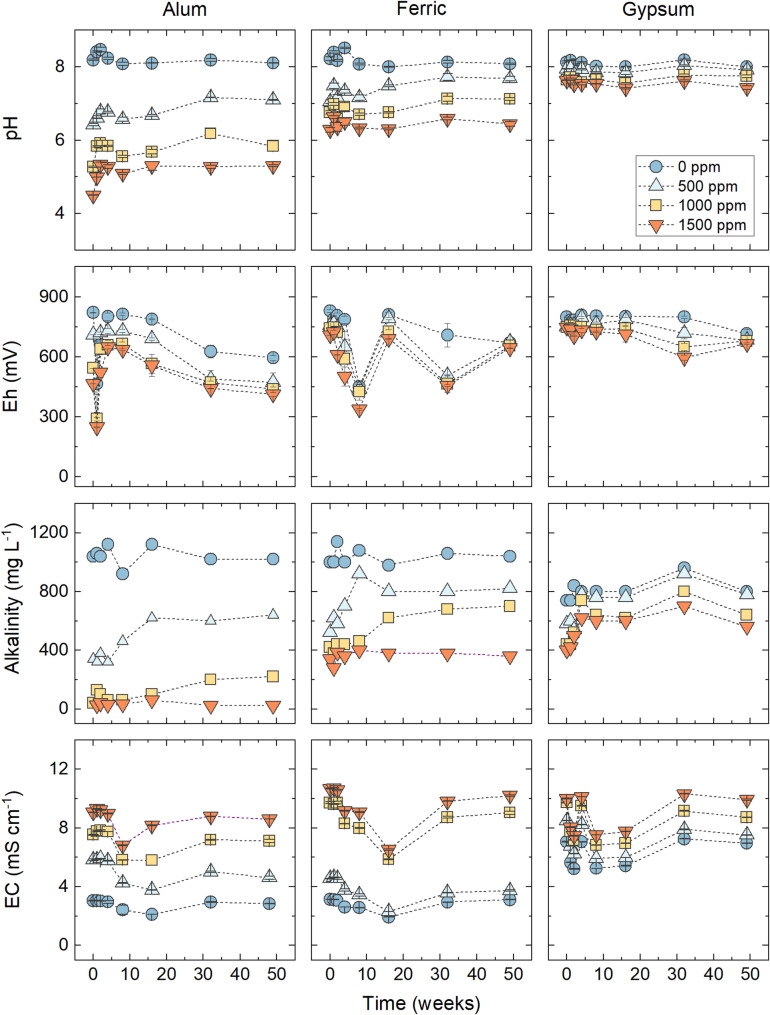
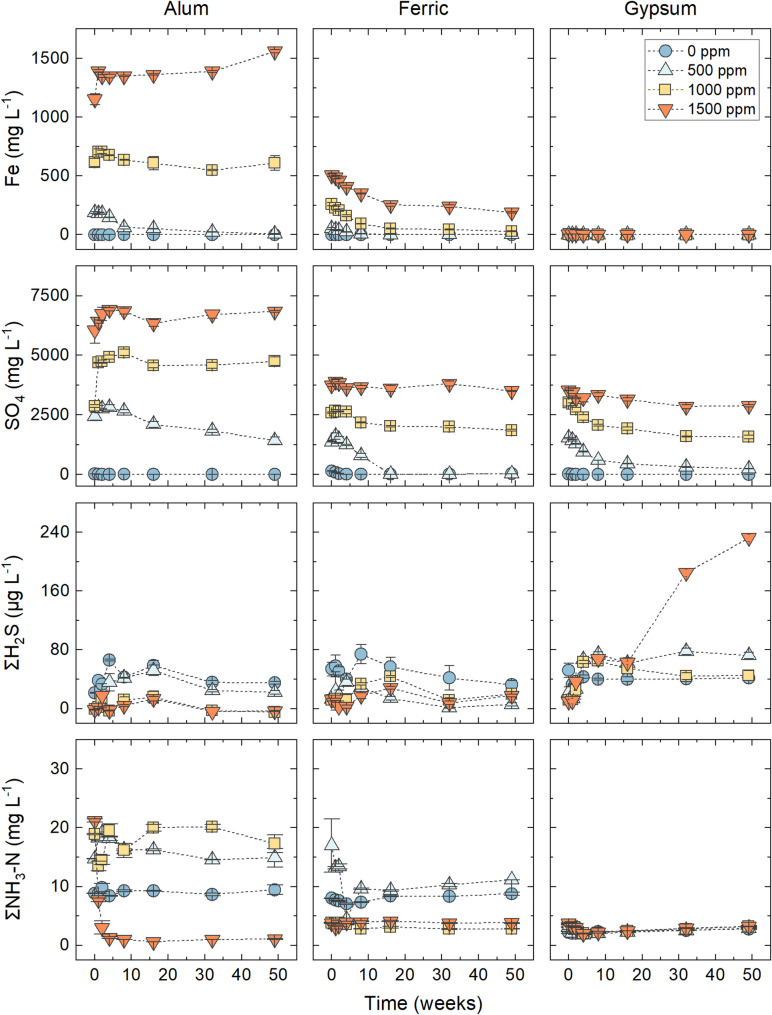
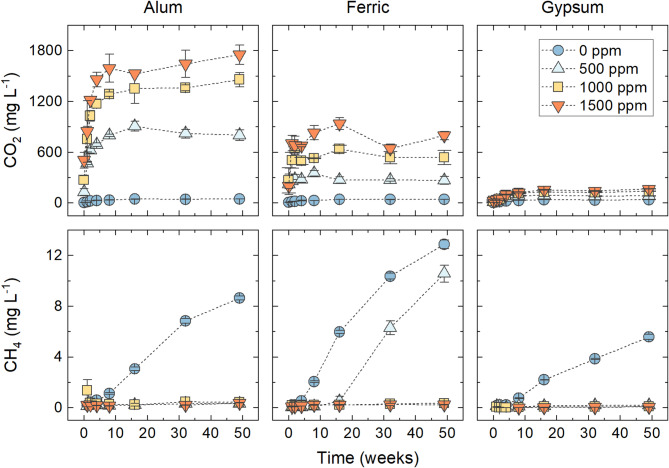
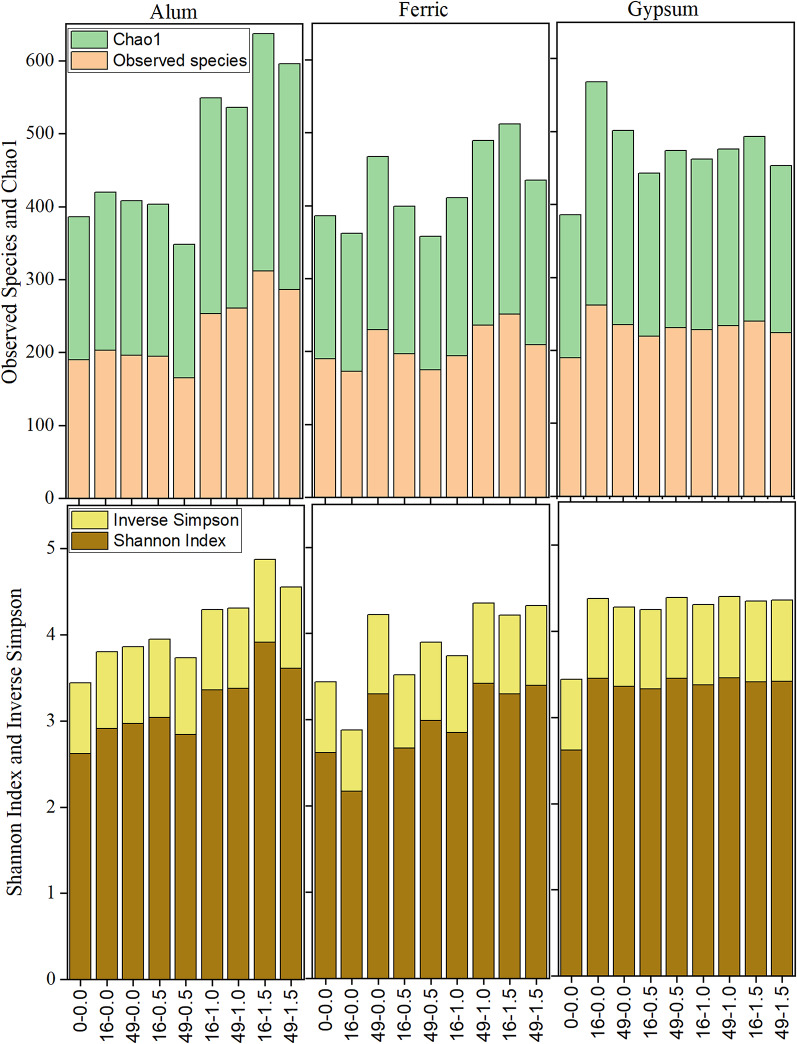
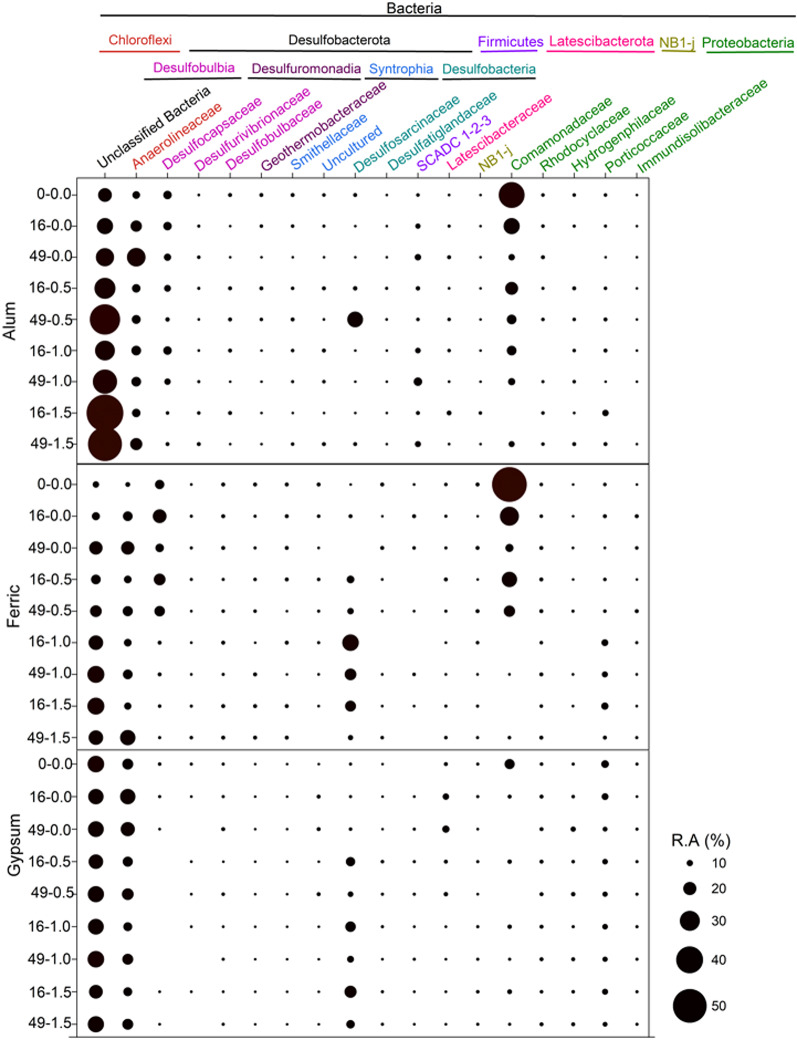
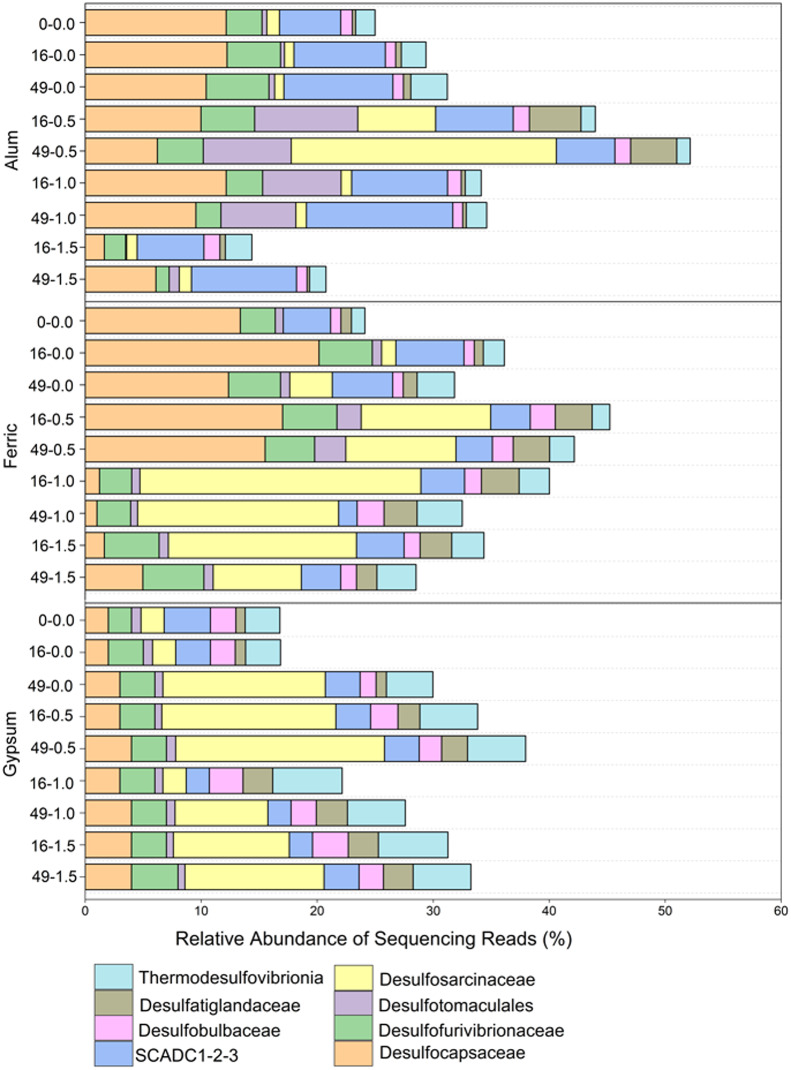
Bitumen extraction from mined oil sands ore generates a large volume of fluid fines tailings (FFT) that must be incorporated into either aquatic or terrestrial reclamation landforms. Mine operators are developing various tailings technologies to accelerate FFT dewatering, including the addition of chemical coagulants and flocculants. However, the impacts of these coagulants and flocculants on biogeochemical processes in treated FFT are not fully understood. We conducted anaerobic batch experiments to examine the influence of different doses (i.e., 0, 500, 1000, and 1500 ppm) of sulfate-based coagulants, including aluminum sulfate (alum) [Al2(SO4)3∙nH2O], ferric sulfate (ferric) [Fe2(SO4)3∙nH2O], and calcium sulfate (gypsum) [CaSO4∙2H2O], on biogenic gas production and microbial communities in treated FFT. Our results show that sulfate addition stimulated microbial sulfate reduction, which inhibited methanogenesis in coagulated FFT relative to experimental controls. Sulfate depletion preceded increased methane production in the 500 ppm gypsum experiment, while larger ferric and alum doses produced higher sulfate concentrations and larger pH decreases. 16 S rRNA sequencing revealed that Comamonadaceae, Anaerolineaceae, and Desulfocapsaceae were the major bacterial families, while Methanoregulaceae and Methanosaetaceae dominated the archaeal families in all treatments. Precipitation of iron(II) sulfides limited dissolved hydrogen sulfide concentrations in experiments where Fe availability was not limited. Our results indicate that addition of sulfate-based coagulants can stimulate microbial sulfate reduction and suppress methanogenesis. However, resumption of methane production following sulfate depletion reveals complex interactions among biogeochemical reaction pathways. Overall, this study demonstrates that biogeochemical cycling of carbon, sulfur, and iron are important considerations for the development and implementation of tailings treatment technologies.
Keywords: Biogeochemistry; Methanogenesis; Oil sands; Sulfate reduction; Treated tailings.
© 2025. The Author(s).
Conflict of interest statement
Declarations. Competing interests: The authors declare no competing interests.
Figures



References
-
- AER (2023) State of Fluid Tailings Management for Mineable Oil Sands, 2022. Alberta Energy Regulator (AER), Government of Alberta, Calgary, Canada, 130 pp
-
- Albakistani EA, Nwosu FC, Furgason C, Haupt ES, Smirnova AV, Verbeke TJ, Lee E-S, Kim J-J, Chan A, Ruhl IA, Sheremet A, Rudderham SB, Lindsay MBJ, Dunfield PF (2022) Seasonal dynamics of methanotrophic bacteria in a boreal oil sands end-pit lake. Appl Environ Microbiol 88:e01455–e01421. 10.1128/aem.01455-21 - DOI - PMC - PubMed
-
- Allen EW (2008) Process water treatment in Canada’s oil sands industry: I. Target pollutants and treatment objectives. J Environ Eng Sci 7:123–138. 10.1139/S07-038 - DOI
-
- Amos RT, Mayer KU, Bekins BA, Delin GN, Williams RL (2005) Use of dissolved and vapor-phase gases to investigate methanogenic degradation of petroleum hydrocarbon contamination in the subsurface. Water Resour Res 41:W02001. 10.1029/2004WR003433 - DOI
Grants and funding
LinkOut - more resources
Full Text Sources
