


Signature of oral microbial dysbiosis in different periodontitis risk levels
- PMID: 40825877
- PMCID: PMC12361276
- DOI: 10.1007/s00253-025-13574-3
Signature of oral microbial dysbiosis in different periodontitis risk levels
Abstract
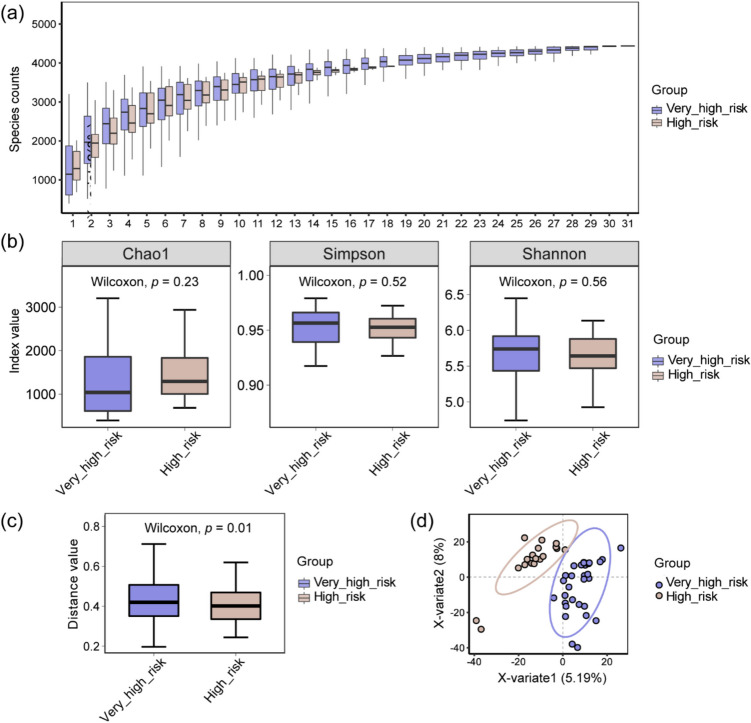
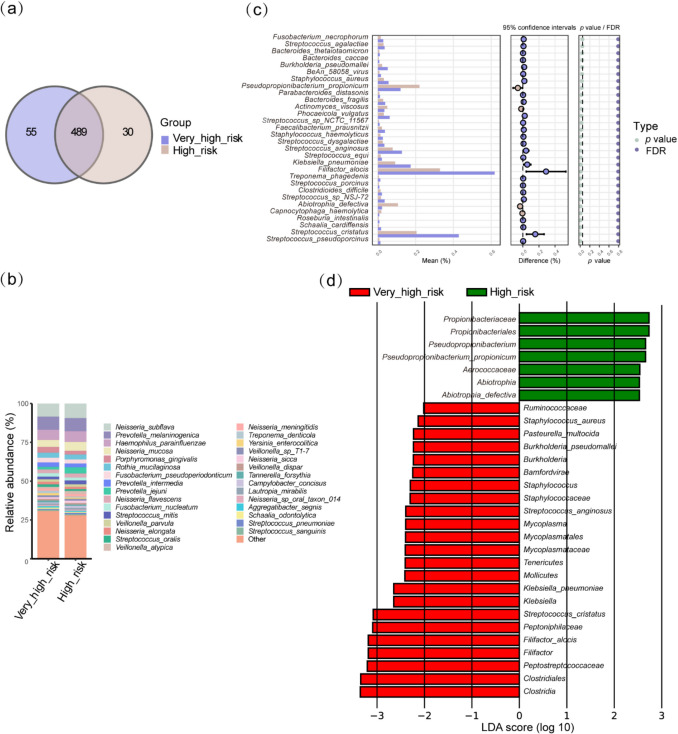
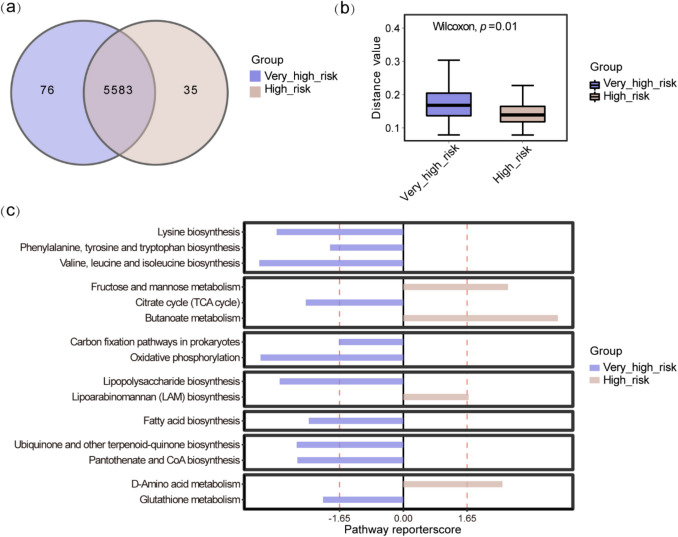
Individuals categorized into distinct periodontitis risk levels often demonstrate substantial disparities not only in the likelihood of developing periodontitis but also in the rate at which the disease progresses. However, the oral microbial communities and their functional characteristics corresponding to different periodontitis risk levels remain to be further explored. Therefore, 52 subjects with periodontitis were selected and categorized into different periodontitis risk groups based on the periodontal risk calculator (PRC). Unstimulated saliva was collected, and metagenomics sequencing was performed to compare microbial diversity, taxonomy, and functional annotation among groups. There was no significant difference in species richness and evenness between the very high risk group and the high risk group, but beta diversity increased in the former group. A higher abundance of Filifactor alocis, Streptococcus cristatus, Klebsiella pneumoniae, and Streptococcus anginosus was attributed to the very high risk group, while Pseudopropionibacterium propionicum and Abiotrophia defectiva were found in higher abundance in the high risk group. Functional annotation revealed that biosynthesis of amino acids (lysine biosynthesis; phenylalanine, tyrosine and tryptophan biosynthesis; valine, leucine, and isoleucine biosynthesis), citrate cycle (TCA cycle), carbon fixation pathways in prokaryotes, oxidative phosphorylation, lipopolysaccharide biosynthesis, fatty acid biosynthesis, ubiquinone and other terpenoid-quinone biosynthesis, pantothenate and CoA biosynthesis, and glutathione metabolism were enriched in the very high risk group. The combined results indicate that the periodontal pathogens associated with a higher risk of periodontitis and the regulation of their related functional pathways increase the risk and likelihood of periodontitis development. KEY POINTS : • There were differences in microbial diversity among different periodontitis risk-level groups. • Some previously overlooked species and pathogenic pathways were linked to periodontitis risk differences. • Combining PRC with metagenomic sequencing revealed more potential pathogens.
Keywords: Metagenomics; Microbiology; Periodontitis; Risk assessment.
© 2025. The Author(s).
Conflict of interest statement
Declarations. Ethics approval: The Medical Ethics Committee of the Affiliated Stomatological Hospital of Kunming Medical University approved the study protocol (Ethics Approval No. KYKQ2022MEC008 and No. KYKQ2024MEC006). All patients signed a written informed consent prior to enrollment. Conflict of interest: The authors declare no competing interests.
Figures

References
MeSH terms
Grants and funding
- XDYC-YLWS-2023-0048/Xingdian Talents Support Program
- 202401AU070088/Natural Science Foundation of Yunnan Province
- EYQ2024001/National Key Clinical Specialty Development Project of Pediatric Dentistry Division of China
- 202501AY070001-052/the Joint Fund of Yunnan Provincial Science and Technology Office and Kunming Medical University
- 202401AY070001-365/the Joint Fund of Yunnan Provincial Science and Technology Office and Kunming Medical University
LinkOut - more resources
Full Text Sources
