


Usability and adoption in a randomized trial of GutGPT a GenAI tool for gastrointestinal bleeding
- PMID: 40825997
- PMCID: PMC12361555
- DOI: 10.1038/s41746-025-01896-5
Usability and adoption in a randomized trial of GutGPT a GenAI tool for gastrointestinal bleeding
Abstract
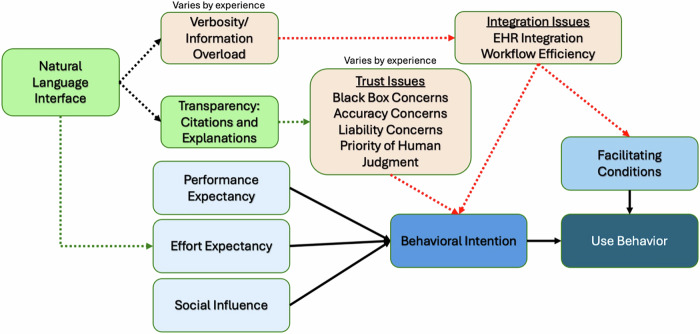
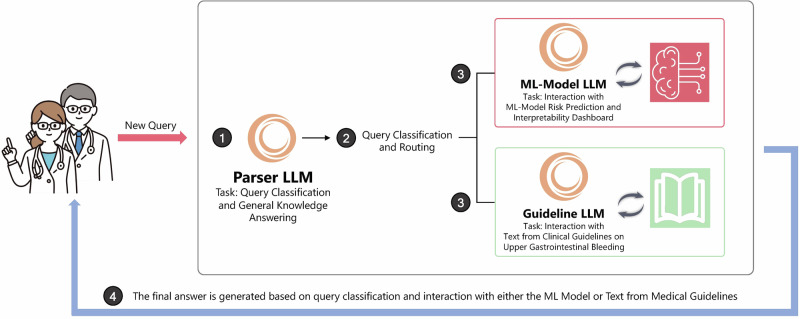
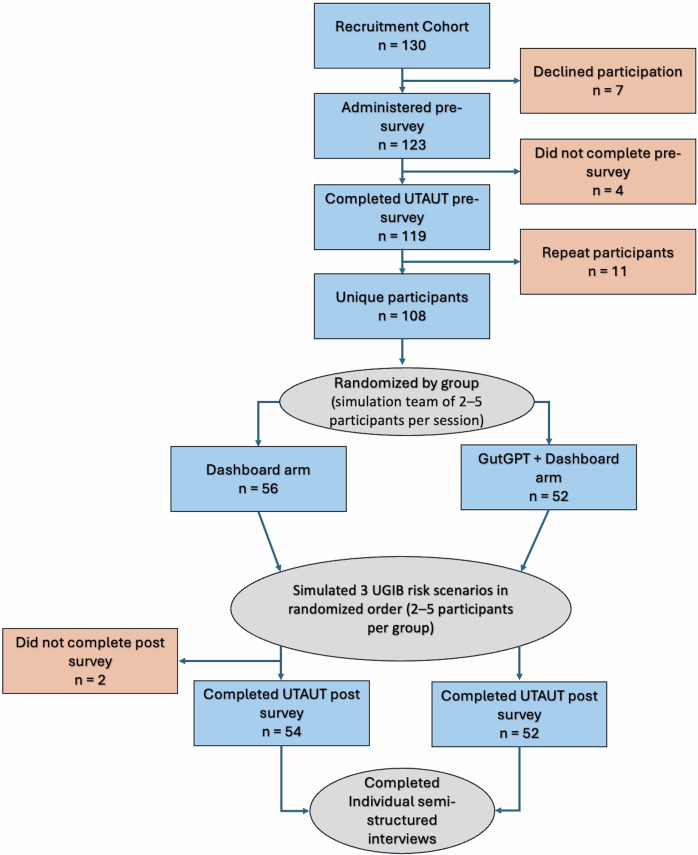
Generative AI (GenAI) may enhance clinical decision support systems (CDSS), but its impact on adoption remains unclear. We conducted a simulation-based randomized trial to evaluate whether a GenAI-enhanced CDSS, "GutGPT," improves adoption compared to an AI dashboard in acute upper gastrointestinal bleeding management. Clinical trainees were randomized to either GutGPT or a comparator dashboard across three cases. The primary outcome was Behavioral Intention, from the Unified Theory of Acceptance and Use of Technology (UTAUT). Secondary measures included additional constructs and decision accuracy. A total of 106 participants participated (52 GutGPT, 54 comparator). GutGPT users reported higher Effort Expectancy. Behavioral Intention had no significant difference. Qualitative analysis highlighted trust and workflow concerns. These findings suggest that usability alone is insufficient to drive adoption. As this study was conducted in a simulation without real-world integration or patient outcomes, further studies are needed. (Trial Registration: ClinicalTrials.gov; Identifier: NCT05816473; Registered March 6, 2023).
© 2025. The Author(s).
Conflict of interest statement
Competing interests: The authors declare no competing interests.
Figures
References
-
- Lu, J. et al. Performance of multilabel machine learning models and risk stratification schemas for predicting stroke and bleeding risk in patients with non-valvular atrial fibrillation. Comput. Biol. Med150, 106126 (2022). - PubMed
Associated data
Grants and funding
LinkOut - more resources
Full Text Sources
Medical
Research Materials
