


Therapeutic efficacy of home-based neuromuscular electrical stimulation on early postoperative functional recovery following arthroscopic rotator cuff repair: a double-blind randomized controlled trial
- PMID: 40830452
- PMCID: PMC12366399
- DOI: 10.1186/s12891-025-09030-y
Therapeutic efficacy of home-based neuromuscular electrical stimulation on early postoperative functional recovery following arthroscopic rotator cuff repair: a double-blind randomized controlled trial
Abstract
Introduction: Pain management and prevention of muscle atrophy are key rehabilitation challenges following arthroscopic rotator cuff repair (ARCR). Despite the potential muscle atrophy-reducing and analgesic effects of neuromuscular electrical stimulation (NMES), evidence supporting its use in post-ARCR rehabilitation remains limited. This study aimed to evaluate the clinical efficacy of home-based NMES intervention for promoting early functional recovery after ARCR.
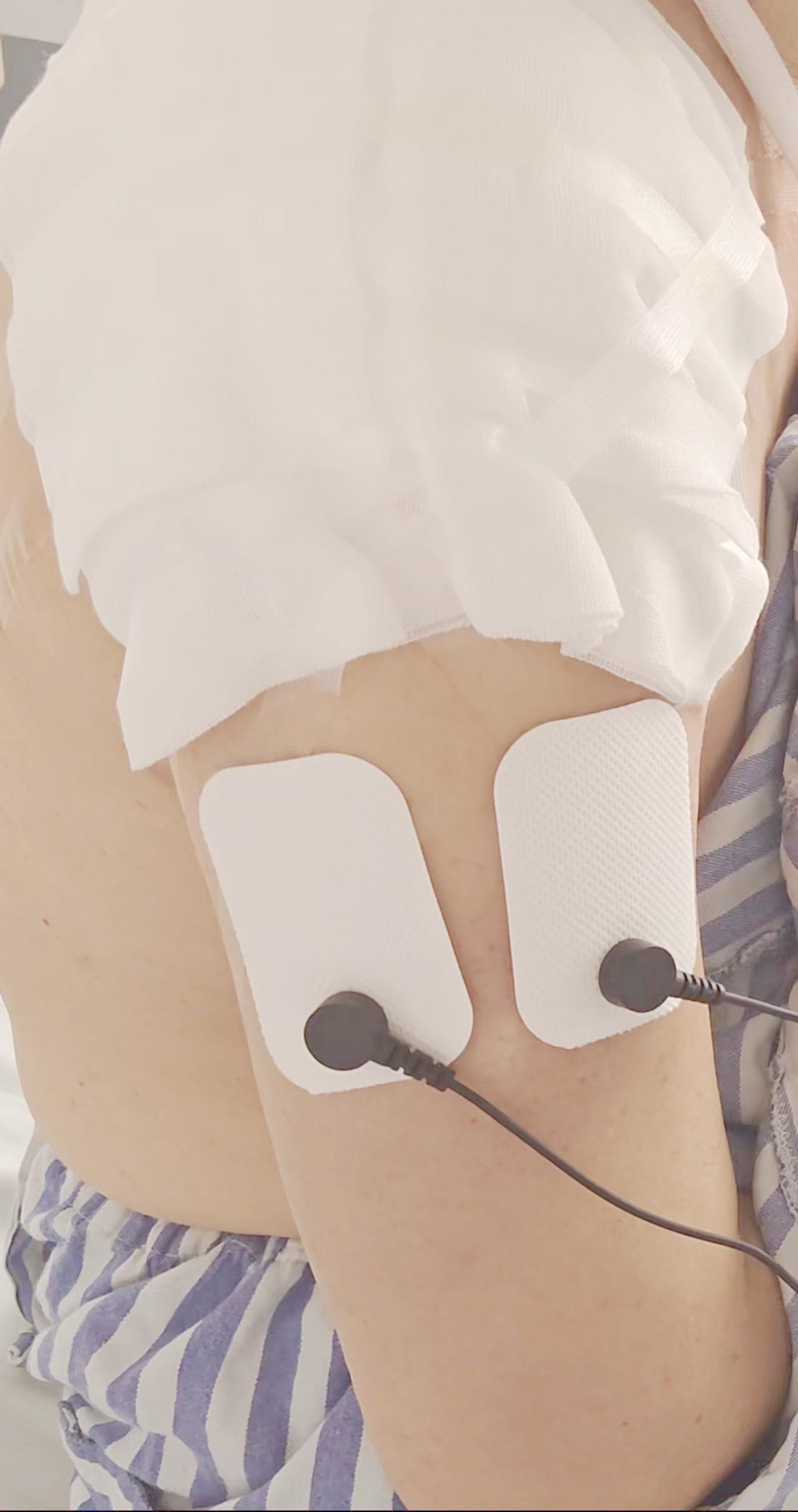
Methods: A total of 63 ARCR patients were randomized into the NMES group (n = 32) and MENS (Micro-current electrical nerve stimulation) group (n = 31), both receiving a 6-week home-based intervention (5 sessions weekly, 30 min per session) following surgery. The NMES group used neuromuscular electrical stimulation equipment, while the MENS group used identical devices without current output. The primary outcome was the Constant-Murley Shoulder (CMS) score, with secondary outcomes including resting and active visual analog scale (VAS) pain scores, deltoid muscle thicknes, shoulder range of motion (ROM), muscle strength, and Tampa Scale for Kinesiophobia scores. Assessments were conducted preoperatively, at 6 weeks, and 3 months postoperatively.
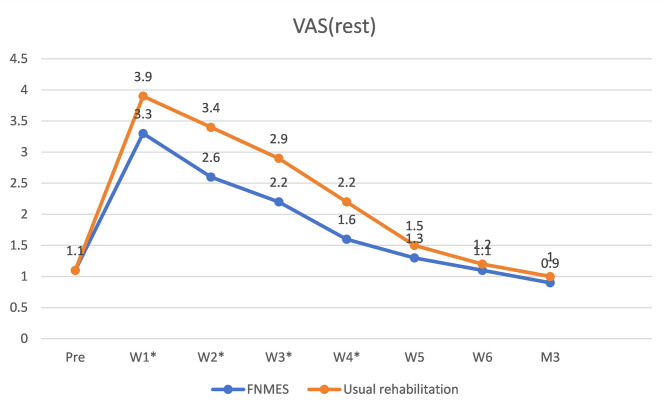
Results: At 6 weeks postoperatively, the NMES group exhibited a significantly higher CMS than the MENS group (76.10 ± 9.43 vs. 71.22 ± 9.2 p = 0.032), along with superior active pain relief (active VAS: 4.1 ± 0.9 vs. 3.4 ± 0.7 p = 0.003), greater forward flexion ROM (151.7 ± 11.3 vs. 141.8 ± 13.6 p = 0.003), and thicker deltoid muscle thickness (1.02 ± 0.06 vs. 0.91 ± 0.06 p < 0.001). The NMES group also demonstrated lower TSK scores (31.06 ± 6.69 vs. 35.42 ± 7.76 p = 0.020) and greater adductor strength (40.9 ± 16.7 vs. 33.5 ± 12.2 p = 0.048). By 3 months postoperatively, intergroup differences persisted only in abductor ROM, muscle strength, and deltoid thickness, with no significant disparities in other measured indices.
Conclusions: Home-based NMES effectively accelerates functional recovery, enhances pain management, and mitigates kinesiophobia within 6 weeks post-ARCR, with partial maintenance of these benefits at the 3-month follow-up. This intervention offers a safe adjunctive strategy for early rehabilitation, particularly suited to patients requiring rapid functional restoration; however, long-term efficacy remains to be confirmed.To evaluate the acceptability of MyCheck for asymptomatic sexually transmissible infections (STIs) testing.
Trial registration: (Chinese Clinical Trial Registry ( https://www.chictr.org.cn ), No. ChiCTR2400088194, 13/08/2024).
Keywords: Arthroscopic rotator cuff repair; Home-Based; Neuromuscular electrical stimulation; Rehabilitation; Rotator cuff tears.
© 2025. The Author(s).
Conflict of interest statement
Declarations. Ethics approval and consent to participate: This study was approved by the Ethics Committee of The First Affiliated Hospital of Fujian Medical University. (Approval No.: MRCTA, ECFAH of FMU|2024|577). All research procedures involving human subjects in this study were conducted in strict compliance with the ethical principles of the Declaration of Helsinki and in accordance with the requirements of the Institutional Review Board. Informed consent to participate was obtained from all of the participants in the study. Consent for publication: All written informed consent for publication of identifying images or other personal or clinical details was obtained from all of the participants. Competing interests: The authors declare no competing interests.
Figures




References
-
- Audigé L, Aghlmandi S, Grobet C, Stojanov T, Müller AM, Felsch Q, Gleich J, Flury M, Scheibel M. Prediction of shoulder stiffness after arthroscopic rotator cuff repair. Am J Sports Med. 2021;49(11):3030–9. - PubMed
-
- McElvany MD, McGoldrick E, Gee AO, Neradilek MB, Matsen FA. 3rd: rotator cuff repair: published evidence on factors associated with repair integrity and clinical outcome. Am J Sports Med. 2015;43(2):491–500. - PubMed
-
- Accousti KJ, Flatow EL. Technical pearls on how to maximize healing of the rotator cuff. Instr Course Lect. 2007;56:3–12. - PubMed
-
- Hata Y, Saitoh S, Murakami N, Kobayashi H, Takaoka K. Atrophy of the deltoid muscle following rotator cuff surgery. J Bone Joint Surg Am. 2004;86(7):1414–9. - PubMed
Publication types
MeSH terms
Grants and funding
LinkOut - more resources
Full Text Sources
Medical
