


Evaluation by M-charts and Microperimeter-MP3 after broad internal limiting membrane peeling for idiopathic epiretinal membrane
- PMID: 40830849
- PMCID: PMC12362970
- DOI: 10.1186/s12886-025-04308-0
Evaluation by M-charts and Microperimeter-MP3 after broad internal limiting membrane peeling for idiopathic epiretinal membrane
Abstract
Purpose: To assess the impact of broad-internal limiting membrane (ILM) peeling on retinal sensitivity (RS) and metamorphopsia assessed using M-CHARTS in patients with idiopathic epiretinal membrane (ERM).
Design: Retrospective observational case series.
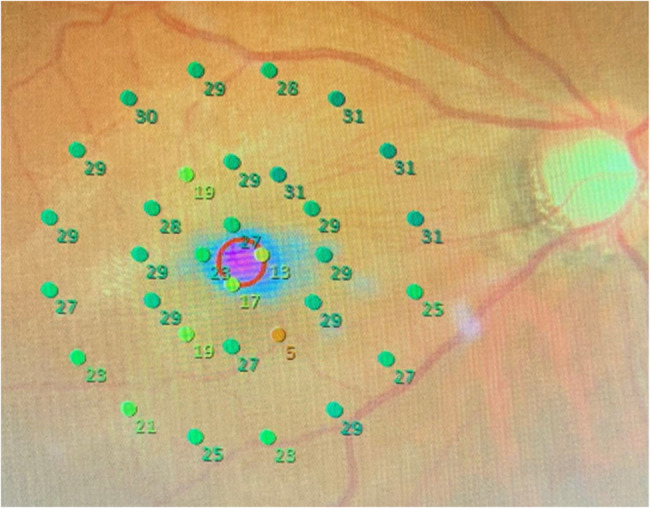
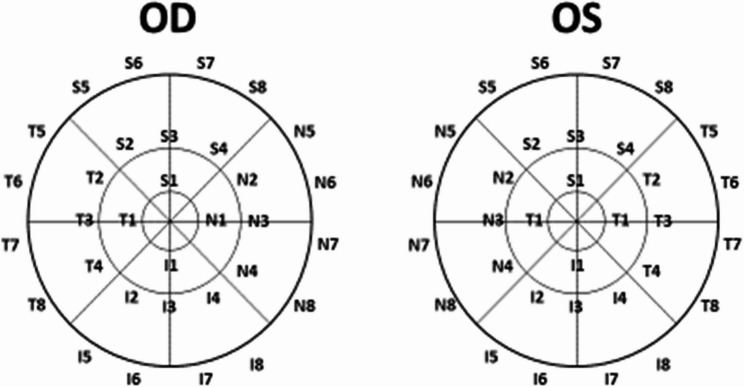
Methods: The study analyzed 20 eyes treated with broad-ILM peeling within the vascular arcades area for ERM, over a 6-month follow-up. Outcomes measured included best-corrected visual acuity (BCVA), vertical M-CHARTS scores(MV) and horizontal M-CHARTS scores (MV), central macular thickness (CMT), and RS. RS was evaluated using Microperimeter-MP3 at specified central degrees, and points below 10 dB were considered microscotomas (MS).
Results: Postoperative BCVA improved significantly at 1 month, 3 months, and 6 months(all p < 0.01).No significant changes in CMT were noted.MH score improvements were significant at 6 months (P = 0.03), whereas MV scores remained unchanged (P > 0.05).RS notably improved within the central 4° at 3 months (P = 0.04) and 6 months (P = 0.05), but remained unchanged in the central 10° and 20° regions (P > 0.05).
MS did not increase significantly at 1 month postoperatively and remained stable through 3 and 6 months (all P > 0.05).
Conclusion: Broad ILM peeling suggests potential for improving visual acuity and metamorphopsia in ERM patients without causing long-term detrimental effects on retinal sensitivity or increasing the occurrence of MS.
Supplementary Information: The online version contains supplementary material available at 10.1186/s12886-025-04308-0.
Keywords: Broad peeling; Epiretinal membrane; Internal limiting membrane; Microperimeter; Microscotomas; Retinal sensitivity.
Conflict of interest statement
Declarations. Ethics approval and consent to participate: The study was conducted in accordance with the Declaration of Helsinki, and approved by the Ethics Committee of St. Marianna University School of Medicine (Approval No. 5477, 26 November 2021). Written informed consent was obtained from all patients prior to surgery. This included consent to undergo the surgical procedure as well as permission for the use of postoperative clinical data for research purposes by the institution. To ensure patient autonomy, information regarding the study objectives and period was disclosed via an opt-out document made publicly available. This allowed patients who had previously provided consent to withdraw from participation if they so wished. Consent for publication: Not applicable. Competing interests: The authors declare no competing interests.
Figures
References
-
- Chang S, Gregory-Roberts EM, Park S, et al. Double peeling during vitrectomy for macular pucker: the Charles L. Schepens lecture. JAMA Ophthalmol. 2013;131:525–30. - PubMed
-
- Park DW, Dugel PU, Garda J, et al. Macular pucker removal with and without internal limiting membrane peeling: pilot study. Ophthalmology. 2003;110:62–4. - PubMed
-
- Azuma K, Ueta T, Eguchi S. Effects of internal limiting membrane peeling combined with removal of idiopathic epiretinal membrane. A systematic review of literature and Meta-Analysis. Retina. 2017;37(10):1813–9. 10.1097/IAE.0000000000001537. - PubMed
-
- Tranos P, Koukoula S, Charteris DG, Perganda G, Vakalis A, Asteriadis S, et al. The role of internal limiting membrane peeling in epiretinal membrane surgery: a randomised controlled trial. Br J Ophthalmol. 2017;101:719–24. - PubMed
-
- Ripandelli G, Scarinci F, Piaggi P, et al. Macular pucker, to Peel or not to Peel the internal limiting membrane? A microperimetric response. Retina. 2015;35:498–507. - PubMed
LinkOut - more resources
Full Text Sources
Miscellaneous
