


Light regulates the synthesis and accumulation of plant secondary metabolites
- PMID: 40831721
- PMCID: PMC12358498
- DOI: 10.3389/fpls.2025.1644472
Light regulates the synthesis and accumulation of plant secondary metabolites
Abstract
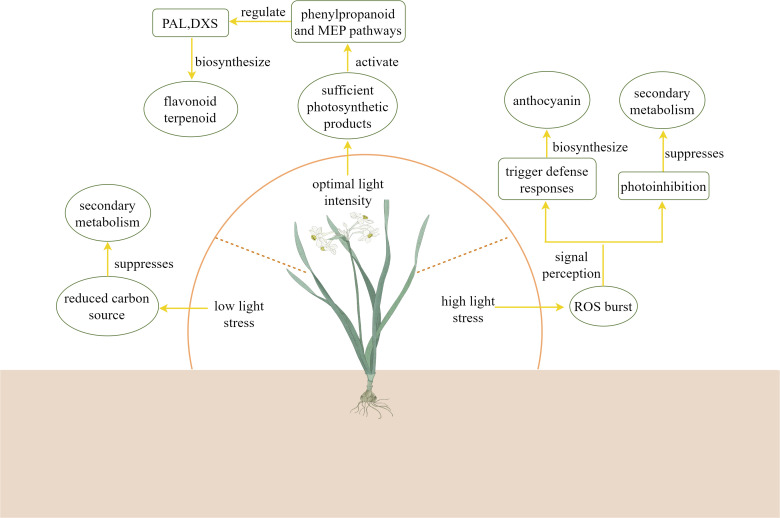
Secondary metabolites are low-molecular-weight organic compounds produced by plants under specific conditions. While they are not directly involved in fundamental growth and developmental processes, they play crucial roles in plant defense, protection, and regulation. These compounds mainly include phenolics, terpenoids, alkaloids, flavonoids, and others. Light, as a key environmental factor regulating the synthesis of plant secondary metabolites, influences their production and accumulation through multidimensional regulatory mechanisms. Different light qualities activate or suppress specific metabolic pathways via signal transduction networks mediated by specialized photoreceptors. Light intensity dynamically modulates secondary metabolite accumulation by affecting photosynthetic efficiency, while photoperiod coordinates metabolic rhythms through circadian clock genes. These light responsive mechanisms constitute a chemical defense strategy that enables plants to adapt to their environment, while also providing critical targets for the directed regulation of medicinal components and functional nutrients. This study provides a review of recent research on the effects of light on plant secondary metabolites, aiming to deepen the understanding of the molecular mechanisms underlying light-regulated secondary metabolism. The findings may offer an insight for enhancing bioactive compounds in medicinal plants and developing functional agricultural products.
Keywords: light; light intensity; light quality; photoperiod; plant; secondary metabolites.
Copyright © 2025 Wu, Wu, Liang, Huang, Meng, Zhang, Xie and Zhu.
Conflict of interest statement
The authors declare that the research was conducted in the absence of any commercial or financial relationships that could be construed as a potential conflict of interest.
Figures
References
-
- Ahmed S., Jamil S., Siddiqui M. (2024). Secondary metabolites-God gifted arsenal for plants. J. Pharmacogn Phytochem. 13, 38–43. doi: 10.22271/phyto.2024.v13.i1a.14811 - DOI
-
- Aimvijarn P., Payuhakrit W., Charoenchon N., Okada S., Suwannalert P. (2023). Riceberry rice germination and UVB radiation enhance protocatechuic acid and vanillic acid to reduce cellular oxidative stress and suppress B16F10 melanogenesis relating to F-actin rearrangement. Plants-Basel 12, 12. doi: 10.3390/plants12030484, PMID: - DOI - PMC - PubMed
Publication types
LinkOut - more resources
Full Text Sources
