


Liquid biopsy in TNBC: significance in diagnostics, prediction, and treatment monitoring
- PMID: 40831937
- PMCID: PMC12358491
- DOI: 10.3389/fonc.2025.1607960
Liquid biopsy in TNBC: significance in diagnostics, prediction, and treatment monitoring
Abstract
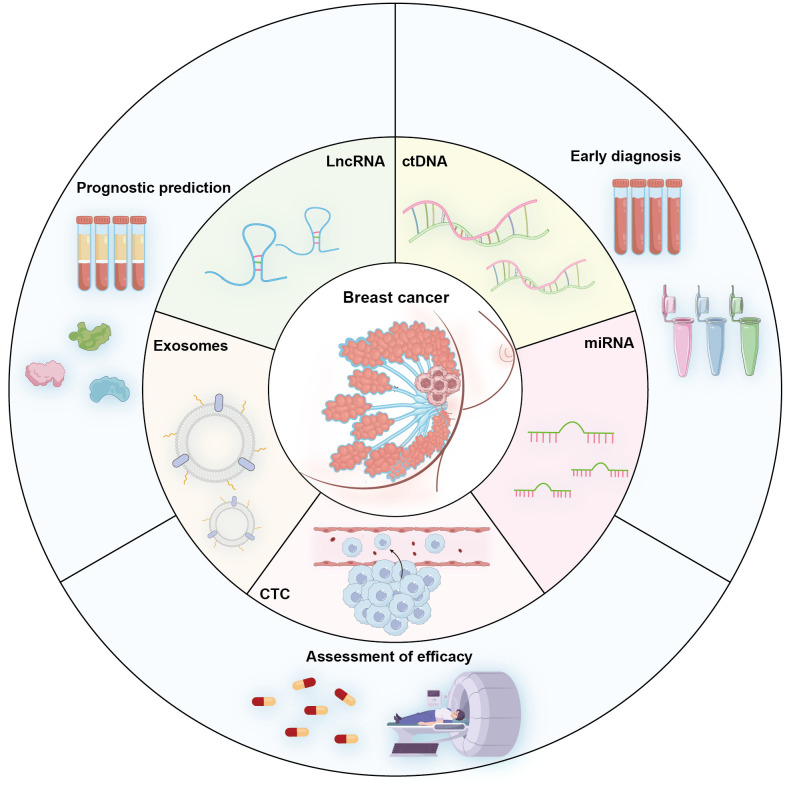
Breast cancer is the most common malignant tumor and the leading cause of mortality among women worldwide. Triple-negative breast cancer (TNBC) is recognized as t the most aggressive form of breast cancer, with a poor prognosis and a high mortality rate within two years. The role of tumor markers in facilitating the early diagnosis, treatment, and monitoring of therapeutic efficacy and prognosis in TNBC is well-established. Currently, tissue biopsy remains the standard clinical method for determining tumor histology and staging. However, the invasive nature of tissue biopsy often leads to poor patient compliance, especially when repeated biopsies are required. In contrast, liquid biopsy offers several advantages: it is non-invasive, sample collection is straightforward, it can reflect the overall tumor burden and heterogeneity, and it allows for real-time monitoring. The markers primarily encompass circulating tumor cells (CTCs), circulating tumor DNA (ctDNA), microRNAs (miRNAs), long ncRNA (lncRNAs), exosome, and so forth. The present review aims to provide a comprehensive overview of the recent advancements and potential clinical applications of liquid biopsy technology in the context of TNBC.
Keywords: CTCs; CtDNA; TNBC; diagnostics; liquid biopsy; lncRNAs; miRNAs.
Copyright © 2025 Sheng and Zong.
Conflict of interest statement
The authors declare that the research was conducted in the absence of any commercial or financial relationships that could be construed as a potential conflict of interest.
Figures
References
-
- Lin NU, Vanderplas A, Hughes ME, Theriault RL, Edge SB, Wong YN, et al. Clinicopathologic features, patterns of recurrence, and survival among women with triple-negative breast cancer in the national comprehensive cancer network. Cancer. (2012) 118:5463–72. doi: 10.1002/cncr.27581, PMID: - DOI - PMC - PubMed
Publication types
LinkOut - more resources
Full Text Sources
