This is a preprint.
Phenome-Wide Risk Evaluation of GLP-1 Receptor Agonist Use in Type 2 Diabetes with Real-World Data Across Multiple Healthcare Systems
- PMID: 40832397
- PMCID: PMC12363721
- DOI: 10.1101/2025.08.13.25333579
Phenome-Wide Risk Evaluation of GLP-1 Receptor Agonist Use in Type 2 Diabetes with Real-World Data Across Multiple Healthcare Systems
Abstract
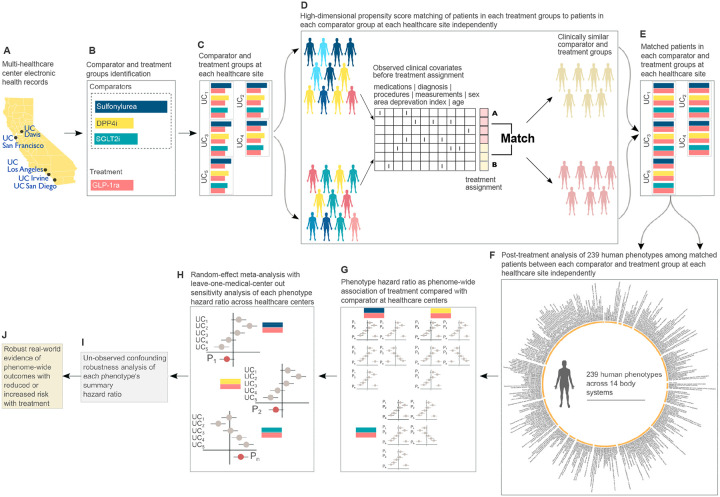
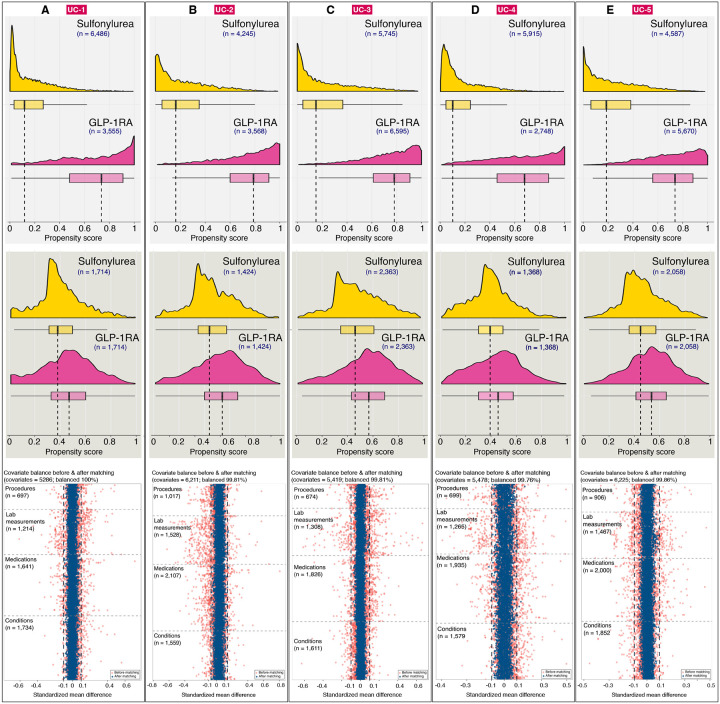
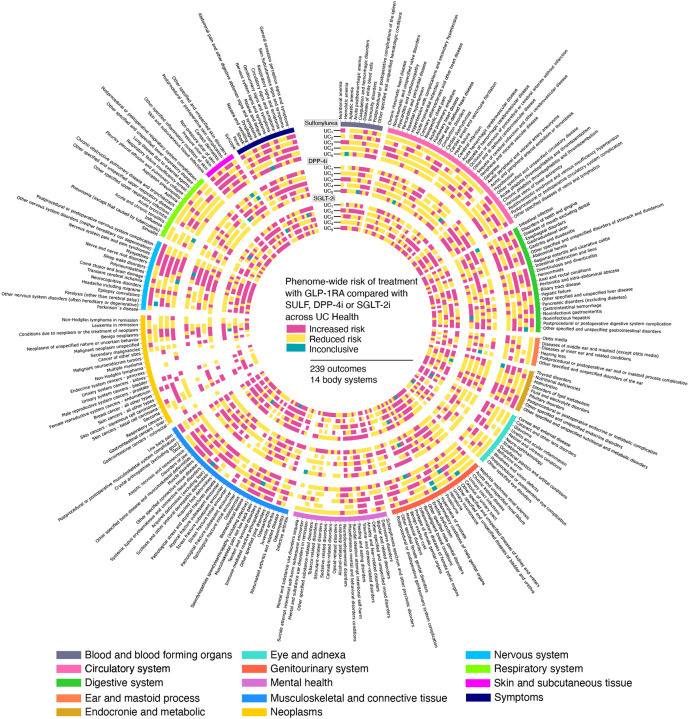
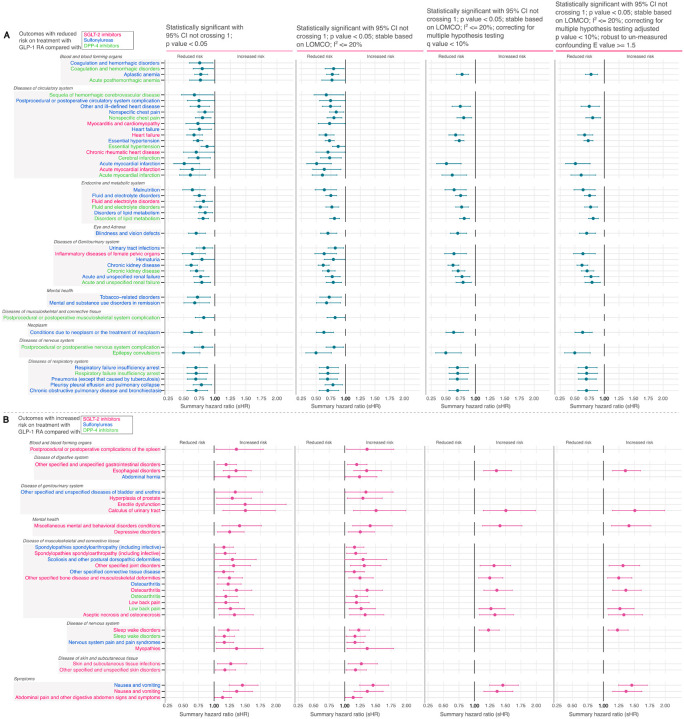
Glucagon-like peptide-1 receptor agonists (GLP-1RAs), widely used for managing type 2 diabetes (T2D) and weight, are gaining attention for treatment of a broad set of conditions. Large-scale, real-world evidence of their broader clinical impact is needed. We assessed the phenome-wide risks and benefits of new users of GLP-1RA versus sulfonylureas, SGLT-2 inhibitors (SGLT-2i), and DPP-4 inhibitors (DPP-4i) in adults with T2D in a multi-healthcare center, 1:1 high-dimensional propensity score matched new user cohort study utilizing principles of target trial emulation with electronic health records (EHRs) of over 9 million patients followed up to 730 days. Primary outcomes included 239 clinical endpoints across 14 organ systems. Among 86,790 patients, mean age was 58-66 years and 44-62% were female across cohorts. Compared to DPP-4i, GLP-1RA use was associated with a reduced risk of acute myocardial infarction (sHR 0.61, 95% CI 0.43-0.85) and chronic kidney disease (sHR 0.71, 95% CI 0.62-0.81). Compared to sulfonylurea, GLP-1RA use was associated with reduced acute renal failure risk (sHR 0.77, 95% CI 0.65-0.90). GLP-1RA use was associated with reduced heart failure risk compared to SGLT-2i (sHR 0.66, 95% CI 0.55-0.80). GLP-1RA also was associated with lower epilepsy risk versus DPP-4i (sHR 0.49, 95% CI 0.32-0.76). GLP1RA was associated with elevated risks of nausea/vomiting: sHR 1.37 vs SGLT2i, 95% CI 1.15-1.62; sHR 1.46 vs sulfonylureas, 95% CI 1.24-1.71). Head-to-head real-world comparisons with established T2D therapies confirmed the broad cardiorenal and metabolic benefits and known on-target adverse effects of GLP-1RAs -consistent with randomized clinical trials - but also suggest potential risks for musculoskeletal and genitourinary adverse events, warranting continued real-world post-market surveillance.
Figures
References
-
- Hegland TA, Fang Z, Bucher K. GLP-1 medication use for type 2 diabetes has soared. JAMA. 2024;332(12):952–953. - PubMed
-
- Gratzl S, Cartwright BMG, Rodriguez PJ, et al. Monitoring report: GLP-1 RA prescribing trends - March 2025 data. medRxiv. Published online March 7, 2025. doi: 10.1101/2025.03.06.25323524 - DOI
-
- Vidal J, Flores L, Jiménez A, Pané A, de Hollanda A. What is the evidence regarding the safety of new obesity pharmacotherapies. Int J Obes (Lond). 2025;49(3):402–411. - PubMed
-
- Pfeffer MA, Claggett B, Diaz R, et al. Lixisenatide in patients with type 2 diabetes and acute coronary syndrome. N Engl J Med. 2015;373(23):2247–2257. - PubMed
Publication types
Grants and funding
LinkOut - more resources
Full Text Sources
Miscellaneous