


Roles of biomaterials in modulating the innate immune response in ocular therapy
- PMID: 40838059
- PMCID: PMC12363269
- DOI: 10.3389/fddev.2023.1077253
Roles of biomaterials in modulating the innate immune response in ocular therapy
Abstract
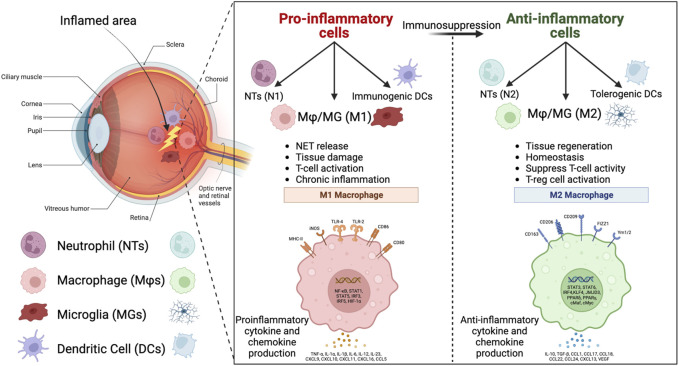
The eye is a hard-to-treat organ due to its poor regenerative capacity and susceptibility to inflammation; as a result, it has an immune privilege mechanism. In the case of ocular degenerative disorders, chronic and uncontrolled ocular inflammations can overcome this immune response to initiate and exacerbate tissue degeneration, ultimately leading to blindness. Recent landmark discoveries on the key roles of the ocular innate immune system in regulating acute and chronic inflammations as well as tissue fibrosis and homeostasis have shed light on the value of novel treatment interventions in modulating ocular immune responses at the molecular, cellular, and tissue levels. This strategy can be attained by using therapeutics to target resident phagocytes and antigen-presenting cells, namely, microglia and dendritic cells, as well as infiltrating neutrophils and macrophages. Biomaterials are foreign materials to the host and interact with innate immune cells. To leverage such intrinsic immunomodulatory properties, biomaterials such as implants, injectable depots, and nano/micro particles can be used alone as a treatment or with different payloads as carriers in immune-related ocular disorders. This article discusses how physicochemical properties such as biodegradability, size, shape, and charge affect biomaterials' interaction with the eye's innate immune system, therefore influencing outcomes towards pro- or anti-inflammatory responses. Knowledge about the eye's immunological response is required for designing tolerogenic biomaterials including intraocular lenses, cellular scaffolds, therapeutic molecule depots, or carriers of gene therapies. The discussion presented in this review will shed light on the potential use of biomaterials to direct immune responses toward favorable treatment outcomes.
Keywords: biomaterials; eye; immune-related disorders; immunomodulation; innate immune system.
Copyright © 2023 Rafiei, Chung and Chau.
Conflict of interest statement
The authors declare that the research was conducted in the absence of any commercial or financial relationships that could be construed as a potential conflict of interest.
Figures



References
-
- Adamson P., Wilde T., Dobrzynski E., Sychterz C., Polsky R., Kurali E., et al. (2016). Single ocular injection of a sustained-release anti-VEGF delivers 6months pharmacokinetics and efficacy in a primate laser CNV model. J. Control Release 244, 1–13. 10.1016/j.jconrel.2016.10.026 - DOI - PMC - PubMed
-
- Anderson J. M. (2003). Biological responses to materials. Annu. Rev. Mater. Res. 31, 81–110. 10.1146/annurev.matsci.31.1.81 - DOI
Publication types
LinkOut - more resources
Full Text Sources
