


High-level activity and access to sport following lower limb amputation due to malignant musculoskeletal tumors versus trauma: a prospective comparative study
- PMID: 40839085
- PMCID: PMC12370868
- DOI: 10.1007/s00402-025-06037-x
High-level activity and access to sport following lower limb amputation due to malignant musculoskeletal tumors versus trauma: a prospective comparative study
Abstract
Introduction: Patients with musculoskeletal tumors who undergo amputation show reduced physical function. To give these patients better expectations of their future physical capabilities and to enhance the evaluation and development of postoperative rehabilitation, we investigated high-level activity and access to sport using objective measurements and questionnaires. We then compared the results to those of amputees who had undergone amputation due to trauma.
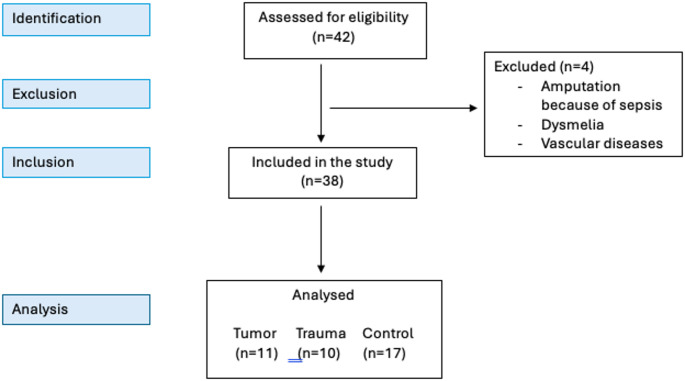
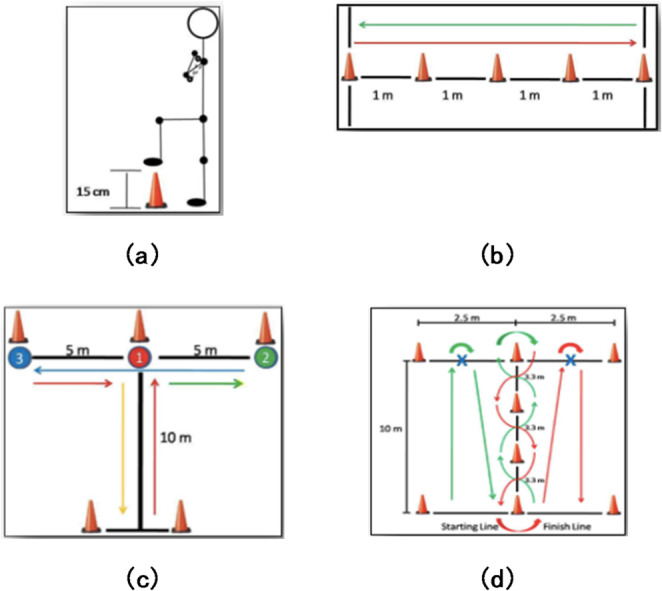
Materials and methods: In a prospective, monocentric study, we evaluated and correlated the results of the conventional mobility tests such as "timed-up-and-go" test (TUG), "2-Minute-Walk-Test" (2MWT), as well as the "10-Meter-Walk-Test" (10MWT) with a test for high-level activity. In this contribution, the Comprehensive High-Level Activity Mobility Predictor (CHAMP), originally developed for male servicemembers, was tested for feasibility in our cohort. We examined eleven patients who underwent amputation due to primary malignant bone or soft-tissue sarcomas and compared the results with ten patients who experienced traumatic amputation, along with seventeen patients in the healthy control group.
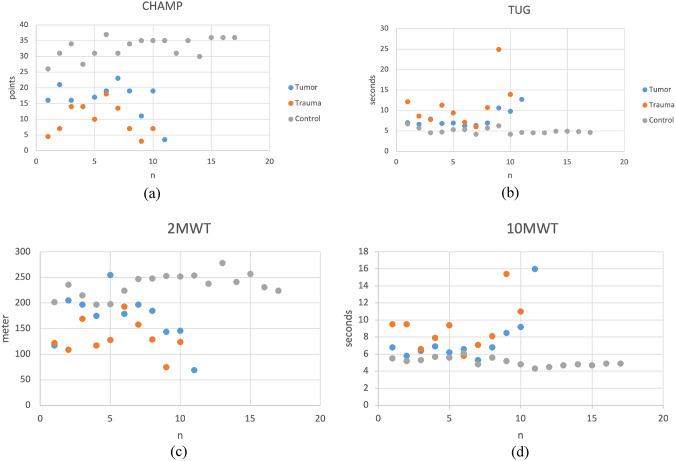
Results: Patients with lower leg amputations due to malignant musculoskeletal tumors exhibited superior outcomes in general mobility and high-level activity mobility compared to those with traumatic amputations. Using a questionnaire, we were able to demonstrate that patients suffering after amputation because of musculoskeletal tumor exhibited higher motivation and a greater sense of health and well-being compared to participants who had undergone traumatic amputation.
Conclusions: The CHAMP can be utilized as a complementary tool in the rehabilitation of amputees to objectively assess high-level mobility and to guide targeted training and therapeutic interventions.
Keywords: Amputation; CHAMP; High-level activity; Outcome measurements; Rehabilitation; Sports; Tumor amputations.
© 2025. The Author(s).
Conflict of interest statement
Declarations. Conflict of interest: The authors declare no competing interests. Informed consent: Informed consent was obtained from all subjects involved in the study. Written informed consent has been obtained from the patient(s) to publish this paper.
Figures

References
-
- World Health Organisation (2010) Global Recommendations on Physical Activity for Health. Geneva - PubMed
-
- Shephard RJ (1991) Benefits of sport and physical activity for the disabled: implications for the individual and for society. Scand J Rehabil Med 23(2):51–59 - PubMed
-
- Wong CK et al (2021) A scoping review of physical activity in people with Lower-Limb loss: 10,000 steps per day?? Phys Ther 101(8) - PubMed
-
- Kegel B, Webster JC, Burgess EM (1980) Recreational activities of lower extremity amputees: a survey. Arch Phys Med Rehabil 61(6):258–264 - PubMed
-
- Kars C et al (2009) Participation in sports by lower limb amputees in the Province of drenthe, the Netherlands. Prosthet Orthot Int 33(4):356–367 - PubMed
Publication types
MeSH terms
LinkOut - more resources
Full Text Sources
Medical
