


Psychometric evaluation of the Chinese version of the Caregiver-Centered Communication Questionnaire (CCCQ) in caregivers of cancer patients
- PMID: 40841639
- PMCID: PMC12372201
- DOI: 10.1186/s12912-025-03756-9
Psychometric evaluation of the Chinese version of the Caregiver-Centered Communication Questionnaire (CCCQ) in caregivers of cancer patients
Erratum in
-
Correction: Psychometric evaluation of the Chinese version of the Caregiver-Centered Communication Questionnaire (CCCQ) in caregivers of cancer patients.BMC Nurs. 2025 Oct 7;24(1):1244. doi: 10.1186/s12912-025-03917-w. BMC Nurs. 2025. PMID: 41057852 Free PMC article. No abstract available.
Abstract
Background: Scientific assessment is a crucial first step in establishing effective communication between healthcare teams and caregivers. Given the lack of reliable and effective tools to comprehensively assess the quality of communication between healthcare teams and caregivers of cancer patients in China. This study aimed to translated and culturally adapted the Caregiver-Centered Communication Questionnaire (CCCQ) and assessed its psychometric properties in caregivers of cancer patients in China.
Methods: CCCQ was translated into Chinese following Brislin's model and culturally adapted according to a Delphi expert panel. Then pretested and refined the Chinese versions of the CCCQ (CCCQ-C) among 10 caregivers. A cross-sectional survey was conducted among 600 caregivers of cancer patients from October to December 2024. Psychometric properties of CCCQ-C were evaluated exploratory factor analysis (EFA), confirmatory factor analysis (CFA), McDonald's omega coefficient, and test-retest reliability.
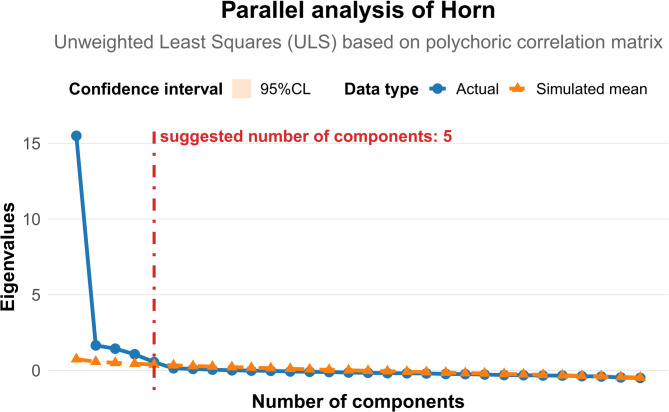
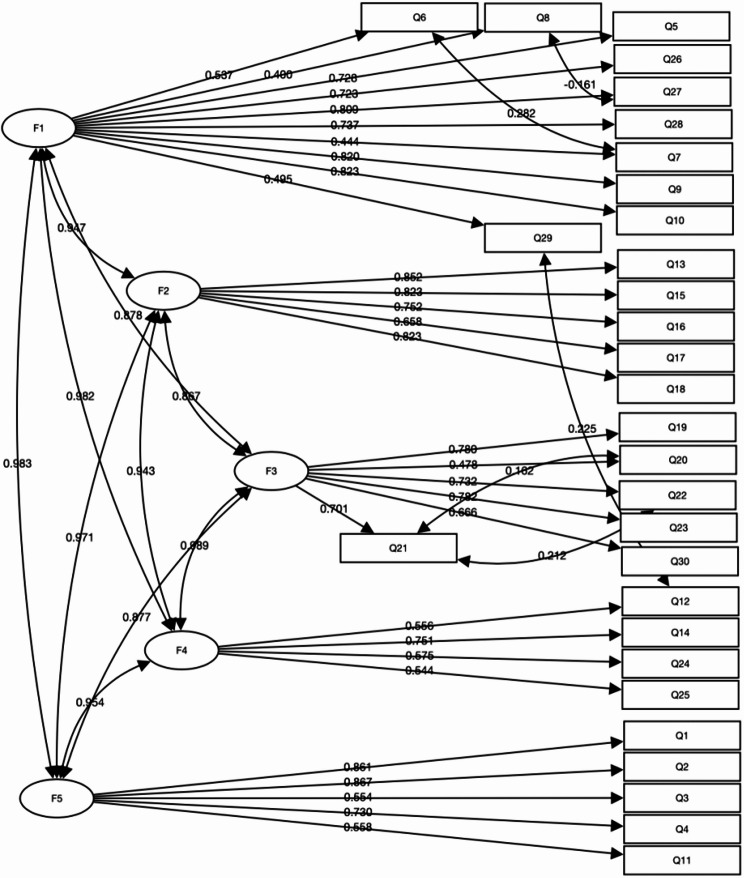
Results: The CCCQ-C demonstrated strong content validity (I-CVI = 0.800 ~ 1.000, S-CVI = 0.980) and internal consistency (McDonald's omega = 0.965). EFA identified five factors explaining 71.014% cumulative variance, while CFA confirmed good model fit. Test-retest reliability was excellent (r = 0.820, ICC = 0.806). The overall questionnaire remained unchanged in terms of 5 dimensions and 30 items during the process of translation and validation.
Conclusion: In China's medical environment for cancer patients, CCCQ-C demonstrates acceptable psychometric properties, making it a reliable and effective assessment tool for evaluating communication between healthcare teams and caregivers. This provides valuable guidance for future practice, research and policy making.
Keywords: CCCQ; Caregiver-centered; Medical communication; Questionnaire; Reliability and validity.
© 2025. The Author(s).
Conflict of interest statement
Declarations. Ethics approval and consent to participate: The study protocol was approved by the Ethics Committee of the Third People’s Hospital Affiliated to Fujian University of Traditional Chinese Medicine (No.: 2024KS-161-1.). The procedures used in this study adhere to the tenets of the Declaration of Helsinki. Written informed consent was obtained prior to the study participants’ enrolment in the study. Consent for publication: Not applicable. Competing interests: The authors declare no competing interests.
Figures

References
-
- Kittel JA, Seplaki CL, Wijngaarden E, Richman J, Magnuson A, Conwell Y. Fatigue, impaired physical function and mental health in cancer survivors: the role of social isolation. Support Care Cancer. 2024;33(1):16. - PubMed
-
- Liu LL, Chen MX, Wang YJ, Zhang X. Q. A qualitative meta-synthesis of the caregiving experiences of family caregivers of pancreas cancer patients. Chin J Mod Nurs. 2020;26:4345–51.
-
- Gong Qinqin C, Shouxia. Research progress on primary caregiver needs of patients with advanced cancer. Mod Prev Med. 2022;49(12):2235–40.
LinkOut - more resources
Full Text Sources
