


Associations among skin carotenoids, anthropometric parameters and healthy lifestyle behaviors in young adults: a cross-sectional, population-based study
- PMID: 40846942
- PMCID: PMC12372304
- DOI: 10.1186/s12967-025-06978-2
Associations among skin carotenoids, anthropometric parameters and healthy lifestyle behaviors in young adults: a cross-sectional, population-based study
Abstract
Background: Healthy lifestyle behaviors are the cornerstone for the prevention of a wide range of metabolic and chronic non-communicable diseases (NCSs). Among lifestyle factors, diet, body mass index (BMI), smoking habits and physical activity are associated with the risk of developing NCSs, including obesity, type 2 diabetes, cardiovascular diseases and certain types of cancer. Particularly, as a part of a healthy diet, increased intake of fruit and vegetable (FV), rich sources of vitamins and minerals, dietary fiber and non-nutrient substances including antioxidants, are known to improve overall health. Carotenoid levels can be measured in skin providing an objective biomarker of long-term FV intake. This study aimed to explore the potential role of skin carotenoids as indicators of health status examining their associations with lifestyle factors among a cohort of young adults. This study aimed to explore the potential role of skin carotenoids as indicators of health status examining their associations with lifestyle factors among a cohort of young adults.
Methods: A sample of 2078 university students were enrolled at the University of Calabria, Italy. All participants underwent anthropometric measurements, assessment of the adherence to the Mediterranean Diet (MD) pattern by the Mediterranean Diet Adherence Screener (MEDAS) and Mediterranean Life Style Index (MEDLIFE) questionnaires and the skin carotenoid content by Veggie Meter®. Student's t-test, chi-squared test, and univariate and multiple linear regressions were used for analyses.
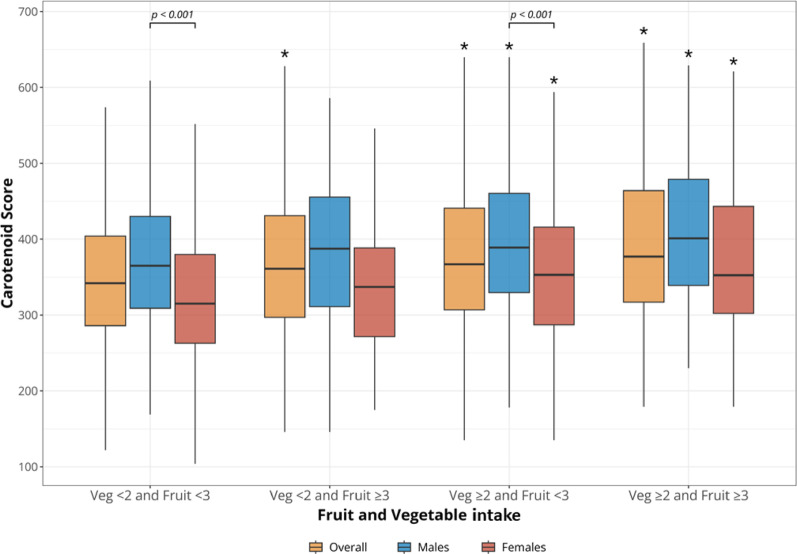
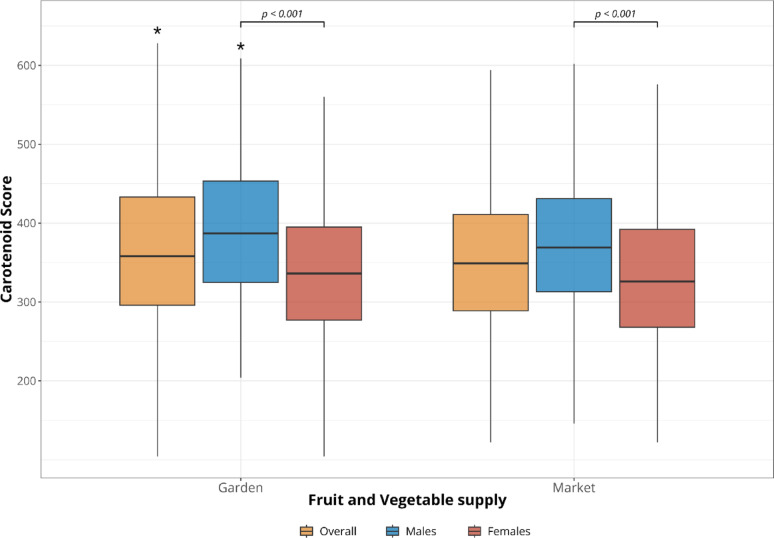
Results: Participants had a mean BMI of 23.30 ± 3.79, which falls within the normal range as well as a medium adherence to the dietary (MEDAS: 7.19 ± 1.86) and lifestyle (MEDLIFE: 3.38 ± 1.21) MD patterns. Mean skin carotenoid levels were 360.61 ± 97.02, with higher carotenoid score in participants stocking up on FV from garden than market (368.28 ± 99.98 vs 357.84 ± 95.88, p = 0.03). Moreover, skin carotenoids were significantly higher in participants declaring to consume more than 2 servings of vegetables and more than 3 servings of fruits/day compared to those having less FV intakes (391.67 ± 101.03 vs 349.27 ± 90.92, p < 0.0001). Multiple regression analyses have revealed that the carotenoid score was positively associated with age, male gender, MEDAS, stocking up on FV from the garden and consuming high FV, while it was negatively associated with BMI and smoking habits.
Conclusions: Skin carotenoids are objective indicators of health status showing a positive association with the adherence to healthy diet and lifestyle behaviors among a cohort of young adults. Findings from this study may contribute to identify individuals with potential risk factors for NCDs and to develop public health strategies to encourage healthier lifestyles.
Keywords: Fruit and vegetable intake; Mediterranean Diet; Skin carotenoid levels; Veggie meter.
© 2025. The Author(s).
Conflict of interest statement
Declarations. Ethics approval and consent to participate: The study was conducted according to the guidelines of the Declaration of Helsinki, and approved by the Ethics Committee of the University of Calabria, Italy (approval number: #0735744/2023). Informed consent was obtained from all subjects involved in the study. Competing interests: The authors declare no conflict of interest.
Figures
References
-
- Organization WH. Noncommunicable diseases: Risk factors and conditions [Available from: https://www.who.int/data/gho/data/themes/topics/noncommunicable-diseases....
-
- Dietary guidelines for Americans 2015–2020.
-
- heath. USDoHaHSHPuai. Healthy People 2010: Understanding and Improving Health. Washington, DC; US. Government Printing Office November 2000.
MeSH terms
Substances
Grants and funding
- Department of Excellence (Italian Law. 232/2016)/Ministero dell'Istruzione, dell'Università e della Ricerca
- PRIN 2022/Ministero dell'Istruzione, dell'Università e della Ricerca
- European Union; NextGeneration EU (# 2022AA4FTJ/Ministero dell'Istruzione, dell'Università e della Ricerca
- CUP H53D23006420006/Ministero dell'Istruzione, dell'Università e della Ricerca
- PRIN PNRR 2022-European Union; NextGenerationEU initiative (#P2022YAKJY/Ministero dell'Istruzione, dell'Università e della Ricerca
LinkOut - more resources
Full Text Sources
Medical
