


Diagnostic utility and clinical relevance of anti-MCV and anti-CCP antibodies in rheumatoid arthritis
- PMID: 40849863
- PMCID: PMC12375518
- DOI: 10.1007/s10238-025-01850-5
Diagnostic utility and clinical relevance of anti-MCV and anti-CCP antibodies in rheumatoid arthritis
Erratum in
-
Correction: Diagnostic utility and clinical relevance of anti-MCV and anti-CCP antibodies in rheumatoid arthritis.Clin Exp Med. 2025 Nov 6;25(1):353. doi: 10.1007/s10238-025-01891-w. Clin Exp Med. 2025. PMID: 41193879 Free PMC article. No abstract available.
Abstract
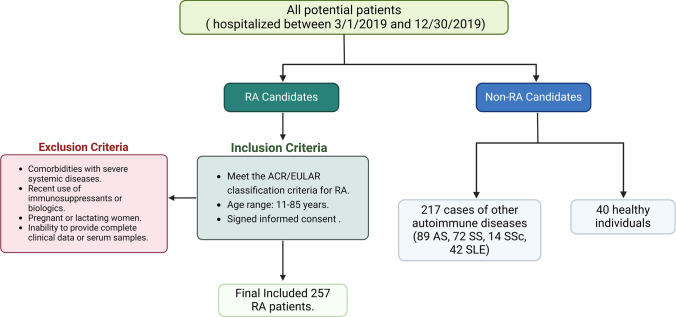
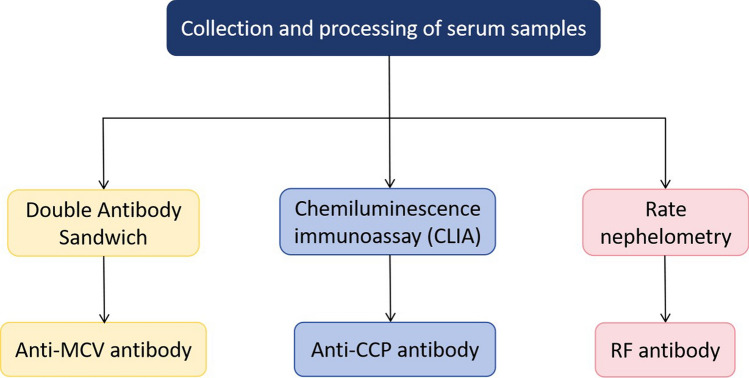
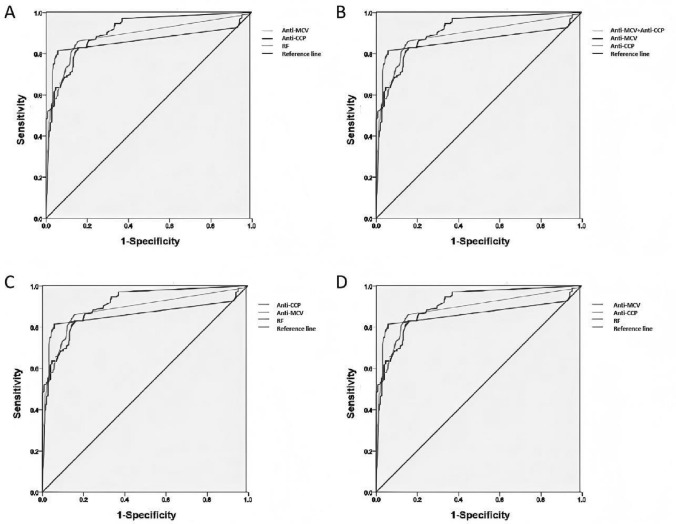
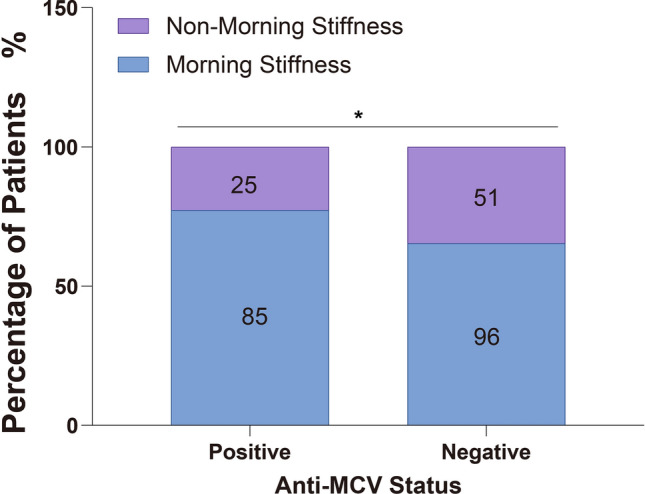
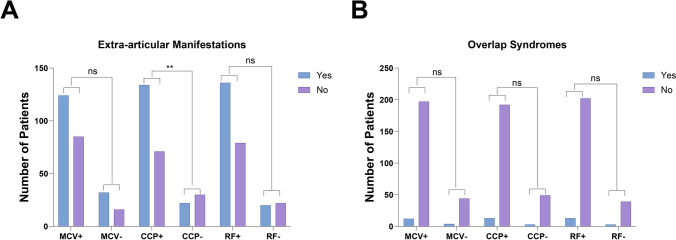
Rheumatoid arthritis (RA) is a persistent autoimmune disorder where serological biomarkers play a crucial role in diagnosis and monitoring disease activity. Antibodies targeting cyclic citrullinated peptides (anti-CCP), mutated citrullinated vimentin (anti-MCV), and rheumatoid factor are commonly used serological markers for RA. However, their respective diagnostic efficacies and potential for mutual complementation remain incompletely understood. This study investigates the diagnostic performance of these three antibodies and their association with disease progression in RA. A total of 257 RA patients who visited Jinhua Hospital Affiliated with Zhejiang University between March and December 2019 were enrolled. Serum specimens were analyzed for anti-CCP, anti-MCV antibodies, and RF levels using chemiluminescence immunoassay (CLIA) and rate nephelometry. The results indicated that the specificity of anti-CCP (94.2%) was higher than that of anti-MCV (84.4%) and RF (84.8%). Furthermore, anti-MCV antibody levels were significantly link to disease duration and morning stiffness. Additionally, anti-MCV and anti-CCP demonstrated differing associations with extra-articular manifestations of RA. The study suggests that anti-MCV antibodies hold significant potential as adjunctive biomarkers in RA, complementing anti-CCP antibodies to improve diagnostic accuracy and provide new insights for early diagnosis and disease monitoring in RA.
Keywords: Anti-CCP; Anti-MCV; Diagnostic performance; Disease progression; Rheumatoid arthritis; Serological markers.
© 2025. The Author(s).
Conflict of interest statement
Declarations. Conflict of interest: The authors declare no conflict of interest. Ethical approval and consent to participate: This study was approved by the Clinical Ethics Committee of Jinhua Central Hospital (No. 2024-183).
Figures


References
MeSH terms
Substances
Grants and funding
LinkOut - more resources
Full Text Sources
Medical
