


Investigating the role of molecular coating in human corneal endothelial cell primary culture using artificial intelligence-driven image analysis
- PMID: 40854928
- PMCID: PMC12379294
- DOI: 10.1038/s41598-025-14367-4
Investigating the role of molecular coating in human corneal endothelial cell primary culture using artificial intelligence-driven image analysis
Abstract
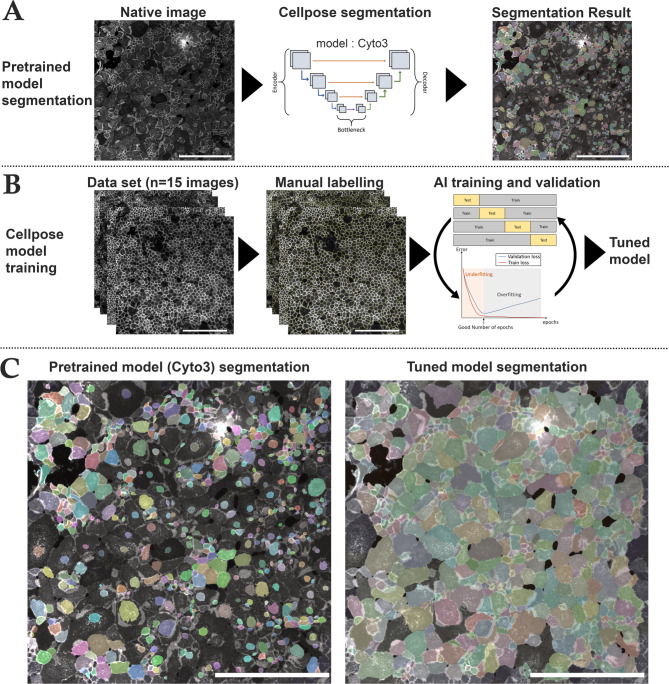
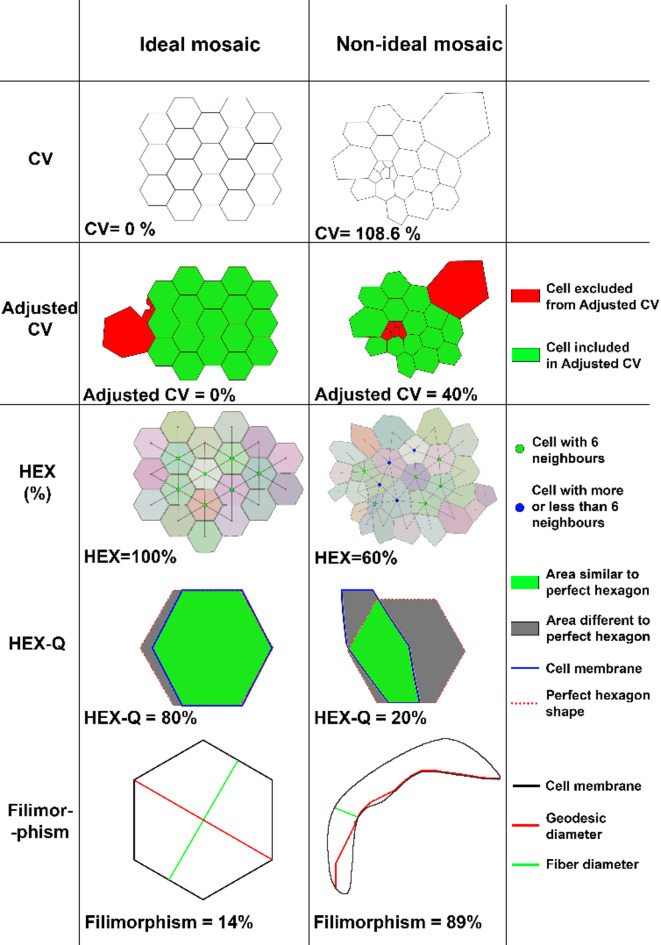
The monolayer of approximately 300,000 human corneal endothelial cells (hCECs) on the posterior surface of the cornea is essential to maintain transparency but is non-self-regenerative. Corneal blindness can currently only be treated by corneal transplantation, hindered by a global donor shortage, highlighting the need for developing tissue and/or cell therapy. The mass production of these advanced therapy medicinal products requires obtaining high-yield, high-quality endothelial cell cultures characterized by hexagonal shape, low size variability, and high endothelial cell density (ECD). Among the usual critical quality attributes which combine the expression of differentiation markers, ECD and cell morphological parameters, the latter are not optimally measured in vitro by conventional image analysis which poorly recognizes adherent cultured cells. We developed a high-performance automated segmentation using Cellpose algorithm and an original analysis method, improving the calculation of classical morphological parameters (coefficient of variation of cell area and hexagonality) and introducing new parameters specific to hCECs culture in vitro. Considering the importance of the extracellular matrix in vivo, and the panel of molecules available for coating cell culture plastics, we used these new tools to perform a comprehensive comparison of 13 molecules (laminins and collagens). We demonstrated their ability to discriminate subtle differences between cultures.
Keywords: Cell therapy; Endothelial cell density (ECD); High-performance automatic segmentation; Human corneal endothelial cells (hCECs); Immunohistochemistry; Molecular coating; Primary cell culture; Tissue-engineered endothelial keratoplasty (TEEK).
© 2025. The Author(s).
Conflict of interest statement
Declarations. Competing interests: The authors declare no competing interests.
Figures


References
-
- Gain, P. et al. « Global Survey of Corneal Transplantation and Eye Banking », JAMA Ophthalmol, vol. 134, no 2, pp. 167–173, févr. (2016). 10.1001/jamaophthalmol.2015.4776 - PubMed
-
- Crouzet, E. et al. « Tissue engineered endothelial keratoplasty in rabbit: tips and tricks », Acta Ophthalmologica, vol. 100, no 6, pp. 690–699, (2022). 10.1111/aos.15081 - PubMed
MeSH terms
Substances
LinkOut - more resources
Full Text Sources
