


Servant leadership effects on teacher wellbeing and enthusiasm in Turkish schools and the moderating influence of distributed leadership
- PMID: 40855009
- PMCID: PMC12378411
- DOI: 10.1038/s41598-025-17311-8
Servant leadership effects on teacher wellbeing and enthusiasm in Turkish schools and the moderating influence of distributed leadership
Abstract
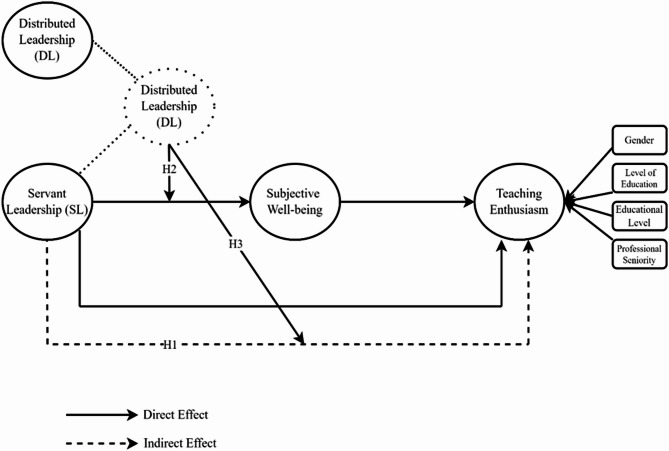
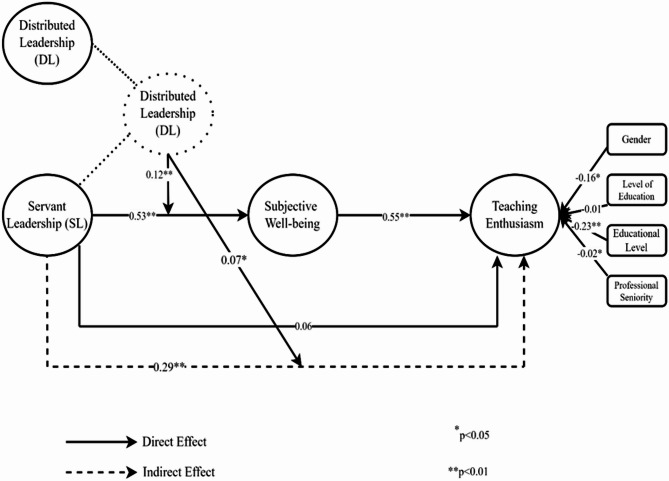
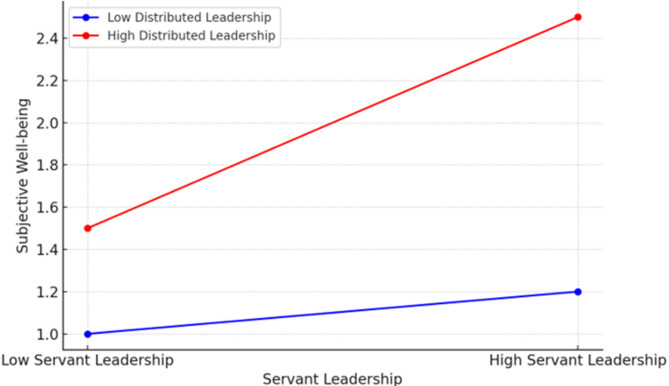
There is a consensus in the literature that the integrated leadership approach, which includes different leadership styles, has an impact on teachers' emotions as well as their behaviors. The aim of this study is to examine the moderator role of distributed leadership in the effect of servant leadership on teachers' teaching enthusiasm through their subjective well-being in Turkish schools. In this cross-sectional study, a moderated mediation model was tested with a quantitative approach. The analyses were conducted with data collected from 827 teachers from 81 provinces of Türkiye. The study results revealed that there was no significant direct relationship between servant leadership and teaching enthusiasm; however, there was a significant and positive relationship between servant leadership and teacher subjective well-being and between teacher subjective well-being and teaching enthusiasm. Additionally, the study found that when distributed leadership was high, the relationship between servant leadership and teacher subjective well-being and the indirect effect of servant leadership on teaching enthusiasm through teacher subjective well-being were strengthened. In other words, the study concluded that school principals who exhibit both servant and distributed leadership can increase teachers' teaching enthusiasm by improving teachers' subjective wellbeing.
Keywords: Distributed leadership; Integrated leadership; Moderated mediation effect; Servant leadership; Teacher subjective well-being; Teaching enthusiasm.
© 2025. The Author(s).
Conflict of interest statement
Declarations. Competing interests: The authors declare no competing interests. Ethical approval: I confirm that all methods in the research have been conducted in accordance with relevant guidelines/regulations. This study adheres to the principles outlined in the Declaration of Helsinki and received approval from the Ethics Committee of Siirt University (07.10.2024-7678). All participants provided voluntary informed consent and were informed that they could withdraw from the study at any time. Furthermore, our data underwent anonymization procedures to ensure participant privacy.
Figures
References
-
- Vergara, C. R. & Grit Self-efficacy and goal orientation: A correlation to achievement in statistics. Int. J. Educ. Res.8, 89–106 (2020).
-
- Acton, R. & Glasgow, P. Teacher well-being in neoliberal contexts: A review of the literature. Aust J. Teach. Educ.40 (8), 99–114. 10.14221/ajte.2015v40n8.6 (2015). - DOI
-
- Goodlad, J. A Place Called School (McGraw-Hill, 2004).
-
- Kunter, M. et al. Teacher enthusiasm: dimensionality and context specificity. Contemp. Educ. Psychol.36 (4), 289–301. 10.1016/j.cedpsych.2011.07.001 (2011). - DOI
-
- Li, P. H., Mayer, D. & Malmberg, L. E. Teacher well-being in the classroom: A micro-longitudinal study. Teach. Teach. Educ.115, 103720. 10.1016/j.tate.2022.103720 (2022). - DOI
MeSH terms
LinkOut - more resources
Full Text Sources
