


Treatment outcome in a specialized unit for adults with severe and extreme anorexia nervosa at one-year follow up
- PMID: 40855346
- PMCID: PMC12376739
- DOI: 10.1186/s40337-025-01374-z
Treatment outcome in a specialized unit for adults with severe and extreme anorexia nervosa at one-year follow up
Abstract
Background: Inpatient treatment successfully increases body weight and decreases eating disorder and associated symptoms in patients with anorexia nervosa (AN). However, relapse rates are high, particularly within the first year after discharge.
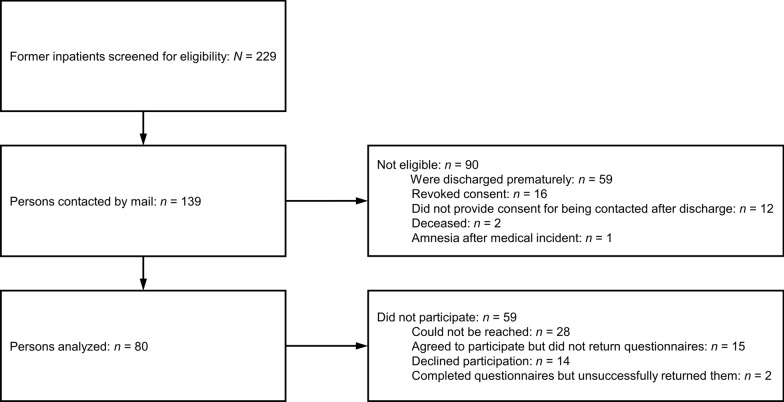
Methods: We examined treatment outcome one year after discharge in adults with AN (N = 80, 2 males; BMI at admission: M = 13.2 kg/m2, SD = 1.79) who received treatment in a specialized inpatient unit for AN patients with severe underweight (body mass index < 15 kg/m2) and/or excessive purging or exercising.
Results: From admission to discharge, body weight and self-reported life satisfaction significantly increased and self-reported eating disorder symptoms, depressive symptoms, and compulsive exercise significantly decreased. From discharge to follow up, life satisfaction and body weight decreased, and eating disorder symptoms, depressive symptoms, and compulsive exercise increased, although 87% of patients indicated to have received some kind of eating disorder treatment in the past six months. At follow up, the majority of patients indicated that they regularly ate three meals per day in the past week, including consumption of high-calorie, formerly forbidden foods. However, only a minority of patients indicated that they adhered to the hospital's guidelines on portion sizes. Patients' self-reported desired body weight at follow up was significantly higher than their current body weight.
Conclusions: While inpatient treatment results in substantial improvements that are partially maintained after discharge, severe and extreme cases of AN require more long-lasting, alternating treatment approaches (e.g., interval treatment) to ensure long-term recovery.
Keywords: Body mass index; Eating disorders; Inpatient treatment; Psychotherapy; Severe and enduring anorexia nervosa.
Plain language summary
This study examined outcomes of inpatient treatment for adults with anorexia nervosa one year after discharge. Initially, patients showed significant improvements in body weight, life satisfaction, and reductions in eating disorder symptoms, depression, and compulsive exercise. However, within a year after leaving the hospital, many patients experienced a decline in life satisfaction and body weight, along with a resurgence of eating disorder symptoms, depression, and compulsive exercise, despite most receiving some form of treatment during this period. While most patients reported eating three meals a day and consuming high-calorie foods, few followed the hospital's portion size guidelines. It is concluded that while inpatient treatment is effective, severe cases of anorexia nervosa need ongoing, innovative treatment approaches to support long-term recovery.
© 2025. The Author(s).
Conflict of interest statement
Declarations. Ethics approval and consent to participate: The study was approved by the ethics committee of the University Hospital of the LMU Munich. All participants signed informed consent before commencing the study. Consent for publication: Signed informed consent was obtained from all participants. Competing interests: All authors declare that they do not have any conflicts of interest.
Figures


References
-
- American Psychiatric Association. Diagnostic and statistical manual of mental disorders. 5th ed. American Psychiatric Association. 2013.
-
- AWMF. Joint German guideline “Diagnosis and treatment of eating disorders”. AWMF. 2020. https://register.awmf.org/assets/guidelines/051_D-Ges_Psychosom_Med_u_ae...
-
- Bates D, Mächler M, Bolker B, Walker S. Fitting linear mixed-effects models using lme4. J Stat Softw. 2015;67(1):1–48. 10.18637/jss.v067.i01. - DOI
-
- Beck AT, Steer RA, Brown GK. Manual for the beck depression inventory-II. Psychological Corporation. 1996.
LinkOut - more resources
Full Text Sources
Research Materials
Miscellaneous
