


Comparing neoadjuvant targeted therapy plus transarterial chemoembolization versus triple therapy including immunotherapy in hepatocellular carcinoma: a Chinese multicentre study
- PMID: 40856809
- PMCID: PMC12381322
- DOI: 10.1007/s00262-025-04136-7
Comparing neoadjuvant targeted therapy plus transarterial chemoembolization versus triple therapy including immunotherapy in hepatocellular carcinoma: a Chinese multicentre study
Abstract
Background: Neoadjuvant therapy (NAT) is a promising strategy to improve long-term outcomes in hepatocellular carcinoma (HCC), particularly for patients with borderline resectable. Targeted therapy, transarterial chemoembolization (TACE), immunotherapy, and radiotherapy are all effective NAT strategies for HCC; however, the optimal NAT regimen for HCC remains undefined.
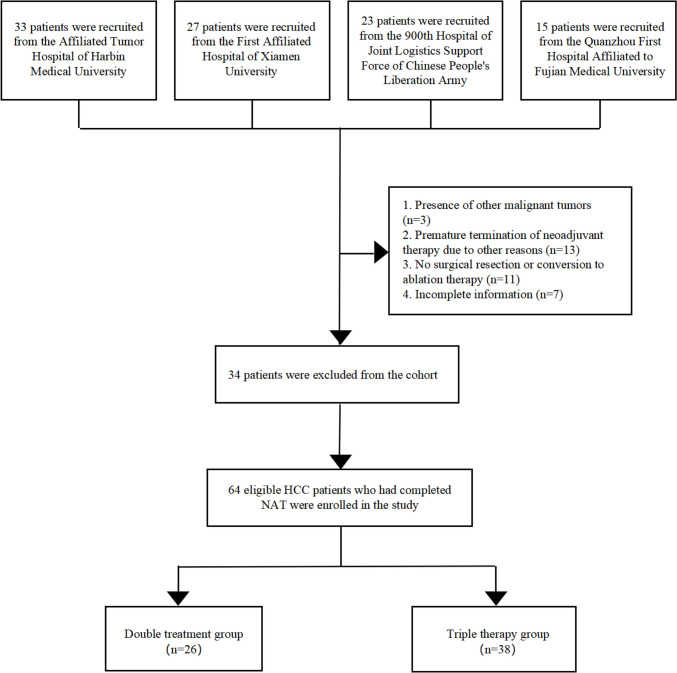
Methods: This multicentre retrospective study included 64 HCC patients who underwent NAT followed by surgical resection between 2020 and 2024 at four tertiary hospitals in China. Based on the treatment regimen, patients were divided into two groups: the dual-therapy group, which received TACE combined with either lenvatinib or bevacizumab, and the triple-therapy group, which additionally received anti-PD-1/PD-L1 immunotherapy. Survival outcomes and prognostic factors were evaluated using the Kaplan-Meier method and Cox proportional hazards models.
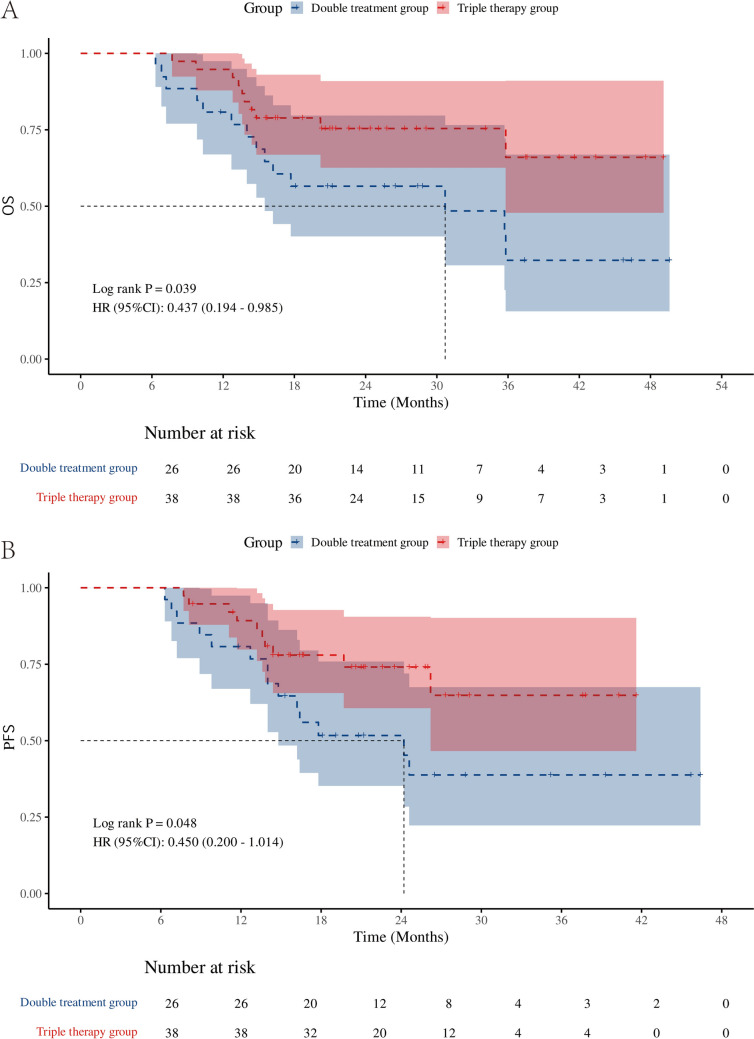
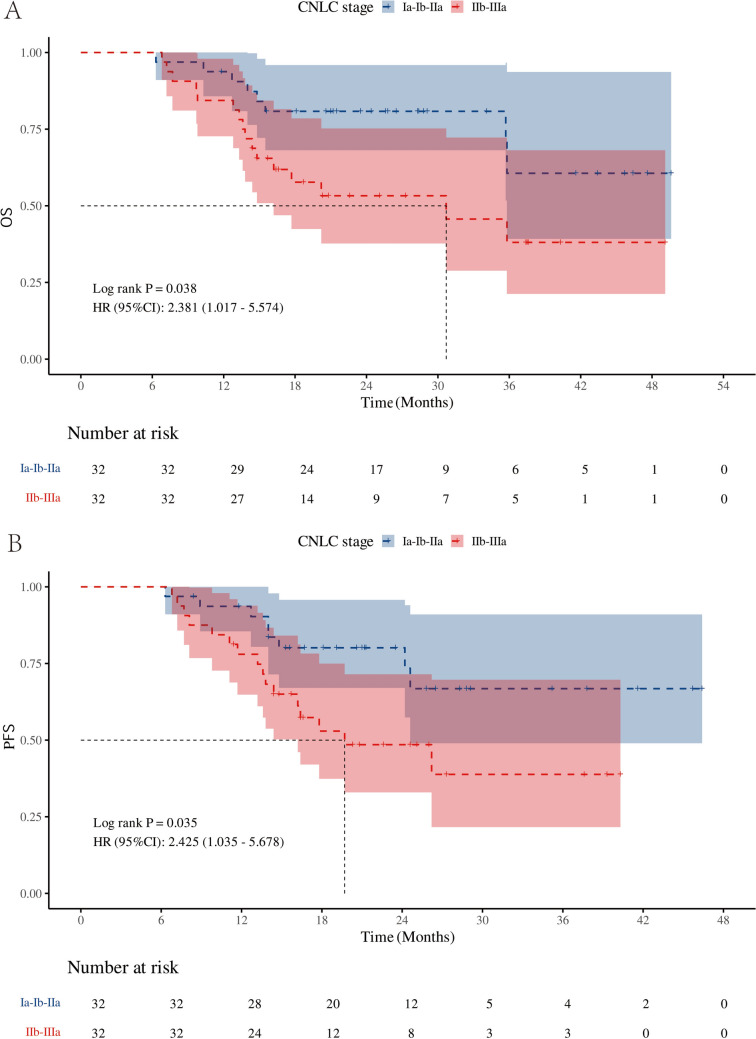
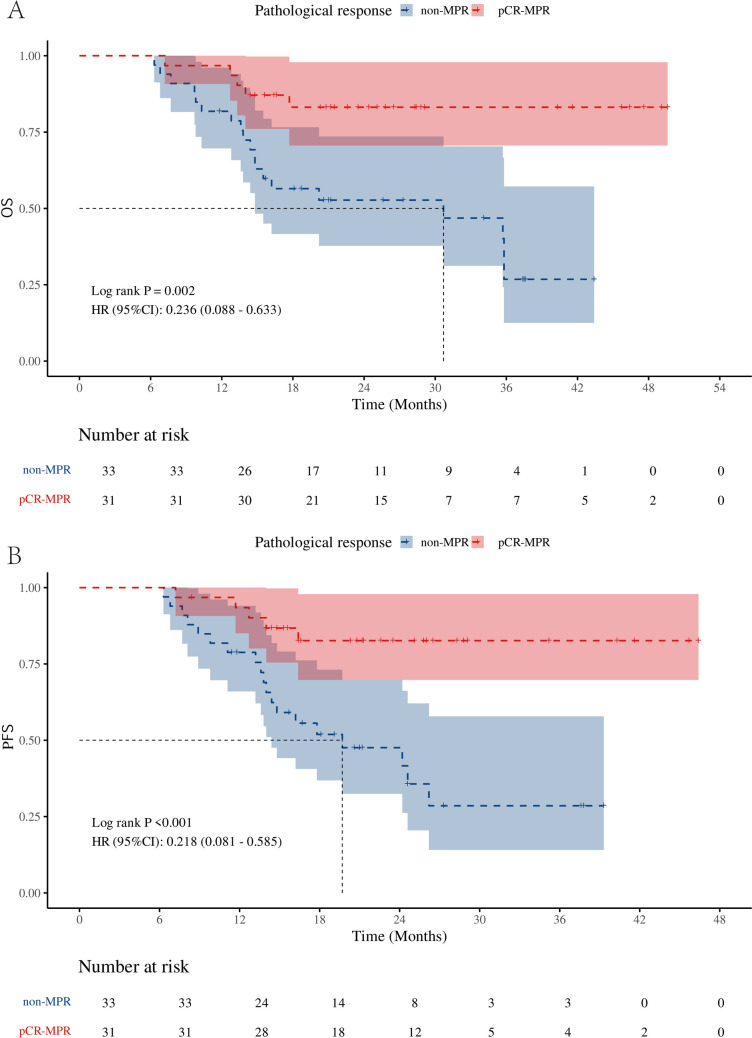
Results: The triple-therapy group demonstrated significantly better progression-free survival (PFS) and overall survival (OS) compared to the dual-therapy group (PFS: HR = 0.450, P = 0.048; OS: HR = 0.437, P = 0.039). Multivariate Cox analysis identified triple therapy, lower tumour burden, and higher pathological response as favourable prognostic factors, whereas vascular invasion and elevated alpha-fetoprotein (AFP) levels were linked to poorer outcomes. Additionally, in this Chinese HCC cohort, the China Liver Cancer (CNLC) staging system appeared to provide superior prognostic stratification compared to the Barcelona Clinic Liver Cancer (BCLC) system.
Conclusion: In the context of NAT for HCC, triple therapy-combining TACE, targeted agents, and immunotherapy-appears to be a more effective treatment option compared to dual therapy.
Keywords: China liver cancer staging system; Hepatocellular carcinoma; Immune checkpoint inhibitor; Major pathological response; Neoadjuvant therapy; Transarterial chemoembolization.
© 2025. The Author(s).
Conflict of interest statement
Declarations. Conflict of interest: The authors have no relevant financial or non-financial interests to disclose. Ethical approval and informed consent. This research was approved by the Institutional Ethics Review Boards of all participating centres: Harbin Medical University Cancer Hospital (KY2024-28), The First Affiliated Hospital of Xiamen University ([2024]133), Quanzhou First Hospital Affiliated to Fujian Medical University (2025-K150), and the 900th Hospital of PLA Joint Logistic Support Force (2024–040). Given that the study was retrospective in nature, the requirement for informed consent was waived.
Figures
References
Publication types
MeSH terms
Substances
Supplementary concepts
Grants and funding
LinkOut - more resources
Full Text Sources
Medical
Research Materials
Miscellaneous
