


Potential of ciprofol as an alternative to propofol in elderly patients undergoing gastrointestinal endoscopy: a meta-analysis and trial sequential analysis
- PMID: 40860879
- PMCID: PMC12375929
- DOI: 10.3389/fphar.2025.1644182
Potential of ciprofol as an alternative to propofol in elderly patients undergoing gastrointestinal endoscopy: a meta-analysis and trial sequential analysis
Abstract
Objective: Ciprofol is increasingly being used for sedation and induction of anesthesia in China. However, it remains unclear whether ciprofol is a more appropriate sedative than propofol in gastrointestinal endoscopy, especially in the elderly population. This study aimed to compare the safety of ciprofol with propofol in elderly patients undergoing gastrointestinal endoscopy.
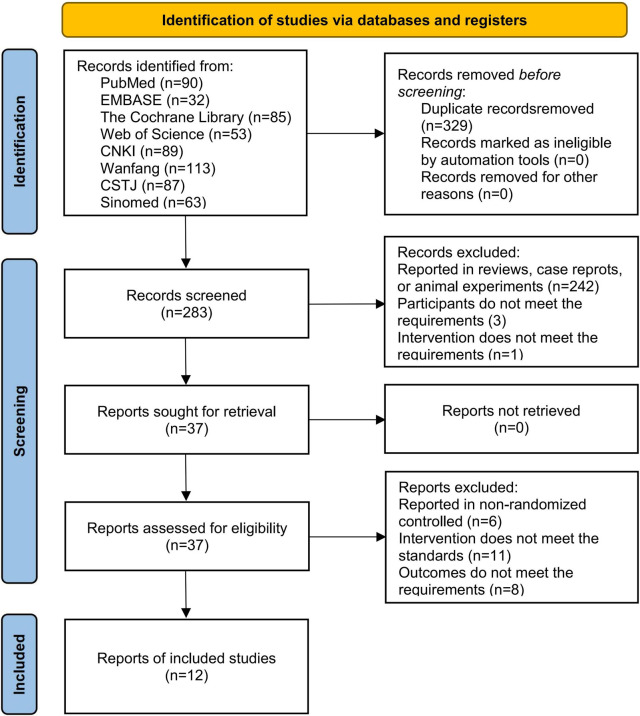
Methods: Eight common databases were used to search the relevant literature up to 1 January 2025. Included studies were screened according to established criteria, and their basic characteristics, outcome data, and risk of bias were recorded. Subsequently, Review Manager 5.3 software was used to perform meta-analysis and Trial Sequential Analysis (TSA) 0.9.5.10 Beta software was used to perform TSA.
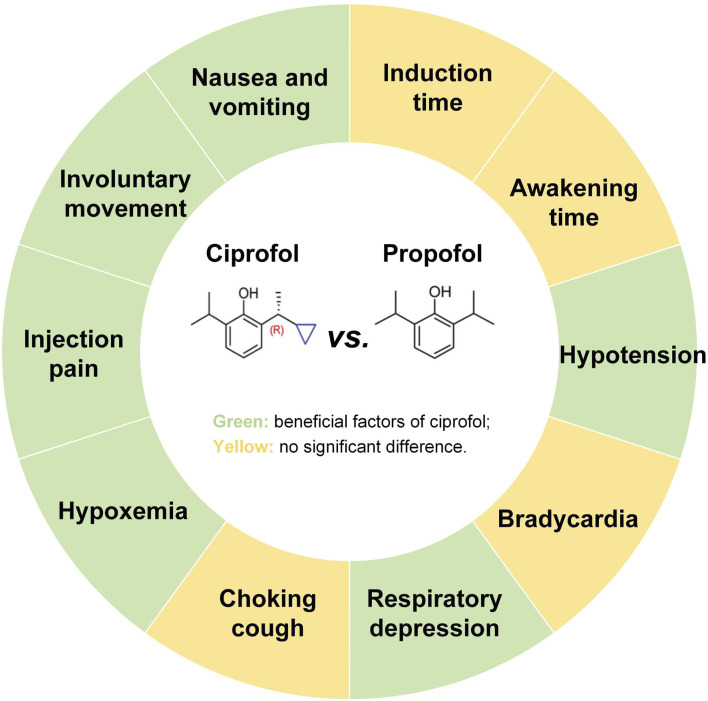
Results: Twelve randomized controlled trials and 1,653 participants were included in this study. Meta-analysis showed that compared to propofol, ciprofol reduced the incidence of hypotension (risk ratio [RR] 0.59, 95% confidence interval [CI] 0.48-0.71, P < 0.00001), respiratory depression (RR 0.30, 95% CI 0.20-0.46, P < 0.00001), hypoxemia (RR 0.29, 95% CI 0.20-0.43, P < 0.00001), injection pain (RR 0.15, 95% CI 0.10-0.22, P < 0.00001), involuntary movements (RR 0.70, 95% CI 0.53-0.92, P = 0.01) as well as nausea and vomiting (RR 0.59, 95% CI 0.36-0.96, P = 0.03), while there was no significant effect on induction time, awakening time, bradycardia, and choking cough (P > 0.05). The TSA revealed conclusive differences in hypotension, respiratory depression, hypoxemia, and injection pain. Regression analysis indicated no publication bias for any of the outcomes (P > 0.05) except awakening time (P = 0.007).
Conclusion: These findings suggest that in elderly patients undergoing gastrointestinal endoscopy, ciprofol has fewer cardiovascular, respiratory, and neurological adverse events than propofol, highlighting the potential of ciprofol as an alternative to propofol. However, the optimal dose of ciprofol for gastrointestinal endoscopic sedation in the elderly remains to be explored.
Systematic review registration: https://www.crd.york.ac.uk/PROSPERO/view/CRD42025643465, identifier CRD42025643465.
Keywords: ciprofol; elderly patients; gastrointestinal endoscopy; meta-analysis; propofol.
Copyright © 2025 Yu, Liao, Deng, Yang, Yin, Liu and Zhang.
Conflict of interest statement
The authors declare that the research was conducted in the absence of any commercial or financial relationships that could be construed as a potential conflict of interest.
Figures


References
-
- Aging and Health (2025). Available online at: https://www.who.int/zh/news-room/fact-sheets/detail/ageing-and-health (Accessed January 8, 2025).
-
- Benzoni T., Cascella M. (2025). “Procedural sedation,” in StatPearls. Treasure Island, FL. StatPearls Publishing. Available online at: http://www.ncbi.nlm.nih.gov/books/NBK551685/ (Accessed January 14, 2025). - PubMed
Publication types
LinkOut - more resources
Full Text Sources
Research Materials
