


Effect of Dietary Difructose Anhydride III Supplementation on the Metabolic Profile of Japanese Black Breeding Herds with Low-Level Chronic Exposure to Zearalenone in the Dietary Feed
- PMID: 40864085
- PMCID: PMC12390375
- DOI: 10.3390/toxins17080409
Effect of Dietary Difructose Anhydride III Supplementation on the Metabolic Profile of Japanese Black Breeding Herds with Low-Level Chronic Exposure to Zearalenone in the Dietary Feed
Abstract
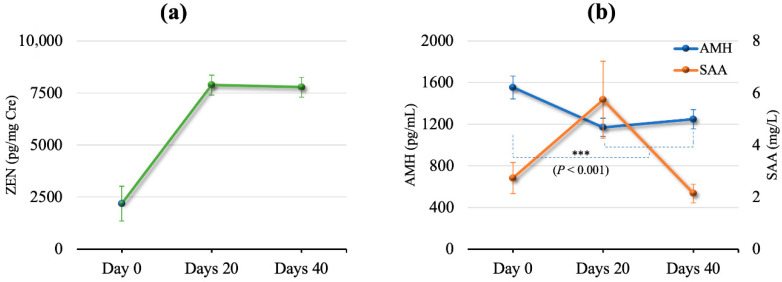
Mycotoxin contamination in animal feed can cause acute or chronic adverse effects on growth, productivity, and immune function in livestock. This study aimed to evaluate the impact of difructose anhydride III (DFA III) supplementation on serum biochemical parameters and intestinal environment in Japanese Black (JB) breeding cows under low-level chronic dietary exposure to zearalenone (ZEN). Using urinary ZEN concentration as an indicator of exposure, 25 JB cows were selected from a breeding farm with confirmed natural feed contamination. Blood samples were collected before DFA III supplementation (day 0), and on days 20 and 40 post-supplementation. Serum biochemical parameters and short-chain fatty acid concentrations were measured. During the studies, dietary ZEN concentration increased, yet improvements were observed in liver function, nutritional status, immune response, and inflammatory markers. Notably, serum butyrate concentration significantly increased following DFA III administration. These findings suggest that DFA III may positively influence intestinal microflora and enhance intestinal barrier function, which could contribute to improved health and nutritional status in cattle exposed to low-level chronic dietary ZEN contamination. DFA III supplementation may represent a promising strategy for mitigating the effects of low-level mycotoxin exposure in livestock production systems.
Keywords: Japanese Black cattle; difructose anhydride III; intestinal barrier function; metabolic profile; zearalenone.
Conflict of interest statement
The authors declare no conflicts of interest.
Figures


References
-
- Widodo O.S., Pambudi D., Etoh M., Kokushi E., Uno S., Yamato O., Taniguchi M., Lamid M., Takagi M. Practical application of a urinary zearalenone monitoring system for feed hygiene management of a Japanese black cattle breeding herd-relevance to anti-Müllerian hormone and serum amyloid A clarified from a two-year survey. Toxins. 2023;15:317. doi: 10.3390/toxins15050317. - DOI - PMC - PubMed
-
- Widodo O.S., Uno S., Kokushi E., Yamato O., Mardianto M.F.F., Shinya U., Kano Y., Kawashima C., Fushimi Y., Ono T., et al. Exposure of cattle breeding herds to naturally co-contaminated zearalenone and deoxynivalenol: The relevance of a urinary mycotoxin monitoring system for herd health and food safety. Toxins. 2024;16:402. doi: 10.3390/toxins16090402. - DOI - PMC - PubMed
-
- Gallo A., Minuti A., Bani P., Bertuzzi T., Cappelli F.P., Doupovec B., Faas J., Schatzmayr D., Trevisi E. A mycotoxin-deactivating feed additive counteracts the adverse effects of regular levels of Fusarium mycotoxins in dairy cows. J. Dairy Sci. 2020;103:11314–11331. doi: 10.3168/jds.2020-18197. - DOI - PubMed
MeSH terms
Substances
Grants and funding
LinkOut - more resources
Full Text Sources
Medical
