


Efficacy and safety of Nd: YAG laser vitreolysis in patients with physiological vitreous floaters
- PMID: 40866907
- PMCID: PMC12382255
- DOI: 10.1186/s12886-025-04311-5
Efficacy and safety of Nd: YAG laser vitreolysis in patients with physiological vitreous floaters
Abstract
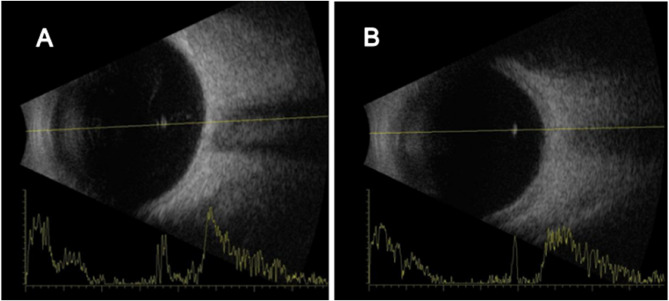
Purpose: To observe the clinical effects of Nd: YAG laser vitreolysis in patients with physiological vitreous floaters by A/B ultrasound and infrared fundus photography., and to evaluate the safety of the treatment by ffERG.
Methods: Thirty eyes diagnosed with physiological vitreous floaters were enrolled. Examination of BCVA, IOP, SLO, A/B ultrasound, infrared fundus photography and ffERG were performed. The vitreolysis was performed for all patients by the same skilled doctor using an ELLEX YAG laser vitreolysis machine. The IOP was measured half an hour after the operation. After treatment, the patients were followed up at 1 day, 1 week, and 1 month. At follow-up, the same thorough examination as before the operation was performed. ImageJ software was used to measure the size of the vitreous floaters in the infrared fundus photography pictures before and after treatment.
Results: There was no significant difference in BCVA and IOP before and after treatment (p > 0.05). Infrared fundus photography showed that the vitreous floaters were obviously reduced or disappeared after treatment, and the difference was statistically significant (p < 0.01). The latent period and amplitude of the five response waves of ffERG at each timepoint were compared before and after treatment, and there was no significant difference (P > 0.05). Ultra-wide angle SLO showed no severe complications in the vitreous or retina after treatment.
Conclusions: In short-term observations, Nd: YAG laser vitreolysis is safe and effective for the treatment of vitreous floaters and can be promoted clinically.
Keywords: A/B ultrasound; Full-field electroretinogram; Infrared fundus photography; Nd: YAG laser vitreolysis; Physiological vitreous floaters.
Conflict of interest statement
Declarations. Ethics approval and consent to participate: Ethics Committee approval by the Medical ethic committe of Hankou Aier Eye Hospital was obtained for the present study protocol that adhered to the tenets of the Declaration of Helsinki. Written informed consents were obtained from all the enrolled patients. Consent for publication: Not Applicable. Competing interests: The authors declare no competing interests.
Figures


References
-
- Timothy R, Fricke M, Jong KS, Naidoo P, Sankaridurg TJ, Naduvilath SM, Ho TY, Wong, Serge Resnikoff. Global prevalence of visual impairment associated with myopic macular degeneration and Temporal trends from 2000 through 2050: systematic review, meta-analysis and modelling[J]. Br J Ophthalmol. 2018;102(7):855–62. - PMC - PubMed
-
- Mura M, Engelbrecht LA, de Smet MD, Papadaki TG, van den Berg TJ. Surg floaters[J] Ophthalmol. 2011;118(9):1894–1894. e1891. - PubMed
-
- Schulz-Key S, Carlsson JO, Crafoord S. Longterm follow-up of pars plana vitrectomy for vitreous floaters: complications, outcomes and patient satisfaction. Acta Ophthalmol. 2011;89(2):159–65. - PubMed
-
- Sommerville DN. Vitrectomy for vitreous floaters: analysis of the benefits and risks. Curr Opin Ophthalmol. 2015;26(3):173–6. - PubMed
Grants and funding
LinkOut - more resources
Full Text Sources
