


The impact of family functioning on fertility intentions among university students: a study based on latent profile analysis
- PMID: 40866946
- PMCID: PMC12382022
- DOI: 10.1186/s12889-025-24358-9
The impact of family functioning on fertility intentions among university students: a study based on latent profile analysis
Abstract
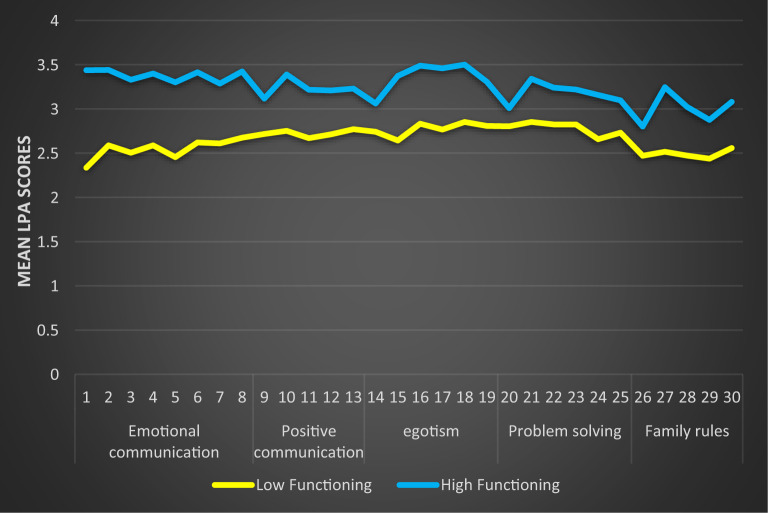
Background: Persistent low fertility in China poses critical socioeconomic challenges. Family functioning has been implicated in reproductive decisionmaking, yet its heterogeneity remain underexplored, particularly among young adults. This study employs Latent Profile Analysis (LPA) to identify high and lowfunctioning family profiles among Chinese university students and their parents, and to quantify their associations with marriageandchildbearing attitudes and explicit fertility intentions.
Methods: In a crosssectional survey of 484 student-parent pairs from two northwest Chinese universities, we administered a 68item questionnaire incorporating the 30item Chinese Family Assessment Device and standardized measures of fertility intentions and marriageandchildbearing views. LPA classified families into two profiles. Multinomial logistic regression (Models 1-3) tested the effect of family functioning on students' ideal number of children ("0," "1," "≥ 2," vs. "indifferent"), sequentially adjusting for student and parental sociodemographic covariates.
Results: LPA yielded two profiles: lowfunctining (57.0%) and highfunctoning (43.0%) families. In Model 1, lowfunctioning membership increased the odds of intending 0 children (R = 2.90, 95% CI 1.53-5.49, p < 0.01), 1 child (OR = 2.65, 1.51-4.63, p < 0.01), and ≥ 2 children (OR = 3.54, 2.28-5.49, p < 0.001) versus remaining indifferent. Adjusting for student factors (Model 2) attenuated the zerochild effect (p = 0.21) but retained significant associations for 1 child (OR = 2.22, 1.20-4.12, p < 0.05) and ≥ 2 children (OR = 3.08, 1.77-5.35, p < 0.001). In the fully adjusted model (Model 3), lowfunctioning status remained a predictor only of ≥ 2 children (OR = 2.57, 1.40-4.73, p < 0.01). Older parental age independently predicted zerochild intentions (OR = 1.20, 1.08-1.33, p < 0.001), while parental occupation moderated highintention outcomes.
Conclusions: Low family functioning exerts a robust influence on both low and high fertility intentions, although its effect on zerochild plans is largely explained by student and parental characteristics. By uncovering multidimensional familyfunctioning profiles and their differential impacts, this study advances theoretical models of intergenerational value transmission and informs targeted familyeducation and policy interventions aimed at mitigating China's lowfertility trajectory.
Keywords: Family functioning; Fertility intentions; Generational differences; Latent profile analysis (LPA); University students.
© 2025. The Author(s).
Conflict of interest statement
Declarations. Ethics approval and consent to participate: This study was conducted in accordance with the Declaration of Helsinki, and it has been approved by the Ethics Committee of Ningxia Medical University (Approval Number:2023-057). and informed consent was obtained from all the participants. Consent for publication: Not applicable. Competing interests: The authors declare no competing interests.
Figures

References
-
- Aassve A, Cavalli N, Mencarini L, Plach S, Livi Bacci M. The COVID-19 pandemic and human fertility. Science. 2020;369:370–1. - PubMed
-
- World Fertility Data | Population Division. https://www.un.org/development/desa/pd/data/world-fertility-data?utm_sou.... Accessed 9 Jan 2025.
-
- Total fertility rate globally. and by continent 1950–2024. Statista. https://www.statista.com/statistics/1034075/fertility-rate-world-contine.... Accessed 9 Jan 2025.
-
- Roser M. Fertility Rate. Our World Data. 2024.
MeSH terms
Grants and funding
- 23BRK036/National Social Science Foundation of China
- 23BRK036/National Social Science Foundation of China
- 23BRK036/National Social Science Foundation of China
- 23BRK036/National Social Science Foundation of China
- XZ2021034/Scientific Research Funding Project of Ningxia Medical University
- XZ2021034/Scientific Research Funding Project of Ningxia Medical University
- XZ2021034/Scientific Research Funding Project of Ningxia Medical University
- XZ2021034/Scientific Research Funding Project of Ningxia Medical University
- 2024AAC03226/Natural Science Foundation of Ningxia Province
- 2024AAC03226/Natural Science Foundation of Ningxia Province
- 2024AAC03226/Natural Science Foundation of Ningxia Province
- 2024AAC03226/Natural Science Foundation of Ningxia Province
LinkOut - more resources
Full Text Sources
Miscellaneous
