


Nutritional Value of Brewer's Spent Grain and Consumer Acceptance of Its Value-Added Food Products
- PMID: 40870812
- PMCID: PMC12386034
- DOI: 10.3390/foods14162900
Nutritional Value of Brewer's Spent Grain and Consumer Acceptance of Its Value-Added Food Products
Abstract
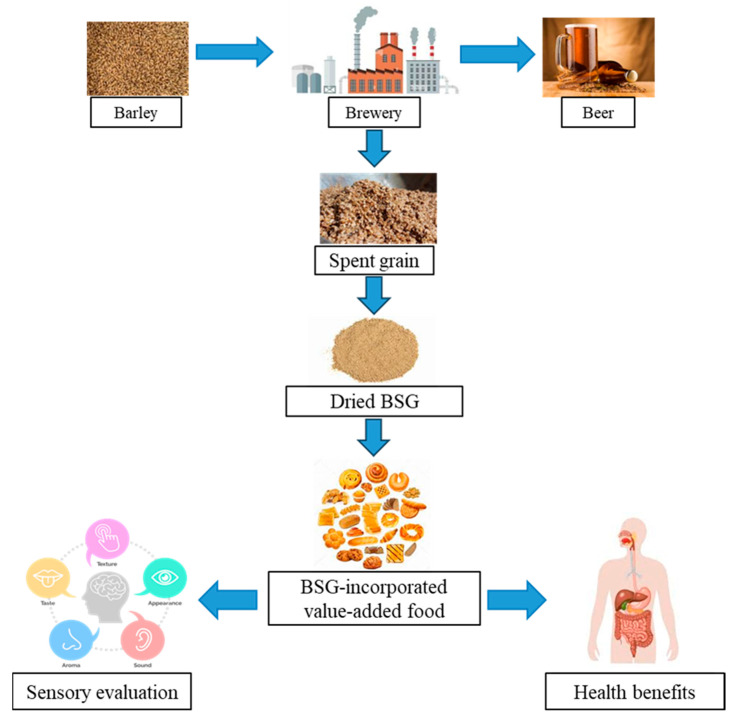
Brewer's spent grain (BSG), a byproduct of the brewing process, offers a sustainable alternative applicable to human nutrition. The nutritional composition, health advantages, and value-added uses of BSG in diverse food items, including snacks, bread, cookies, and pasta, are examined in this review. Furthermore, consumer acceptance and organoleptic attributes, including texture, taste and appearance, are discussed. BSG is composed of 60% carbohydrates (of which 50% dietary fiber), 10% lipids, and 30% proteins. BSG is also high in minerals such as calcium and phosphorous and bioactive polyphenols such as catechin, p-coumaric, and ferulic acid. BSG holds significant opportunities to be utilized in enhanced food production, biofuel generation, and other industrial applications. The reported therapeutic effects of BSG include anticarcinogenic, antiatherogenic and oxidative stress reduction. Based on sensory evaluations, the maximum amount of BSG that can be added to food products to maintain consumer acceptance is 15%. There is a need to convince manufacturers and consumers of the potential of incorporating BSG into food products, the health benefits of this, and the sustainability advantages of the use of BSG. The integration of BSG into food systems will contribute to food waste minimization and the promotion of the circular economy.
Keywords: Brewer’s spent grain; consumer; food; health; nutrients; valorization.
Conflict of interest statement
The authors declare that they have no known competing financial interests or personal relationships that could have appeared to influence the work reported in this paper.
Figures

References
-
- Gupta S., Cox S., Abu-Ghannam N. Process Optimization for the Development of a Functional Beverage Based on Lactic Acid Fermentation of Oats. Biochem. Eng. J. 2010;52:199–204. doi: 10.1016/j.bej.2010.08.008. - DOI
-
- Statista Beer Production Worldwide in 2020, by Region (In Million Hectoliters) 2021. [(accessed on 3 July 2025)]. Available online: https://www.statista.com/statistics/270270/worldwide-beer-production-by-...
Publication types
LinkOut - more resources
Full Text Sources
Miscellaneous
