


Trends in influenza- and pneumonia-related mortality in lung cancer patients from 1999 to 2022: a retrospective CDC WONDER analysis
- PMID: 40890819
- PMCID: PMC12403505
- DOI: 10.1186/s12931-025-03336-0
Trends in influenza- and pneumonia-related mortality in lung cancer patients from 1999 to 2022: a retrospective CDC WONDER analysis
Abstract
Background: Lung cancer is the most frequent cause of cancer-related deaths in the United States and worldwide. Infectious diseases such as pneumonia and influenza are major risk factors for morbidity and mortality in patients diagnosed with lung cancer. Our study expands upon existing literature investigating epidemiological differences in lung cancer mortality, using the Centers for Disease Control and Prevention (CDC) Wide-ranging Online Data for Epidemiology Research (WONDER) database to report on influenza- and pneumonia-related mortality rates in lung cancer patients through multiple decades.
Methods: CDC WONDER was used to identify influenza- and pneumonia-related deaths in lung cancer patients that occurred within the United States from 1999 to 2022. Crude and age-adjusted mortality rates (AAMR) were calculated, as well as annual percent change and weighted average annual percent change with 95% confidence intervals for the AAMRs. The Joinpoint Regression Program was used to determine trends in mortality within the study period.
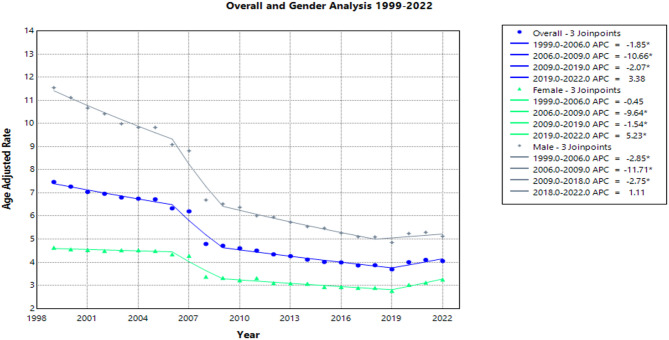
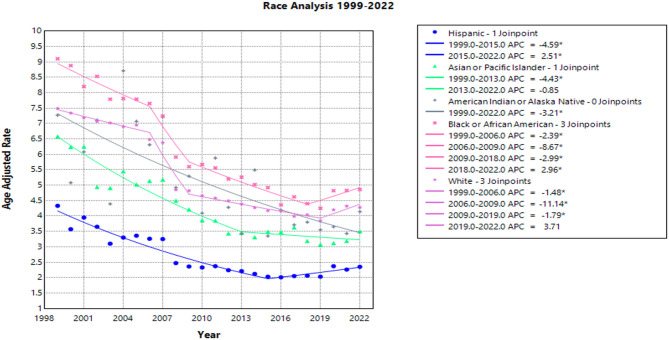
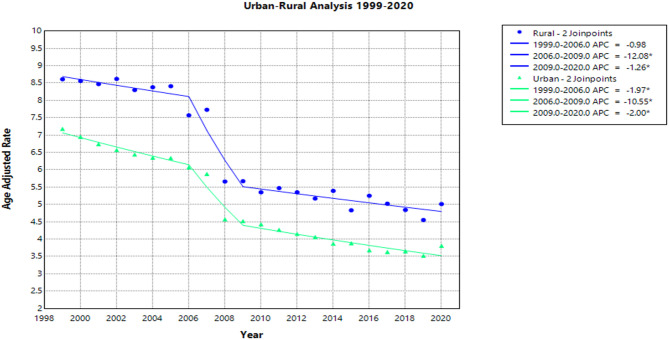
Results: From 1999 to 2022, male lung cancer patients demonstrated greater mortality rates from pneumonia and influenza compared to females (60.6% vs. 39.4%). When stratified by race and ethnicity, Black patients had the highest AAMR over the study period at 9.1 per 100,000 people in 1999, as well as the most significant reduction in AAMR to 4.9 per 100,000 people in 2022. Additionally, AAMRs were consistently higher in rural areas compared to urban locations. By age group, patients aged 75–84 had the highest overall crude mortality rate at 28.3 per 100,000 people in 1999, with the lowest rate in ages 35–44 at 0.2 per 100,000 people in 2022.
Conclusion: This study expands upon previously reported trends in lung cancer mortality, highlighting epidemiological differences in influenza- and pneumonia-related death. Significant disparities in mortality rates were noted in older-aged, male, Black, and rural lung cancer patients. Targeted public health strategies concerning the unique needs of these diverse populations will be essential in improving mortality rates. Future research should also investigate the underlying causes of these disparities, and examine how certain community-based initiatives, such as campaigns for tobacco cessation, vaccination, and lung cancer screening, can inform guidelines and reduce preventable mortality in high-risk groups.
Supplementary information: The online version contains supplementary material available at 10.1186/s12931-025-03336-0.
Keywords: CDC WONDER; Cancer disparity; Health equity; Influenza; Lung cancer; Pneumonia.
Conflict of interest statement
Declarations. Competing interests: The authors declare no competing interests. Ethics approval & consent to participate: Not applicable. Consent for publication: Not applicable. Competing interests: Not applicable.
Figures



References
-
- Centers for Disease Control and Prevention. Lung cancer awareness. https://www.cdc.gov/cancer/features/lung-cancer.html. Updated 2024. Accessed December 10, 2024.
-
- Centers for Disease Control and Prevention. Lung cancer risk factors. https://www.cdc.gov/lung-cancer/risk-factors/index.html. Updated 2024. Accessed December 10, 2024.
-
- Shepshelovich D, Goldvaser H, Edel Y, Shochat T, Lahav M. High lung cancer incidence in heavy smokers following hospitalization due to pneumonia. Am J Med. 2016;129(3):332–8. 10.1016/j.amjmed.2015.10.030. https://www.sciencedirect.com/science/article/pii/S0002934315010359. - PubMed
LinkOut - more resources
Full Text Sources
