


From tumor microenvironment to ocular hypertension: unraveling the pathogenesis and therapeutic strategies of cancer-related glaucoma
- PMID: 40893899
- PMCID: PMC12392418
- DOI: 10.3389/fmed.2025.1628325
From tumor microenvironment to ocular hypertension: unraveling the pathogenesis and therapeutic strategies of cancer-related glaucoma
Abstract
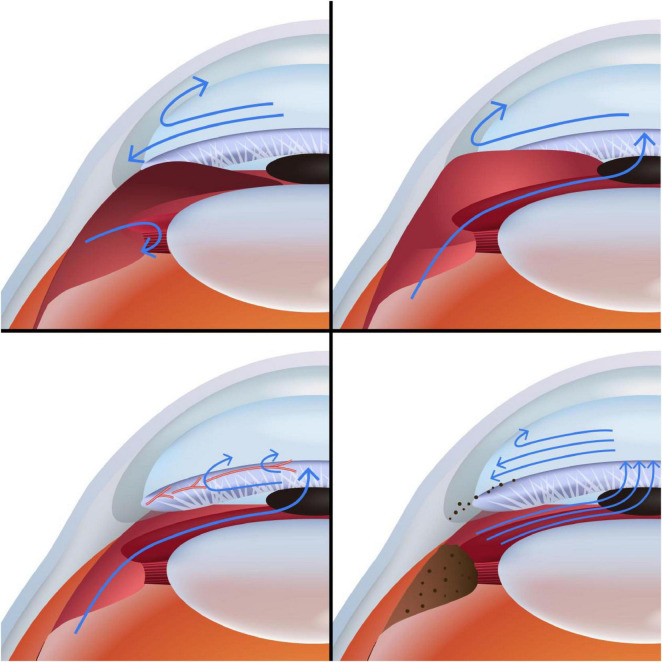
Cancer is a global health threat, and its incidence and mortality are increasing annually. Cancer-related glaucoma, a severe complication caused by primary or metastatic tumors and their treatments, has complex pathogenic mechanisms. This review aims to clarify the risk factors, classification, diagnosis, and treatment progress of this glaucoma type. Mechanisms include mechanical obstruction, secondary angle closure, neovascularization, inflammation and cytokine release, alterations in aqueous humor dynamics, and secondary hemosiderosis. Clinical manifestations are diverse, such as rapid intraocular pressure increase, neovascular changes, and tumor-related characteristic signs. Treatment requires multidisciplinary cooperation, with primary tumor control as the core, combined with drugs like anti-VEGF agents and targeted therapies, and modified surgeries. Future research should focus on personalized therapeutic strategies, gene therapy applications, integration of multimodal imaging, and optimization of AI models to optimize early intervention and reduce the risk of irreversible optic nerve damage.
Keywords: cancer-related glaucoma; clinical manifestation; multidisciplinary collaboration; pathogenesis; treatment strategies.
Copyright © 2025 Lin and Li.
Conflict of interest statement
The authors declare that the research was conducted in the absence of any commercial or financial relationships that could be construed as a potential conflict of interest.
Figures
References
Publication types
LinkOut - more resources
Full Text Sources
